Tales from the Tread: Geothermal groundwater below Steamboat Springs
Tread of Pioneers Museum
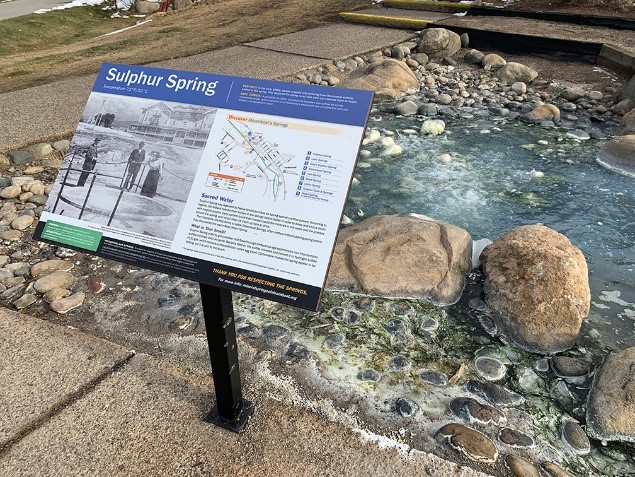
Courtesy Photo
One of the most common questions that visitors to Steamboat Springs ask may be, “Where do the mineral springs come from?” or “How did Steamboat Springs get its name?” Although the answer may seem simple at first, it comes from an underground geothermal reservoir, and until recently, we have known very little about the journey that this mineral rich water takes underground prior to what we see on the surface.
Beginning in 2021, the U.S. Geological Survey (USGS) conducted a study (co-funded by the Tread of Pioneers Museum and the City of Steamboat Springs) designed to understand more about the local mineral springs, so that the City and local partners can plan for and protect these precious natural resources.
The study sought to explore several key questions: Where is the source of the groundwater discharging from mineral springs along the Yampa River? How long does it take to flow from the recharge zone (where it becomes groundwater) to where we see it at the springs? How susceptible are the springs to changes from human activity?
The results of this study included some surprises and reaffirmed some previous work. Through looking at very small changes in the daily water temperature in the springs, it became apparent that some springs, such as Black Sulphur Spring, are gaining groundwater from both deep geothermal water and shallow aquifers, potentially even the Yampa River. These mixed springs are in contrast to springs like the Sulphur Spring and the Steamboat Spring that receive all their water from a deep geothermal flow path.
Perhaps the most surprising results were the age of the groundwater, which was estimated using gases that are dissolved in the water and trace when water was last in contact with the atmosphere. These groundwater age tracers showed that groundwater discharging from springs ranged from 2,000 years old up to 18,000 years old! These ancient groundwaters (found in Steamboat Spring, Lithia Spring, and Sulphur Spring) may represent glacial meltwater that was recharged from melting glaciers in the Park Range at the end of the last ice age (the Pleistocene).
It is amazing to think that when we look at the Steamboat Spring, the last time that water saw the open air was when it was in a melting glacier thousands of years ago. In this way we can easily interact with an archive of a previous period in earth’s history.
Results of the study also identified which geologic rock likely host the geothermal reservoir, and how the exposures of different rocks control where springs are found today.
Although the USGS study answered many questions, many mysteries remain. How are the springs along the Yampa River connected to Strawberry Park and Old Town Hot Springs (if they are connected at all), and if so, why is the chemistry of the water so different? How deep does the geothermal reservoir extend to? How can the City and other partners best protect these geothermal treasures?
Future research will continue to shed light on these and other questions. The full results of the USGS study are available to download free of charge at this link: https://doi.org/10.1016/j.geothermics.2026.103615.
To reach Connor Newman, connor.newman1988@gmail.com








Support Local Journalism
Support Local Journalism
Readers around Steamboat and Routt County make the Steamboat Pilot & Today’s work possible. Your financial contribution supports our efforts to deliver quality, locally relevant journalism.
Now more than ever, your support is critical to help us keep our community informed about the evolving coronavirus pandemic and the impact it is having locally. Every contribution, however large or small, will make a difference.
Each donation will be used exclusively for the development and creation of increased news coverage.