Fishing guides brace for low water levels, warm temps after dry winter
Anemic snowpack spurring changing strategies

John F. Russell/Steamboat Pilot & Today
“Devastating,” “worrying” and “unsettling” — that’s just some of the vocabulary used by guides regarding the upcoming fishing season on the Yampa and other local rivers.
The rivers are fed by winter snowpack. But this year only 171 inches of snow fell — down from the 10-year average of 289 inches, according to Steamboat Ski Resort tracking data.
The historic low snowfall winter was 1980-81, when only 133 inches fell. The winters of 1986-87 and 1991-1992 also recorded snowfall totals under 200 inches.
The last three winters totaled 302, 389 and 448 inches of snowfall, respectively.
“We’re undertaking historic preparations amid this drought” said Yampa Valley Anglers owner Ryan Herbert. “It’s not looking good, but we’re hoping on a wet spring and for the anticipated low water levels to be at the historic averages. Albeit, with bated breath.”
Steamboat Flyfisher owner Johnny Spillane anticipates a similar situation.
“Time will tell what happens,” said Spillane. “But we need to pay attention to what’s safe for the fish.”

Pivoting practices
“I don’t know what to expect weather-wise,” said Scott Graham, manager at North Park Anglers. “But I hope its rain, moisture and cold weather.”
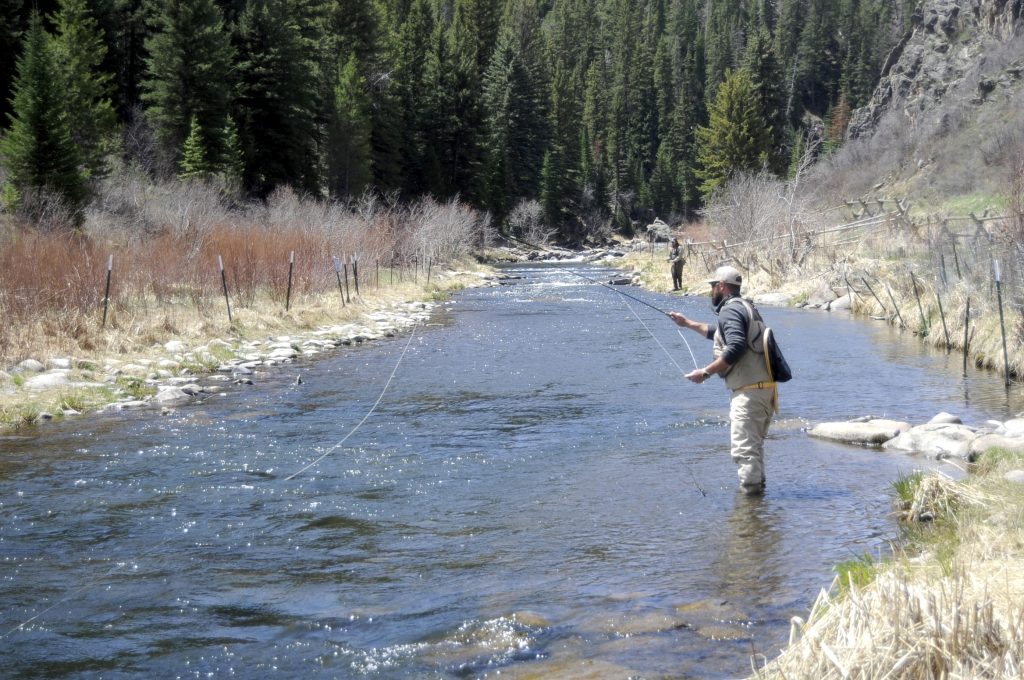
Guides are already game-planning for what the summer may bring. Many are looking toward high alpine streams and traveling for lake fishing.
“The anticipation has led us to start preparations for traveling for some high-altitude fishing,” said Straightline Sports guide Jon Almen. “Places like the Flat Tops and Buffalo Pass will make for better fishing this year.”
Almen even expects to venture into Utah and fish the Green River, which the Yampa feeds into at Dinosaur National Monument.
“We’re very fortunate that we have so many other safer options than the Yampa,” said Spillane. “It’s an opportunity for our clients to experience something different.”
Graham is setting his sites on lake fishing and smallmouth bass and pike.
“Clients may need to get used to the idea of still-water fishing,” said Graham. “It may not be ideal but we can’t push the issue.”
In hot water
But it’s not just low water levels that the guides need to worry about. Low water levels on hot days can lead to rapid water temperature increases.
“Once temperatures hit 66 or 67 degrees it gets dangerous for trout,” said Almen. “At 68 degrees I wouldn’t touch the river.”
Almen explained that guides often carry thermometers to check the water temperatures as they fish.
Early morning trips are expected to become the norm this season.
“Anglers should expect to go out early in the mornings, before temperatures get dangerous in the midday heat,” said Graham. “We expect a lot of early trips.”
Almen expects much of the same.
“Most of our mid-summer trips will be over by noon,” said Almen. “When the water heats up we will pull out quick.”
Herbert is fearful of how fires will impact the season.
“The fire situation will complicate where we go as well,” Herbert said. “I won’t put clients in a situation I feel is unsafe.”
Regardless of what happens, the guides remain committed to protecting the rivers.
“We are kind of like the ski industry. We live and die by Mother Nature,” said Graham. “We are just going to have to educate the public, alter our processes as the time passes and try not to damage the resource we all enjoy.”









Support Local Journalism
Support Local Journalism
Readers around Steamboat and Routt County make the Steamboat Pilot & Today’s work possible. Your financial contribution supports our efforts to deliver quality, locally relevant journalism.
Now more than ever, your support is critical to help us keep our community informed about the evolving coronavirus pandemic and the impact it is having locally. Every contribution, however large or small, will make a difference.
Each donation will be used exclusively for the development and creation of increased news coverage.