Colorado lawmakers want to end use of taxpayer dollars to bring more wolves to state
Representatives tagged a provision onto the budget that would bar Colorado Parks and Wildlife from using state funds to bring in new wolves

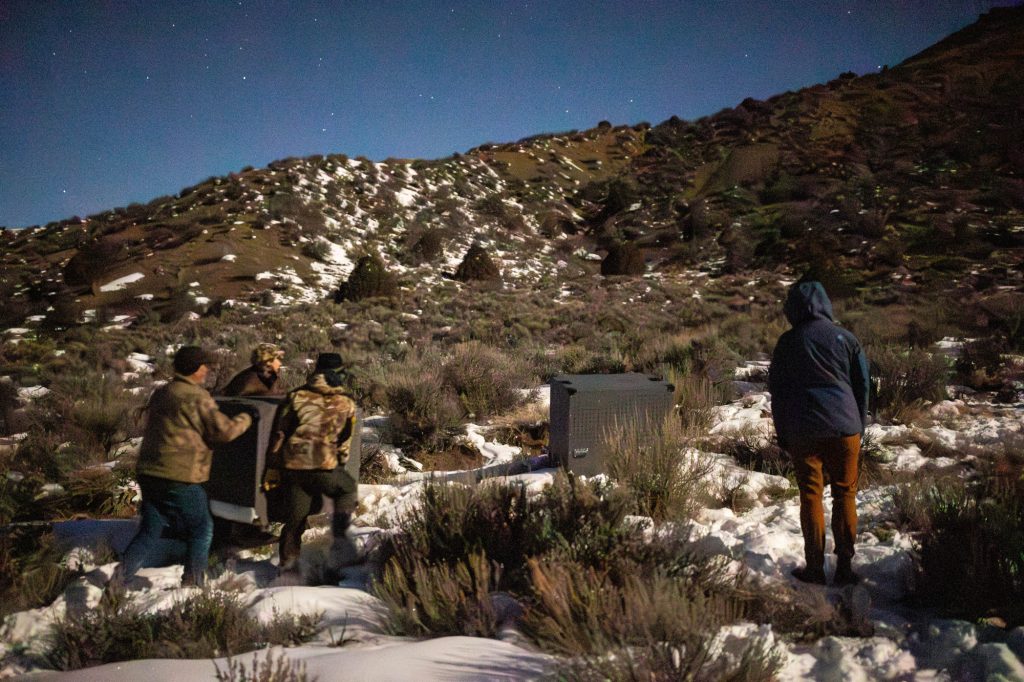
Colorado Parks and Wildlife/Courtesy Photo
Colorado lawmakers want to tighten the reins on how the state wildlife agency is spending taxpayer dollars to restore gray wolves on the Western Slope.
In a budget footnote introduced by Rep. Ty Winter, R-Trinidad, and Rep. Meghan Lukens, D-Steamboat Springs, Colorado Parks and Wildlife would not be allowed to use general fund dollars to bring more wolves to the state in the upcoming fiscal year.
“What I would like to say to my ranchers is that we are not using their taxpayer dollars to introduce more wolves into their backyard,” Lukens said. “The money that is still allocated to the Department of Natural Resources can still be used for conflict minimization and overall management of the program, but if we are going to, as a state, pay for new wolves, I believe that money should be coming from gifts, grants and donations.”
The footnote passed the House on Friday, April 10, at the end of the chamber’s marathon budget conversations. This year, lawmakers are looking at cuts to items like Medicaid and immigrant health care programming, social services and affordable housing to close a $1.5 billion shortfall.
“We’ve talked about budget priorities and putting people first,” Winter said. “Well, this is one chance to do that.”
“This isn’t just about wolves, and this just isn’t about cattle, this is about people’s livelihoods. How would you feel if somebody was preying on your paycheck? ‘Cause that is what’s happening here,” he added.
Colorado Parks and Wildlife receives $2.1 million annually from the state general fund to run the wolf reintroduction program, which was mandated by voters in 2020.
The amendment offered by Winter and Lukens does not change this allocation; it only prohibits the agency from using any of these funds to bring additional wolves to Colorado.
Rep. Kyle Brown, D-Louisville, a member of the joint budget committee, which drafts the state budget before it heads to the House and Senate, spoke in opposition to adding the budget footnote on Friday.
“The (joint budget committee) has talked extensively about wolves, and while we may not always agree on these issues, we have discussed them, and this money remains in the budget for reintroduction, in part because this is a reflection of the voters’ intent,” Brown said. “While the amendment deals with specifically reintroduction, the line that this deals with goes toward management, which is much more than just reintroduction.”
House Speaker Julie McCluskie, D-Dillon, said that the amendment was a rare exception to a personal rule of hers to support the joint budget committee’s decisions on the budget.
“It is a moment for us to recognize that while we should honor the will of the voters — I am respectful of that — our reintroduction of wolves has not gone successfully nor without significant cost,” McCluskie said. “I would ask for your support on this amendment, knowing that there is certainly a better path forward for us on the wolf management plan, and I would encourage further evaluation of the process so far, ways that we can continue to improve it.”
Proposition 114 — which required Parks and Wildlife to create a self-sustaining population of gray wolves, while preventing conflict with livestock — passed by nearly 57,000 votes in Colorado in 2020. The measure was opposed in 51 of Colorado’s 64 counties, including all but five Western Slope counties, where reintroduction is required to take place.
Rep. Tammy Story, D-Evergreen, said that Parks and Wildlife could not meet the legal requirements of this measure “without a sustainable funding source, especially not that of gifts, grants and donations.” She went on to argue that wolves are vital to creating a healthy ecosystem in Colorado, and coexistence is the key to the program’s success.
What is Colorado spending on wolves?
Parks and Wildlife began reintroduction in December 2023, releasing 10 wolves from Oregon in Grand and Summit counties. In January 2025, the agency released an additional 15 wolves from British Columbia in Pitkin and Eagle counties. While the state’s burgeoning population has seen some reproduction, 13 of the 25 wolves brought into Colorado have died.
Ultimately, the state wildlife agency did not move forward with its plans to bring in more wolves during the 2025-26 winter. Parks and Wildlife had planned to return to British Columbia this winter, signing an agreement with the province to capture up to 15 wolves. However, new leadership and direction from the U.S. Fish and Wildlife Service forced the state wildlife agency to look to Northern Rockies states instead. Parks and Wildlife was unable to source wolves from these states in time for this past winter.
The agency has said it has plans to find another source by the upcoming winter, meeting the wolf restoration plan’s goal of releasing 30 to 50 wolves in the first three to five years of reintroduction.
Parks and Wildlife reported that the British Columbia operation cost nearly $257,000, but recently told the joint budget committee that future translocations could cost up to $450,000.
In a December 2025 report to Colorado’s joint budget committee, Parks and Wildlife said the majority of its expenses go toward personnel, followed by operating costs, compensation for ranchers and conflict minimization programs and tools. In the first seven months of 2025, the agency spent $3 million on the program.
In addition to the $2.1 million allocation, Parks and Wildlife is set up to receive an annual allocation of $350,000 from the state to compensate ranchers for livestock losses due to wolves. Compensation for losses in 2025 are expected to exceed $1 million, which the agency can also use federal dollars and non-license revenue from its wildlife cash fund to pay. Parks and Wildlife also receives funds from the Born to Be Wild License Plate — which generated over $1 million during its first 21 months — that can only be spent on tools and programs seeking to minimize wolf-livestock conflict.
The new footnote echoes provisions included in a bill that passed during an August special session convened to address budget challenges last year.
This bill redirected $264,268 of the $2.1 million allocated in the 2025-26 budget for the wolf program to Colorado’s Health Insurance Affordability Enterprise. The amount removed was reflective of the amount Parks and Wildlife spent in January 2025 to bring 15 wolves from Canada. This law also barred Parks and Wildlife from using the remaining general fund dollars to bring in new wolves during the fiscal year.
The footnote brought by Winter and Luken joins another placed on the budget last year by lawmakers regarding wolves. This existing note requests that Parks and Wildlife not spend any of its general fund allocation on wolf reintroductions “unless and until” preventative measures “are implemented to the highest degree possible to assist owners of livestock in preventing and resolving conflicts between gray wolves and livestock.”
Colorado’s 2026-27 budget — including the new wolf footnote — will be debated on the Senate floor this week. It then faces final approval from the joint budget committee before heading to Gov. Jared Polis’s desk.







Support Local Journalism
Support Local Journalism
Readers around Steamboat and Routt County make the Steamboat Pilot & Today’s work possible. Your financial contribution supports our efforts to deliver quality, locally relevant journalism.
Now more than ever, your support is critical to help us keep our community informed about the evolving coronavirus pandemic and the impact it is having locally. Every contribution, however large or small, will make a difference.
Each donation will be used exclusively for the development and creation of increased news coverage.