14th Judicial District Attorney’s Office violates Victim Rights Act
Subcommittee finds alleged sexual assault victim and her mother 'not treated with fairness, respect, dignity'

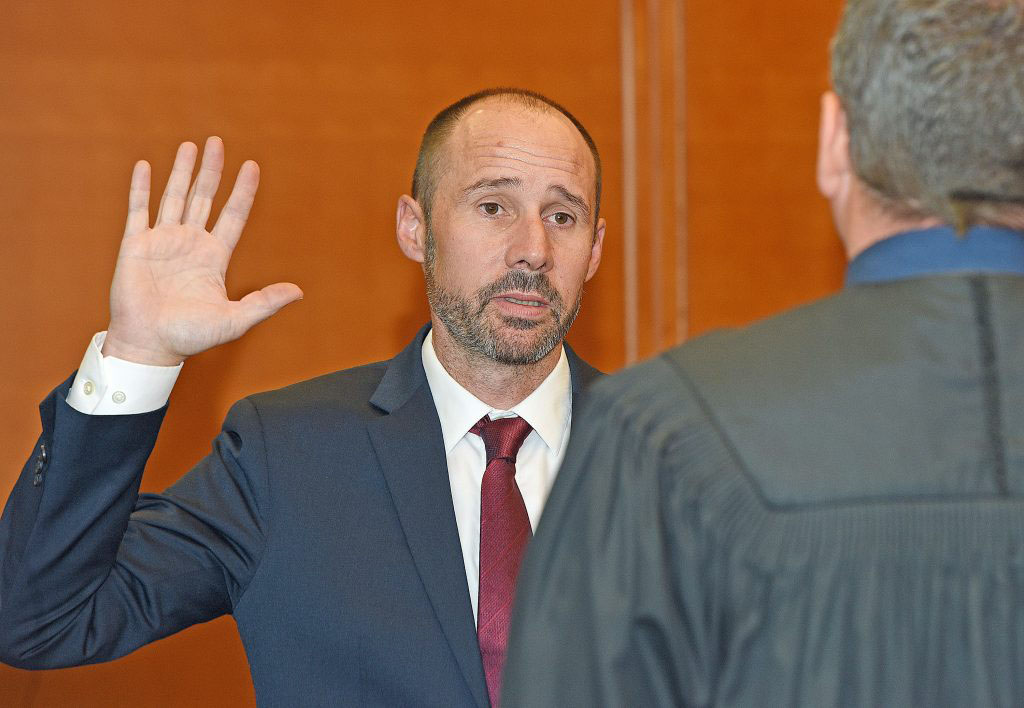
John F. Russell/Steamboat Pilot & Today
State officials determined that the 14th Judicial District Attorney’s Office violated the Victim Rights Act during a Dec. 19 review meeting, according to a findings summary from the Colorado VRA Subcommittee.
The subcommittee ruled that a Steamboat Springs victim of an alleged sexual assault crime and her mother were “not treated with fairness, respect and dignity by the District Attorney’s Office.”
As a result of the subcommittee’s findings, the DA’s office is now required to attend trauma-informed training and a Victim Rights Act training provided by a specialist and staff member of the Colorado District Attorney’s Council by Feb. 24.
The VRA Subcommittee exists within the Colorado Crime Victim Services Advisory Board, under the Division of Criminal Justice.
The subcommittee formally reviews complaints of non-compliance with the Victim Rights Act, which “ensures that crime victims are treated with fairness, respect, dignity and that they are free from intimidation, harassment and abuse,” according to the Division of Criminal Justice website.
Comprised of a restorative justice representative, a deputy district attorney, a police chief, a district judge and other stakeholders, the subcommittee voted 7-0 in mid-December that there was a basis in fact for a violation of the Victim Rights Act in the case.
The case — which deals with the alleged sexual assault of a born-and-raised Steamboat local who requested to remain anonymous — was reported to the Routt County Sheriff’s Office on June 5, 2024.
On April 15, 2025 the sheriff’s office submitted the case to the DA’s office. On May 2, Deputy District Attorney Joseph Bucci declined to prosecute the case and notified the victim through an emailed letter.
Bucci did not send the declination to prosecute letter to the victim’s attorney, nor did he involve a trauma-informed community advocate in the discussion, according to a Nov. 2 letter issued to the DA’s office from the VRA Subcommittee.
Following Bucci’s decision to decline charges, the victim’s mother called Bucci 10 times last May but did not receive a return phone call, states the letter.
On May 28, the Routt County detective who investigated the case, the victim, her mother and their attorney met with Bucci. The letter states that Bucci was “ill-prepared to discuss the case and had neglected to read the medical report” included in the case.
In addition, the victim “felt like (Bucci) blamed her for the incident,” the letter continues.
“Joe Bucci was cruel and showed no compassion,” the victim’s mother wrote in a letter to the subcommittee. “There was a serious lack of empathy. We had the sense that his role as a DA was adversarial. He was more like a defense attorney than a Deputy DA. He could not even look (the victim) in the eye and looked at us, the other meeting attendees, and spoke as if she was not there.”
The mother’s letter also states that Bucci “did not understand the behavior of someone who was just sexually assaulted.”
From May through August, the victim’s mother and their attorney left “numerous” voicemails and sent “multiple” emails to District Attorney Matt Karzen to discuss the declination letter, but did not receive a response, according to the Nov. 2 letter to the DA’s office from the VRA Subcommittee.
Karzen’s eventual response to the victim’s mother stated that he was “unwilling to discuss” the case, according to the letter.
In the findings summary issued Tuesday, the subcommittee concluded that the DA’s office’s decision to decline charges is a “difficult conversation to have with a victim, and it should be done in a trauma-informed manner.”
The subcommittee also determined that email correspondence between the victim’s mother and Karzen was “not trauma-informed” and made assumptions about the mother’s intentions to schedule a meeting.
“The subcommittee discussed that DA Karzen appeared to assume that the reason (the mother) wanted a meeting was to discuss the decision to dismiss the case, which had already been discussed, and DA Karzen was not going to change (Bucci’s) decision,” states the findings summary. “The subcommittee discussed that if a victim requests a meeting, the District Attorney’s Office should not assume what the intent of the meeting is, but clarify the purpose and/or schedule a meeting, recognizing that a no-file decision is difficult for a victim to understand.”
“DA Karzen’s email response appeared to be confrontational instead of trauma-informed,” the findings summary adds.
Following the Victim Rights Act Subcommittee’s unanimous vote, Karzen stated in a Wednesday email to the newspaper that he was confident that proper procedures were followed in issuing the declination letter.
Karzen added that “moving forward, in certain types of cases, (the DA’s office) process will be to offer a face-to-face meeting with the victim or complaining party, explain the declination verbally and discuss it as they may wish, and then provide them a copy of the declination document.”
“It is now apparent to me that (a declination to prosecute) procedure has some drawbacks: Despite its intended effect, because declination letters involve technical legal analyses, it can present as cold or disengaged to some people, and that is obviously something we want to avoid,” Karzen wrote in the email to the newspaper.
“Also, in a small number of instances, it can be a catalyst for an emotionally traumatized complaining party to change their story in the hopes that it will change the decision, which is a dangerous thing because it obfuscates the facts of the case, and the truth, further.”
Following the subcommittee’s vote, Karzen is allowed to request a reconsideration of the findings by Jan. 27. As of Wednesday, Karzen stated that the decision to request reconsideration “has not been made yet.”
Karzen emphasized that his office will “take advantage” of the training provided by the Victim Rights Act specialist and District Attorney’s Council, regardless of whether reconsideration is requested.
“Given the findings of the VRA subcommittee, it is apparent to me the expectations of the Division of Criminal Justice as to how the statutory language in the VRA statutes is to be applied has evolved in recent years,” he stated. “Therefore, from my perspective as the DA, clarification regarding the requirements and boundaries of those statutes is something I appreciate, because there are competing obligations involved, and managing those obligations appropriately is critical.”



Support Local Journalism
Support Local Journalism
Readers around Steamboat and Routt County make the Steamboat Pilot & Today’s work possible. Your financial contribution supports our efforts to deliver quality, locally relevant journalism.
Now more than ever, your support is critical to help us keep our community informed about the evolving coronavirus pandemic and the impact it is having locally. Every contribution, however large or small, will make a difference.
Each donation will be used exclusively for the development and creation of increased news coverage.