Trump administration orders Craig Unit 1 coal plant to stay open a day before scheduled closure
Gov. Jared Polis and environmental advocates blast the decision, which U.S. Department of Energy said was made in response to an energy “emergency”
Steamboat Pilot & Today
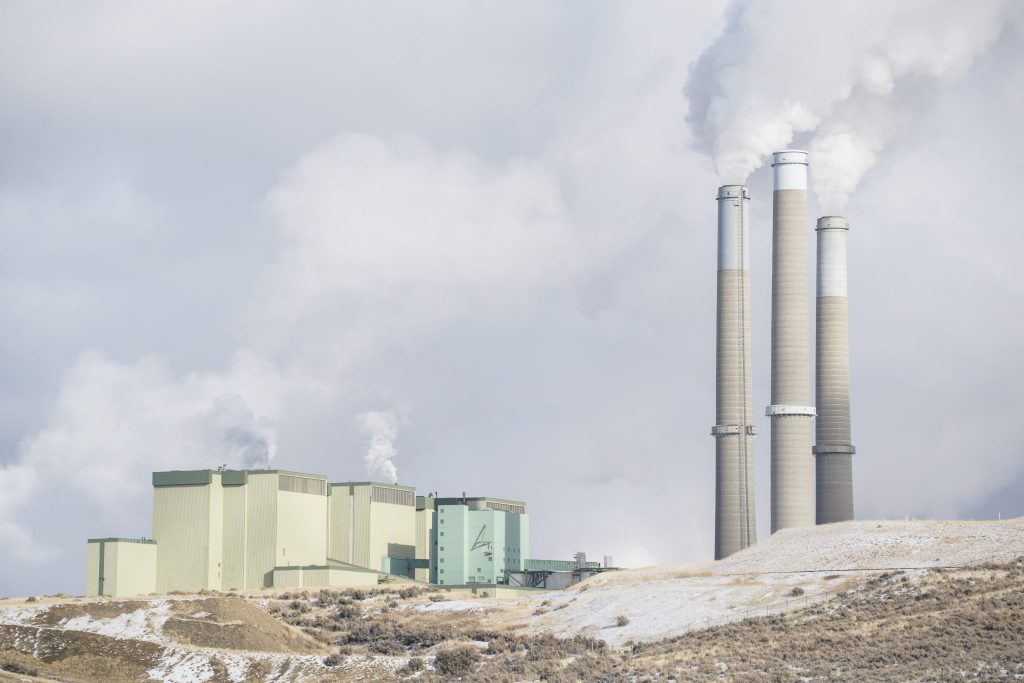
Eli Pace/Steamboat Pilot & Today archive
President Donald Trump’s Energy Department is ordering a coal-burning power plant in Northwest Colorado to remain open just one day before it was scheduled to shut down.
U.S. Department of Energy Secretary Chris Wright issued an emergency order on Tuesday requiring Craig Station’s Unit 1 plant in Moffat County to keep running until at least March 30, 2026, with an extension possible. The plant was set to close on Wednesday, Dec. 31.
The order was issued under section 202(c) of the Federal Power Act, which allows the Energy Department to keep power plants running during times of crisis, such as war or energy shortages. The move to keep the Craig plant open had been expected for weeks.
Wright’s order claims that Colorado and other Western states face an energy “emergency” due to a “shortage of electric energy, a shortage of facilities for the generation of electric energy, and other causes.”
The closure of coal-burning plants “could lead to the loss of power to homes,” the order states, as well as “businesses in the areas that may be affected by curtailments or power outages, presenting a risk to public health and safety.”
The Trump administration has used similar justifications under the Federal Power Act to keep open coal plants in Michigan and Washington, as well as an oil plant in Pennsylvania.
Gov. Jared Polis, in a statement on Wednesday, condemned the decision, claiming that keeping the Craig plant open will “pass tens of millions in costs to Colorado rate payers.”
He added that the plant is “broken and not needed.”
“Ludicrously, the coal plant isn’t even operational right now, meaning repairs — to the tune of millions of dollars — just to get it running, all on the backs of rural Colorado ratepayers!” Polis stated. “Going backwards is an attempt to force local communities to foot the bill to extend plant operations, and will cost energy consumers more. Today’s action flies in the face of this careful planning, is inconsistent with market forces, and will hurt Coloradans.”
The Craig Press sent questions to Tri-State Generation and Transmission Association, the utility cooperative that operates Craig Station, asking whether claims that the plant is “broken” are accurate and how it plans to respond to the emergency order.
A spokesperson said that Tri-State received the order at 6 p.m. Tuesday night and responded to questions with a statement saying that the plant, as a result of the order, “will likely require additional investments in operations, repairs, maintenance and, potentially, fuel supply, all factors increasing costs.”
Tri-State co-owns Craig Station’s Unit 1 alongside other utility providers, including Xcel Energy, the Platte River Power Authority and PacifiCorp.
“Tri-State has a policy of 100% compliance, and we will work with (the plant’s) co-owners, and federal and state governments to determine the most cost-effective path to that end,” said Tri-State CEO Duane Highley, in a statement.
“We are continuing to review the order to determine what this means for Craig Station employees and operations, and the financial impacts,” Highley’s statement continued. “As a not-for-profit cooperative, our membership will bear the costs of compliance with this order unless we can identify a method to share costs with those in the region. There is not a clear path for doing so, but we will continue to evaluate our options.”
Tri-State originally decided to close the plant by the end of 2025 as part of its move to more environmentally-friendly energy sources. It plans to close the Craig station’s two other coal-burning plants by 2028.
The effort is partly driven by a state law that requires large-scale utility providers to reach 100% renewable electrical energy by 2050. Tri-State is also looking to transition to other energy sources for economic reasons, it said.
Craig Mayor Chris Nichols welcomed the news of the emergency order, but stated that Craig should continue the work of preparing for a possible economic transition within the community.
“It’s great for the community to keep those jobs active, even for a short period,” Nichols said in an interview on Wednesday. “But we need to continue what we’re going to do to replace good-paying jobs in the community, because it’s a short-term extension.”
U.S. Rep. Jeff Hurd, a Western Slope Republican whose sweeping 3rd Congressional District includes Moffat County, praised the emergency order in a statement on Wednesday, saying that Colorado’s energy policy “has been driven by ideology instead of reality.”
“Plants were scheduled to close to satisfy political timelines, even though the power was still needed and local economies would feel the loss,” stated Hurd, who has pushed for the Trump administration to keep another coal plant running in Pueblo, which is also in his district.
The state’s energy office and environmental advocates, however, are deeply critical of the decision.
Colorado Energy Office Executive Director Will Toor, in a statement, questioned the U.S. Energy Department’s use of the Federal Power Act, which he said provides the federal government “limited authority” to act during emergencies.
“Colorado does not have an energy emergency,” Toor stated. “In fact, the state, along with the rest of the region, has some of the most reliable power systems in the country.”
Toor pointed to a recent report by the North American Electric Reliability Corporation, a nonprofit regulatory group that assesses grid conditions and develops standards, that found there are no short- or long-term elevated reliability risks in the Rocky Mountain region.
The environmental group Earth Justice, also in a statement, claimed the emergency order was “illegal” and failed to provide evidence of any “actual emergency.”
The group also cited an analysis by Grid Strategies, a consulting firm that supports more clean energy, showing that if the plant remains open and generates its average output of the last few years, costs could rise to $20 million over 90 days, or approximately $85 million per year.
“Those needless costs are likely to be borne by electricity customers in Colorado and nearby states,” Earth Justice stated.
Craig Press reporter John Camponeschi contributed to this story.






Support Local Journalism
Support Local Journalism
Readers around Steamboat and Routt County make the Steamboat Pilot & Today’s work possible. Your financial contribution supports our efforts to deliver quality, locally relevant journalism.
Now more than ever, your support is critical to help us keep our community informed about the evolving coronavirus pandemic and the impact it is having locally. Every contribution, however large or small, will make a difference.
Each donation will be used exclusively for the development and creation of increased news coverage.