New traffic signal to light up Tuesday
$9.2 million intersection improvement project almost complete

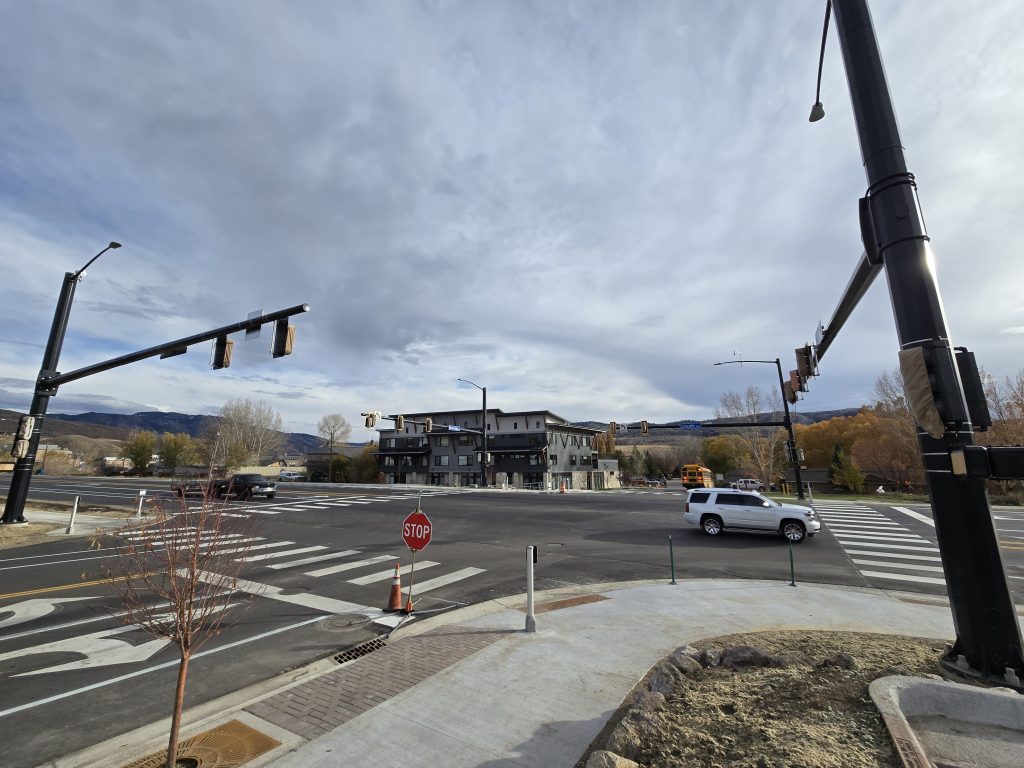
Suzie Romig/Steamboat Pilot & Today
Commuters from west of Steamboat Springs are breathing a sigh of relief with the near completion of the approximately $9.2 million intersection improvement project at U.S. Highway 40 and Downhill Drive that has created repeated rush-hour traffic delays this summer.
Colorado Department of Transportation Regional Communications Manager Charles Marsh said officials plan to turn on the new traffic light at the updated intersection on Tuesday. He noted the Downhill Drive light is the first new CDOT signal in the city since an addition at 11th Street in 2010.
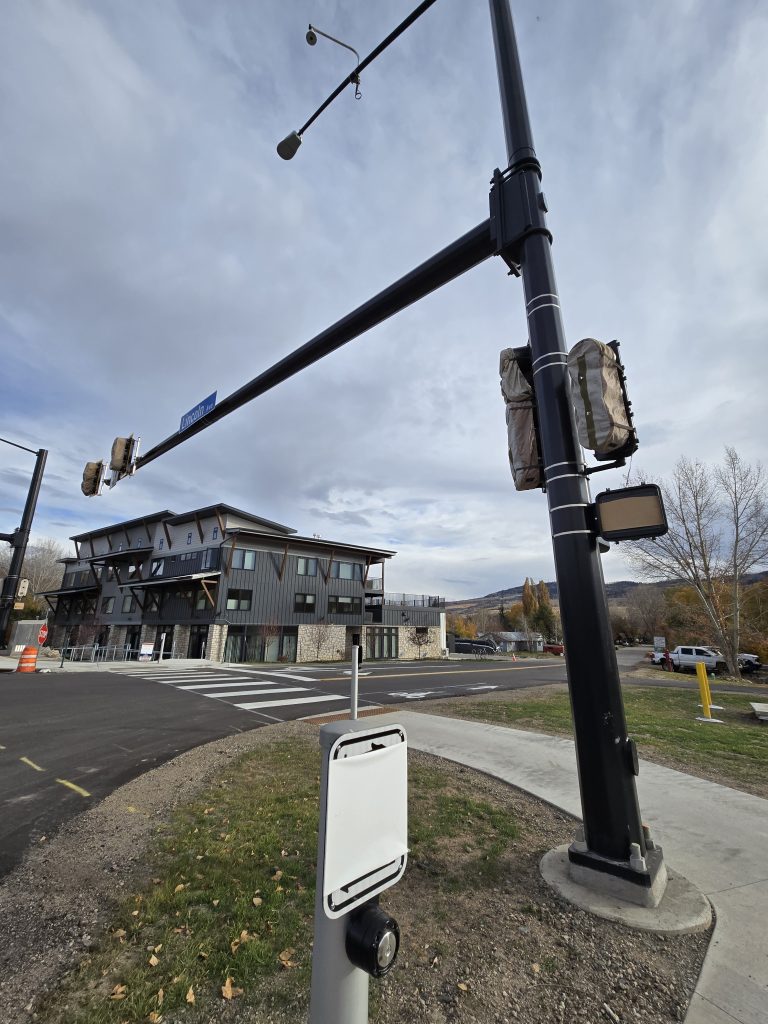
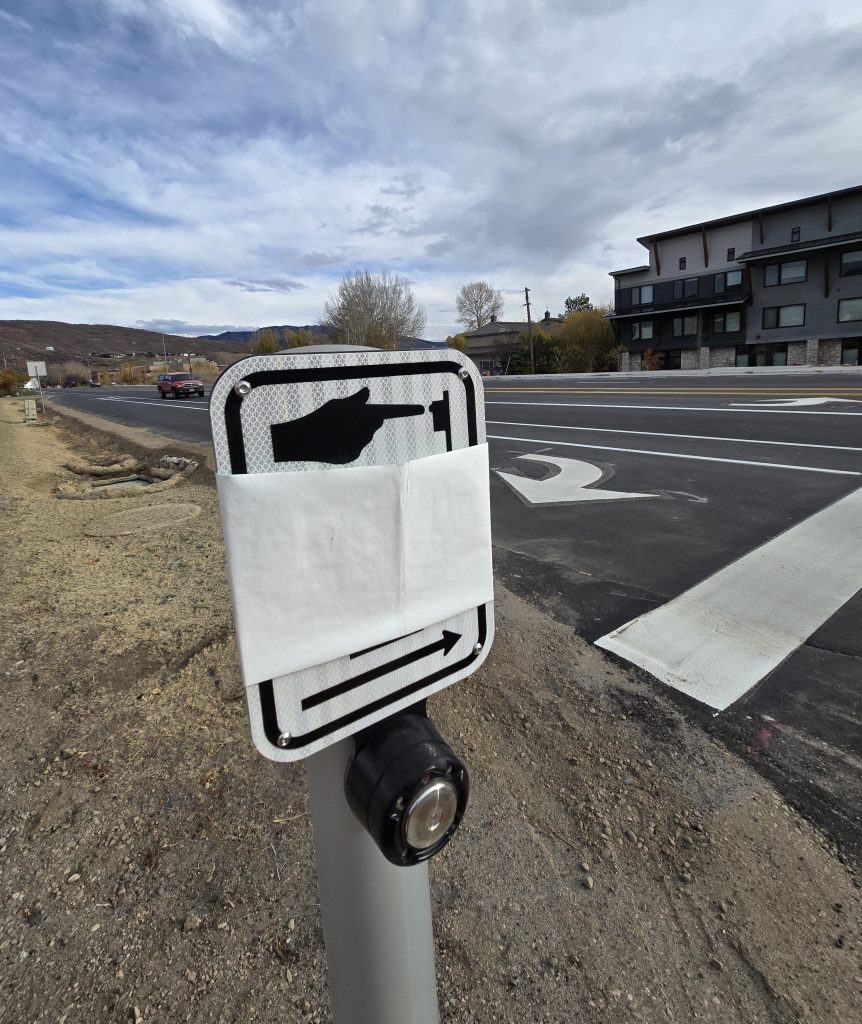
The new signal at Downhill Drive will use video detection to identify vehicles on the side street so the light will only change to serve the side street when the detection indicates a need or when the pedestrian button is pushed, Marsh explained.
“Although we have a basic plan for the signal’s start-up operations, we will monitor its function for several weeks and make necessary adjustments,” added Marsh.
The intersection project boasts new improvements such as added sidewalks, a second eastbound lane and multiple turn lanes. Riverside and Downhill drives were aligned and the steeper grade of Downhill Drive was reduced to create a more gradual entry onto the highway, according to the CDOT project webpage.
Crosswalks and crossing signals added at each arm of the newly signaled intersection aim to improve pedestrian safety, and an extension of the sidewalk on the west side of Downhill Drive ties into sidewalk on the north side of Highway 40.
“All of this work will make the intersection much safer and efficient for motorists, bikers and pedestrians,” Marsh noted.
The project also upgraded the sewer line serving businesses along Downhill Drive in addition to properties off of Riverside Drive. The water line along Downhill and Riverside drives was replaced where needed and city utility lines were lowered along parts of Downhill Drive to allow for regrade of the road, Marsh said.
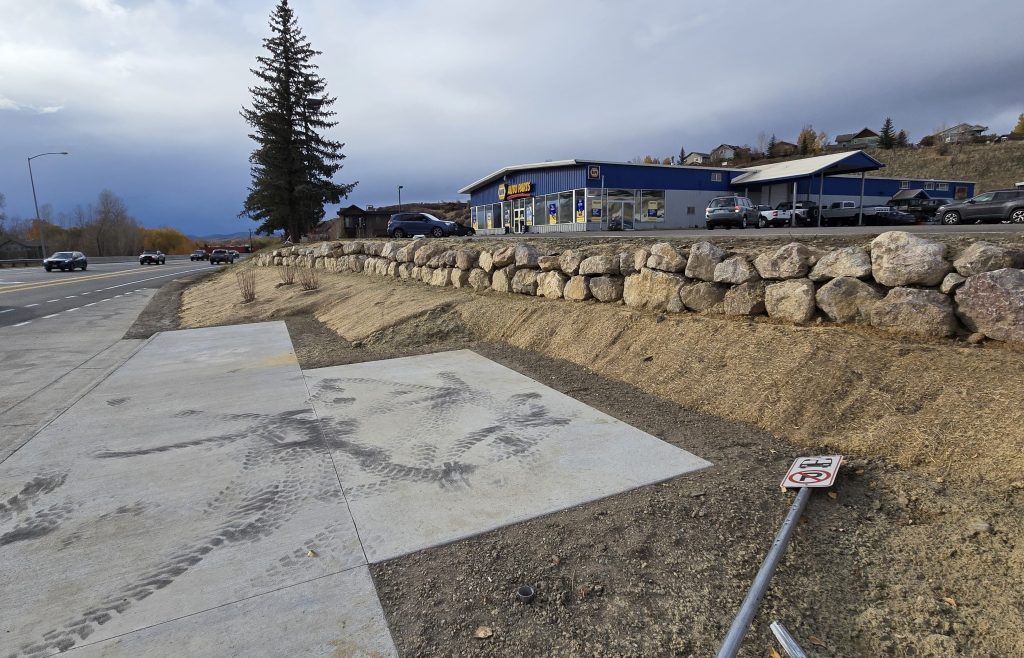
Steamboat Springs Transit Manager Jonathan Flint explained that two existing bus stops in the area of the project were shifted to new and improved locations for better defined access for buses. The two updated bus stops now are adjacent to the intersection.
The new traffic signal in place of previous stop signs may add some slowing of vehicle flow during rush-hour traffic, Marsh noted.
“U.S. 40 traffic did not stop at this intersection before this project (side streets had stop signs), so it is possible this will affect U.S. 40 rush-hour traffic,” Marsh noted in an email. “That said, both Riverside and Downhill drives have decent-sized neighborhoods they feed, and prior to the project, it was difficult to make a left turn onto U.S. 40 from Riverside or Downhill Drive during rush hour. So, the project will definitely benefit anyone using these roads.”
Steamboat Springs City Engineer Matt Phillips reiterated that the intersection upgrade “was warranted to improve safety and mobility of all roadway users, including pedestrians and bicyclists” due to “increased traffic volumes at this intersection and the large amount of turning traffic into and out of the side streets.”
Phillips said the city collected developer contributions toward the construction of the project “from all developments that impacted the intersection starting from the point that the intersection improvements were identified as a needed improvement.” Phillips said 24 development projects contributed a total of more than $1.2 million toward the construction.
“The city committed to contributing up to $1.25 million toward any construction costs exceeding $8 million,” Phillips said.
Since adding traffic signals in a smaller community is less common, citizens have posed questions as to how traffic signals along the highway are programmed. Marsh clarified how traffic lights along the highway are automated.
“For Steamboat Springs, the signals are in sync, and all work with one another,” Marsh said. “All the signals are on clocks that are programmed to change at certain times in conjunction with each other. The term our engineers use is ‘offset,’ which basically means there are specific timing plans that tell each signal when to change in line with the previous signal. The timing is all coordinated to allow for vehicle progression.”
When it comes to changing signal timing, CDOT works in conjunction with city staff every five to 10 years to conduct traffic volume counts to assess if the general timing needs to be changed, Marsh explained. The last assessment was conducted approximately three years ago.
“There are also various timing plans that go into effect at certain times,” Marsh said. “For instance, there is a timing plan in place for seasonal changes, … for weekends versus weekdays, again, all based on traffic volumes.”
Marsh said video detection is installed at CDOT signaled intersections in the area, and several “smart” features are already built into the signal operations, noting no other options are available currently to provide additional smart features beyond what is installed. The lights along Lincoln Avenue use video detection so that only vehicles present on the cross streets and pedestrians requesting a crossing signal should make the light change unless there is a malfunction due to technical issues or severe weather, Marsh said.
For more information, CDOT refers citizens to the document “Traffic Signals 101” linked near the bottom of the webpage Codot.gov/safety/traffic-safety.
“Traffic engineers look at signals as a vital tool for dealing with many traffic flow situations,” according to the Traffic Signals 101 document. “Traffic signals aren’t a ‘cure-all,’ but they are a valuable tool.”
To reach Suzie Romig, call 970-871-4205 or email sromig@SteamboatPilot.com.








Support Local Journalism
Support Local Journalism
Readers around Steamboat and Routt County make the Steamboat Pilot & Today’s work possible. Your financial contribution supports our efforts to deliver quality, locally relevant journalism.
Now more than ever, your support is critical to help us keep our community informed about the evolving coronavirus pandemic and the impact it is having locally. Every contribution, however large or small, will make a difference.
Each donation will be used exclusively for the development and creation of increased news coverage.