EPA rejects Colorado haze plan over coal plant closures
Decision draws fire from Polis, Bennet

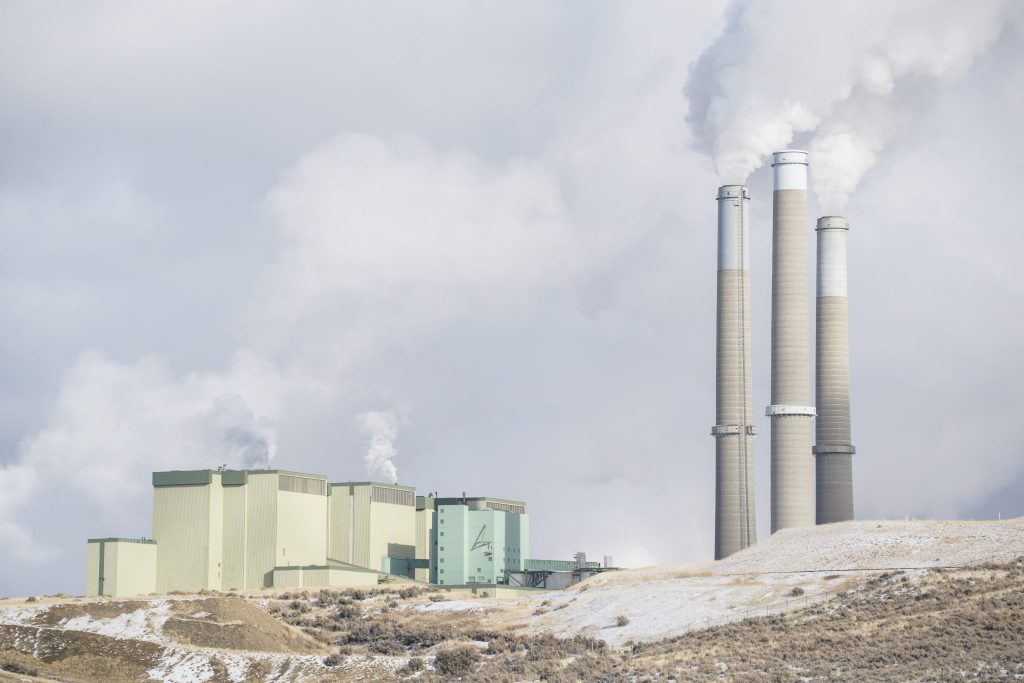
Eli Pace/Steamboat Pilot & Today archive
The U.S. Environmental Protection Agency on Friday rejected Colorado’s latest air-quality plan aimed at improving visibility in the state’s national parks and wilderness areas, saying the measure violated federal law by forcing the closure of coal-fired power plants without the consent of plant operators.
The EPA’s full disapproval of Colorado’s 2022 Regional Haze State Implementation Plan, wrote the agency, was necessary to prevent “the premature closure of power plants” and to uphold the Clean Air Act.
“The Trump administration chose dirtier air and higher costs … and rejected Colorado’s and utilities’ careful plans to save people money and increase energy availability and reliability,” the office of Colorado Gov. Jared Polis said in a Tuesday statement to the newspaper. “Keeping old coal plants online will increase costs to ratepayers, worsen air quality, and make it harder to bring lower cost and cleaner generation online.”
The Regional Haze Program, adopted in 1999, requires states to reduce airborne pollutants that impair views at national parks and wilderness areas.
“Reliable baseload energy sources are essential to Powering the Great American Comeback and ensuring families have cost-effective energy,” wrote EPA Administrator Lee Zeldin in the statement. “EPA is ready and willing to work full-heartedly with Colorado to revise its SIP, ensuring full compliance with the Clean Air Act as written.”
The agency said Colorado’s inclusion of non-consensual retirement dates — in particular, the proposed 2028 closure of Colorado Springs Utilities’ Nixon Unit 1 — lacked the legal assurances required under Section 110 of the Clean Air Act, noting that the plan failed to show that such retirements would not constitute an unlawful taking of private property.
The EPA also cited concerns regarding the plan’s harmful impacts to “grid reliability,” referencing the Department of Energy’s Dec. 30 emergency order requiring Craig Station’s Unit 1 to continue operating until at least March 30, 2026 due to an energy “emergency” in the West.
“The Trump EPA is unequivocally committed to following the Clean Air Act, and EPA legally cannot approve Colorado’s SIP revision,” the agency wrote. “Shutting down these power plants is not necessary to meet regional haze requirements, and including forced closure deadlines for facilities that want to stay open would have been a misuse of the CAA.”
According to the statement, Colorado has two years to submit a “revised, approvable” plan — otherwise the EPA will complete a “federal implementation plan.”
Federal rejection sets off political and policy backlash
Colorado leaders swiftly criticized the move as a setback for both climate goals and consumer savings.
The governor’s office called the decision “out of touch with the realities of the electric grid in Colorado,” arguing that the state’s utilities have already planned — and in many cases begun — to retire aging coal plants based on cost, not politics.
In the case of Craig Station, Tri-State confirmed to the newspaper last month that the plant, as a result of the Department of Energy’s emergency order, “will likely require additional investments in operations, repairs, maintenance and, potentially, fuel supply, all factors increasing costs.”
While the agency’s disapproval does dictate that state coal plant closures are not federally enforceable, the closures are included in state regulation, meaning they remain enforceable through state law.
“President Trump’s so-called ‘energy emergency’ is being used to justify tying the hands of utilities, forcing them to keep aging, outdated power plants open,” said U.S. Sen. Michael Bennet in a statement.
“It’s unacceptable to burden ratepayers with unnecessary costs,” he continued. “Federal intervention like this makes long-term planning impossible — this is not how you operate a business, plan an electric grid, or help a community stay prosperous.”
Bennet accused the White House of using federal energy policy to retaliate against states like Colorado that have adopted more aggressive clean-energy goals, adding that “President Trump continues to take out his personal and political grievances on Coloradans who are already struggling to make ends meet.”
Michael Ogletree, senior director of state air quality programs at the Colorado Department of Public Health and Environment, said in a statement the EPA’s decision undermines progress under the very program it was meant to advance.
“Colorado submitted a highly protective, innovative plan that met all state and federal requirements to reduce regional haze,” Ogletree said.
“EPA’s action is not based on a failure to meet visibility protections, which Colorado continues to meet,” he continued. “The decision reflects a disagreement over our inclusion of coal-fired power plant retirement dates — a provision that signals the state’s commitment to a cleaner energy future and aligns with existing law and market realities.”
“Regardless of EPA’s decision, Colorado will continue to lead,” he added, noting that the state has shown “that it is possible to protect public health, reduce pollution, and maintain a reliable energy system at the same time.”
Ogletree said the department is continuing to review the EPA’s disapproval and is “considering taking next steps.”
Tri-State weighs in
In a Tuesday statement to the newspaper, Tri-State Generation and Transmission Association, which co-owns Craig Station, said it was evaluating the implications of EPA’s decision.
“Tri-State is reviewing the U.S. Environmental Protection Agency’s disapproval of plant closure dates included in Colorado’s revised 2022 Regional Haze State Implementation Plan, particularly as it relates to Craig Generating Station,” wrote Tri-State Public Relations Specialist Mark Stutz.
“Tri-State appreciates the federal government’s focus on grid reliability and rising energy demand in the West, as they remain our members’ top priorities,” he added. “Regardless of market conditions and regulatory landscape, we are committed to meet our members’ needs in the most reliable, affordable and responsible way possible.”
In Northwest Colorado, the ruling could keep coal generation at the Craig Station operating longer than expected.
Tri-State originally decided to close the plant by the end of 2025 as part of its move to more environmentally-friendly energy sources. It plans to close the Craig station’s two other coal-burning plants by 2028.
Those plans remain in effect under state law, but will no longer be federally enforceable pending a new plan proposed by the state or federal implementation plan through the EPA.
What happens next
Under federal law, Colorado must now resubmit a revised SIP that meets EPA’s conditions or face a federally imposed implementation plan within two years. Either process would require the state to craft a new long-term strategy consistent with Clean Air Act requirements and the agency’s updated regional haze rule.
The decision also arrives as the EPA has formally delayed the next planning phase of the regional haze program.
The same day the federal Department of Energy ordered Craig Station’s Unit 1 to remain open, Zeldin extended the deadline for states to submit the next round of state plans from 2028 to 2031, citing the need for additional time to align state plans with the agency’s forthcoming regulatory overhaul of the haze program.
The EPA initially proposed a partial approval of the plan in July 2025, citing general alignment with visibility objectives but warning that certain provisions raised legal questions.
After a 60-day public comment period, the agency pivoted to full disapproval following energy supply concerns and the DOE’s emergency directive to keep the Craig unit online.
In the Friday statement, EPA Regional Administrator Cyrus Western said the final ruling is “fully compliant with the Clean Air Act while simultaneously providing for clean air for all Americans,” emphasizing that the agency “is ready and willing to work full-heartedly with Colorado to revise its SIP, ensuring full compliance with the Clean Air Act as written.”
The disapproval underscores a familiar tension between state ambition and federal authority, and raises new questions about the limits of state-driven climate action under an administration prioritizing fossil fuel use for reliability.
For now, the EPA says its “line of communication” with Colorado is open, and the agency “looks forward to working hand in hand” with the state on a new plan.







Support Local Journalism
Support Local Journalism
Readers around Steamboat and Routt County make the Steamboat Pilot & Today’s work possible. Your financial contribution supports our efforts to deliver quality, locally relevant journalism.
Now more than ever, your support is critical to help us keep our community informed about the evolving coronavirus pandemic and the impact it is having locally. Every contribution, however large or small, will make a difference.
Each donation will be used exclusively for the development and creation of increased news coverage.