Feds’ $140 million promised to Colorado River drought mitigation projects remains stuck for ‘bureaucratic’ reasons
Colorado’s congressional delegation has been applying pressure to release Inflation Reduction Act water project funds frozen during Trump’s first day in office

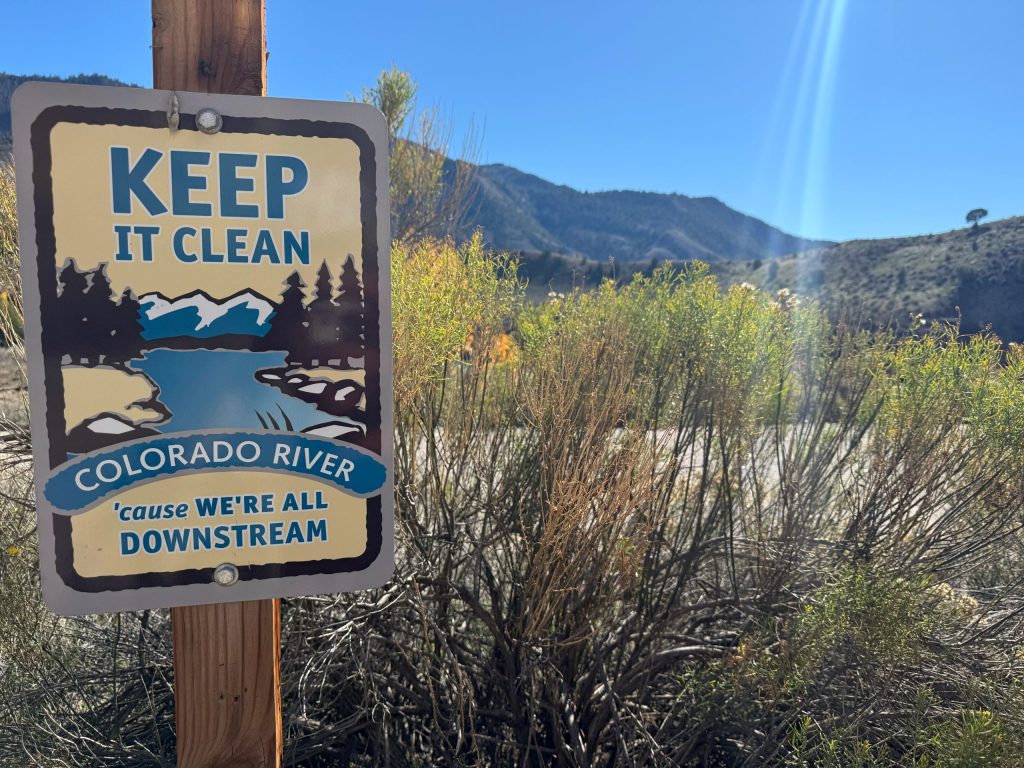
Ali Longwell/Vail Daily
Despite pressure from Colorado’s congressional delegation, around $140 million in federal funding previously granted to Western Slope water projects has lingered in limbo for nearly 16 months.
The funds, awarded to 17 Western Slope projects in the final days of President Joe Biden’s administration, were part of the Inflation Reduction Act’s drought mitigation grant opportunity for the Upper Colorado River Basin. This included $40 million granted to the Colorado River District to aid in its purchase of the Shoshone water rights, the oldest and largest non-consumptive right on the Colorado River tied to the hydropower plant in Glenwood Canyon.
Three days after the awards were announced, President Donald Trump took office, and his Day 1 order, “Unleashing American Energy,” called for all federal agencies to “immediately pause the disbursement of funds appropriated through the Inflation Reduction Act.”
In June, the U.S. Bureau of Reclamation released funds for two of the projects in the Orchard Mesa Irrigation District in Palisade, but the rest remain frozen.
“The funding has not yet been released, and that’s a real concern given current conditions across all of Colorado, but particularly western Colorado,” said Rep. Jeff Hurd, a Republican representing Colorado’s third district spanning the Western Slope, in an interview on Thursday, April 9. “I am continuing to press hard for clarity on timing and next steps because those projects were awarded for a reason and the need has not gone away.”
Hurd joined all members of Colorado’s congressional delegation in August in pushing for the remaining funds to be released in a letter to the top officials at the U.S. Department of the Interior and Bureau of Reclamation.
Since then, Hurd said he has been “actively working the issue at multiple levels.”
“I’ve raised it directly with the president. I’ve raised it directly with the acting commissioner of the Bureau of Reclamation, the Secretary of the Interior, the undersecretary at the Department of Interior,” he said. “My focus has been straightforward: These are projects that are tied to real water needs, and delaying them only increases the risk for communities not only in my district but throughout the Colorado River basin.”
Hurd said he remains hopeful the funds will be released, especially following what he referred to as a “productive discussion” with Trump.
“It’s gonna require continued pressure and attention,” he said. “There is broad recognition that water and water infrastructure and drought mitigation are not optional in the West, and these sorts of projects — for example, the Shoshone water right, and these other projects — they are practical. They’re targeted and they’re already vetted. So the case for moving forward on them is strong, and I’m gonna keep pushing until we see progress.”
With the funds frozen due to both “bureaucratic reasons” and “politics,” Hurd likened his approach to that of a river.
“I want to be like water when it comes to these obstacles,” he said. “When water meets an obstacle, it either goes around it or wears it down.”

In an emailed statement, Rep. Joe Neguse, a Democrat representing Colorado’s second district, which spans portions of the northwest Front Range and a few Western Slope counties, said he was committed to pressing the Trump administration to release this “critical drought management funding,” with Hurd and Colorado Democratic Sens. Michael Bennet and John Hickenlooper.
“There is no more critical lifeline for our state, our communities, and our way of life here in Colorado than the Colorado River, and safeguarding this water source for future generations is an issue that impacts folks of every political stripe,” Neguse said. “This is of the utmost importance to farmers, ranchers, municipalities, conservation organizations, recreation businesses, county commissioners, and civic leaders across our state. And together, we’ll defend the Colorado River for the future of the state we all treasure.”
Which funds are withheld in Colorado
The Inflation Reduction Act set aside $4 billion toward drought mitigation, including funds for the Bureau of Reclamation’s Upper Colorado River Basin System Conservation and Efficiency program, also known as the Bucket 2E funding. In January, the Bureau under Biden’s administration allocated a total of $388.3 million to 42 projects on tribal land and in states in the Upper Basin.
This included $152 million for 17 projects in Colorado, including those for wildlife habitat, watershed and stream restoration, water infrastructure improvements and more.
Only $12 million of this funding for two Orchard Mesa Irrigation District projects — meant to improve water delivery to the 15-mile reach of the Colorado River, which extends from Grand Junction and the confluence of the Gunnison River and serves as critical habitat for several endangered fish species, as well as install new metering technology in the Grand Valley — has been released to the awardees.
The largest Colorado award was the $40 million promised to the River District, which represents 15 Western Slope counties. This funding represented a large chunk of the $98.5 million that the River District needs to purchase the Shoshone water rights from Excel Energy. Outside of the frozen federal dollars, the River District has raised $57.2 million from the state Legislature, its board and the various Western Slope municipalities and utilities it serves.
Matt Aboussie, Colorado River District’s communications director, said the district continues to work closely with the Bureau of Reclamation to secure this promised funding and remains committed to securing the rights.
“Funding will not be the obstacle that stops this effort,” Aboussie said. “If needed, River District leadership is prepared with alternative funding options and continues to rely on all our communities to get this project across the finish line.”
While the $40 million has been withheld, the Colorado River District has been going through all the other steps to acquire the water rights. In November, it entered into an instream flow agreement with the Colorado Water Conservation Board, which will ensure that flows tied to the water rights will remain in the Colorado River for environmental benefits regardless of the hydroelectric plant’s future.
The River District has also filed a joint application in water court with the conservation board and Xcel Energy. The water court will make the final determination on the acquisition, including rulings on some of the contested issues surrounding the district’s acquisition of the water rights, such as how much water has historically been granted. As this case gets underway, 63 entities have filed as parties with an interest in the acquisition, including Front Range water providers, cities and counties concerned about their transmountain diversions and around 23 Western Slope entities supporting the River District.
After a water court decree, the district will need funding and approval from the Colorado Public Utilities Commission to complete the transaction.
Funding needs intensify as drought worsens on the Western Slope

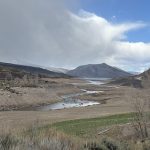
The need for the funds has intensified following a historically low snowpack and a drought affecting the entire state, including large portions of the Western Slope under the most intense drought conditions. The latest projections for the Colorado River estimate that Lake Powell will receive around one-fifth of its normal water from the basin.
Colorado Gov. Jared Polis activated the state’s drought task force in March, which will help coordinate a response to the worsening conditions. Local water providers and municipalities are already introducing restrictions to guard limited water resources this summer.
This has included declarations and drought restrictions across the Western Slope, including those from the Vail-area water district, the city of Steamboat Springs and the Mt. Werner Water and Sanitation District, Grand County and the towns of Basalt, Yampa, Frisco and Kremmling.
“These projects are about resilience. They are about liability. They help stretch limited water supplies. They improve storage and delivery systems and most importantly, they give communities in my district certainty and increasingly uncertain environment,” Hurd said.





Support Local Journalism
Support Local Journalism
Readers around Steamboat and Routt County make the Steamboat Pilot & Today’s work possible. Your financial contribution supports our efforts to deliver quality, locally relevant journalism.
Now more than ever, your support is critical to help us keep our community informed about the evolving coronavirus pandemic and the impact it is having locally. Every contribution, however large or small, will make a difference.
Each donation will be used exclusively for the development and creation of increased news coverage.