Colorado legislature passes bill to loosen restrictions on how counties fund affordable housing
The measure was brought by Sen. Dylan Roberts, a Frisco Democrat who represents ski towns that are on the forefront of the state’s affordable housing crisis

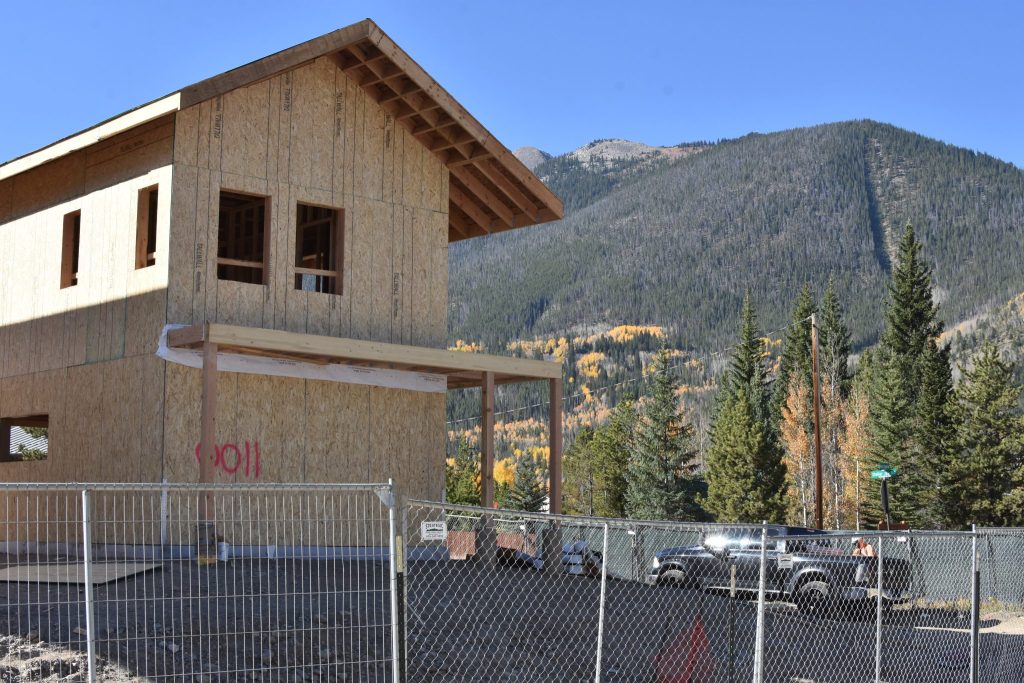
Kit Geary/Summit Daily News archive
A bill to give counties more ways to fund affordable housing cleared the Colorado legislature Wednesday and is on its way to Gov. Jared Polis’ desk.
Senate Bill 1 would allow counties to spend property tax revenue collected in their general fund on affordable housing efforts, and allow counties and municipalities to sell buildings and land they own to fund workforce housing developments, except for parks.
The bill also grants more flexibility for when communities hold local elections to form and fund multijurisdictional housing authorities, and expands eligibility for tax credits that help finance middle-income housing developments.
The measure is sponsored by Sens. Dylan Roberts, D-Frisco, and Jeff Bridges, D-Greenwood Village, as well as Reps. Andrew Boesenecker, D-Fort Collins, and Chris Richardson, R-Elbert County.
Roberts, who represents ski towns with some of the highest housing costs in the state, and where housing needs stretch across a broad income spectrum, said the bill gives communities more options for combating their affordability issues.
“This gives them more tools to have local control over their housing decisions,” he said during debate on the bill in the Senate last month, “and makes sure that they can put more of their community members in housing they can afford so they can continue to live in those communities and make them great places to be.”
SB 1 is supported by an array of local governments and housing groups who say the bill is a common-sense measure that lifts restrictive provisions on how governments finance affordable housing.
While counties, for example, can use voter-approved property tax dollars, often referred to as a mill levy increase, to fund specific initiatives, like housing, they currently don’t have authority from the state to use property tax revenue that goes to their general fund for housing. The general fund is often a county’s largest fund account and typically supports core programs, like public safety and human services, as well as county departments.
“The bill would allow counties to contemplate affordable housing as we do any other kind of infrastructure such as water, sewer and roads,” Summit County Commissioner Tamara Pogue said during the bill’s first hearing in late January. “It gives us the flexibility to weigh all these needs as we prepare our budgets, allowing us to make the most thoughtful and balanced decisions possible on behalf of our communities.”
Pogue added that in mountain communities like hers, the cost of building affordable housing continues to become more expensive. She said the county had a housing project estimated to cost $55 million in December 2024, only for that to jump to more than $80 million in March 2025.
“If counties aren’t given the flexibility to leverage our general funds as we try to fill that gap our efforts will be significantly harder than they already are,” Pogue said.
The bill ultimately passed both legislative chambers with broad bipartisan support, with the Senate voting 28-6 on Wednesday to approve changes made to the bill in the House, where it passed by a vote of 53-10 the day before.
A handful of Republicans opposed the measure, with some saying they had a fundamental disagreement with letting affordable housing be the role of local governments.
“This would be a fine tool for local governments, if that were the proper role of government — to provide housing for the people,” Sen. Mark Baisely, R-Sedalia, said while debating the bill in the Senate last month. “… The way that we should lower the cost of housing would be less and less involvement by the government in our lives, including in our housing.”
Sen. Janice Rich, R-Grand Junction, said she had concerns about proliferating what she called “high-density development” that could lower homeowners’ property values. Rich said homeowners’ property taxes should not be used to pay for government-supported housing.
Roberts said his bill does not place any mandates on local governments when it comes to housing, something that has proven to be a thorny issue in the legislature in recent years. Unlike more controversial measures to usurp local zoning codes, which Republicans staunchly opposed, Roberts said SB 1 preserves local control.
“I thought that’s what my friends on this side of the aisle wanted,” he said.









Support Local Journalism
Support Local Journalism
Readers around Steamboat and Routt County make the Steamboat Pilot & Today’s work possible. Your financial contribution supports our efforts to deliver quality, locally relevant journalism.
Now more than ever, your support is critical to help us keep our community informed about the evolving coronavirus pandemic and the impact it is having locally. Every contribution, however large or small, will make a difference.
Each donation will be used exclusively for the development and creation of increased news coverage.