Colorado lawmakers tackled wolves, luring bears, hunting beavers and wildlife leadership during the 2026 legislative session
A look back at the bills, discussions and footnotes from the 2026 legislative session that will impact Colorado Parks and Wildlife

Colorado Parks and Wildlife/Courtesy Photo
As Colorado lawmakers wrapped up the 2026 legislative session on Wednesday, May 13, they passed bills and had discussions that will impact not only the state’s human residents but also its wildlife.
Among the more than 600 bills that were introduced this year, the Capitol passed several that will impact Colorado Parks and Wildlife, including measures to fund wildlife crossings, enact stricter penalties for luring bears and add staff to manage recreation. Beyond bills, lawmakers also had discussions around wolf funding and the wildlife agency’s commission leadership.
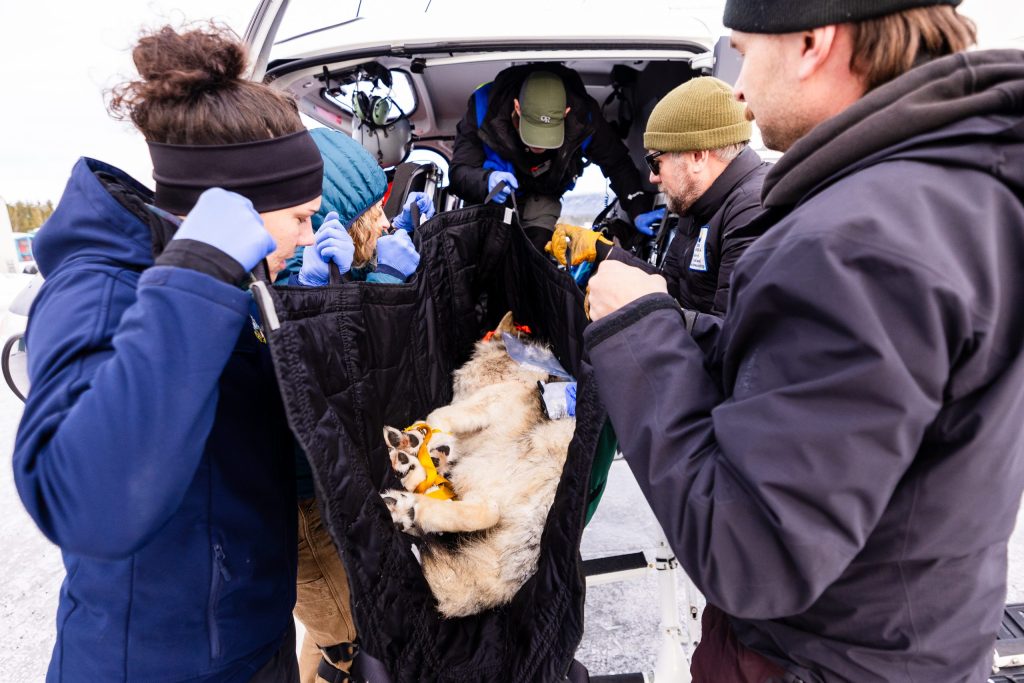
House Bill 1410: Wolf program fully funded — with a caveat
Before lawmakers officially returned for the session, the Joint Budget Committee met in December and began discussing funding for Colorado’s wolf reintroduction program. These conversations continued into the session and throughout the budget process, with lawmakers questioning how Parks and Wildlife was spending taxpayer dollars to relocate new wolves and prevent conflict with livestock as well as why the program has cost significantly more than was originally estimated on the 2020 ballot.
“We are still obviously in very tough budget times, and we don’t believe that in this time of cutting health care for sick children, money for transportation projects across the state (and) difficult times for education funding that the general fund should be used for buying new wolves and transporting them to Colorado,” said Sen. Dylan Roberts, D-Frisco, during an April budget discussion in the Senate.
When Colorado voters mandated the restoration of gray wolves in 2020, the legislature was required to find funding for the effort. Parks and Wildlife receives an annual allocation of $2.1 million from the general fund for wolves and $350,000 annually to a separate fund to compensate ranchers for wolf-related losses.
This year, as the assembly had to make budget cuts to close a $1.5 billion shortfall, potential cuts to the $2.1 million were debated — although none ultimately made the final budget signed into law by Gov. Jared Polis.
“Despite a lot of discussion around wolves at the Capitol, CPW lost no funding for the wolf reintroduction plan through the General Assembly,” said Dan Gibbs, executive director of the Colorado Department of Natural Resources, which oversees Parks and Wildlife.
Roberts and Sen. Marc Catlin, R-Montrose, introduced one of three budget amendments floated this year related to wolves.
While Roberts and Catlin’s amendment to pull some wolf funding was left out of the final budget, a footnote brought by Rep. Ty Winter, R-Trinidad, and Rep. Meghan Lukens, D-Steamboat Springs, made it through. While not legally binding, footnotes are a way for legislators to express their intent in how taxpayer dollars are spent. In this case, it asks that Parks and Wildlife not use any of its general fund allocation to bring new wolves to the state. Instead, the agency could use gifts, grants, donations and non-license revenue from its cash fund.
Senate Bill 141: A new way to fund wildlife crossing infrastructure
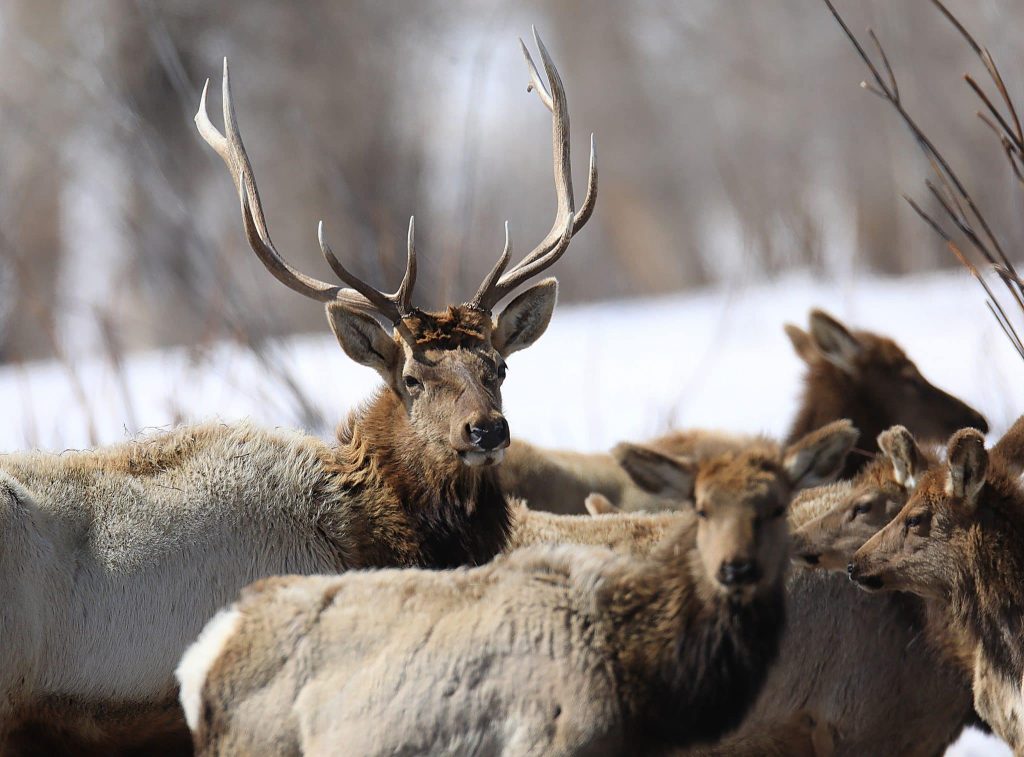
For the second session in a row, funding for wildlife crossings was a priority for High Country lawmakers. In 2025, at least 7,500 animals were killed on Colorado roadways — 68% of which took place on the Western Slope.
Learning from a failed bill last year and drawing on the success of the Keep Colorado Wild Pass, a group of bipartisan Western Slope lawmakers brought a proposal to add an optional $5 fee to Coloradans’ annual vehicle registration.
“There’s a lot of legislation that we work on down at the Capitol, where you are either planning for a result or hoping that a result comes to be when you pass legislation. In this case, we know that this works,” Roberts said. “Statistically, the wildlife crossing infrastructure and wildlife fencing reduce collisions by over 90%. There’s not a lot else in government that fixes a problem almost 90% the moment it’s built.”
Roberts, Senate Minority Leader Cleave Simpson, R-Alamosa, House Speaker Julie McCluskie, D-Dillon, and Rep. Rick Taggart, R-Grand Junction, sponsored the bill.
The bill’s fiscal note estimates it could raise around $1.96 million in its first six months and $3.9 million in the subsequent fiscal years. Seventy-five percent of the fee will go into a Collision Prevention Fund, overseen by the Colorado Department of Transportation, to fund and match federal grants for wildlife crossing infrastructure such as overpasses, underpasses and wildlife fencing in high-risk areas. The other 25% will go into Parks and Wildlife’s Wildlife Cash Fund for wildlife connectivity and wildlife crossing-related conservation efforts.
While the bill had widespread support, it was amended to require public outreach and education materials ahead of the proposed 2028 rollout in order to alleviate county clerks’ concerns about the administrative burden of implementation.
The bill passed both chambers and now awaits the governor’s signature.
House Bill 1008: CPW given more of a role in managing recreation
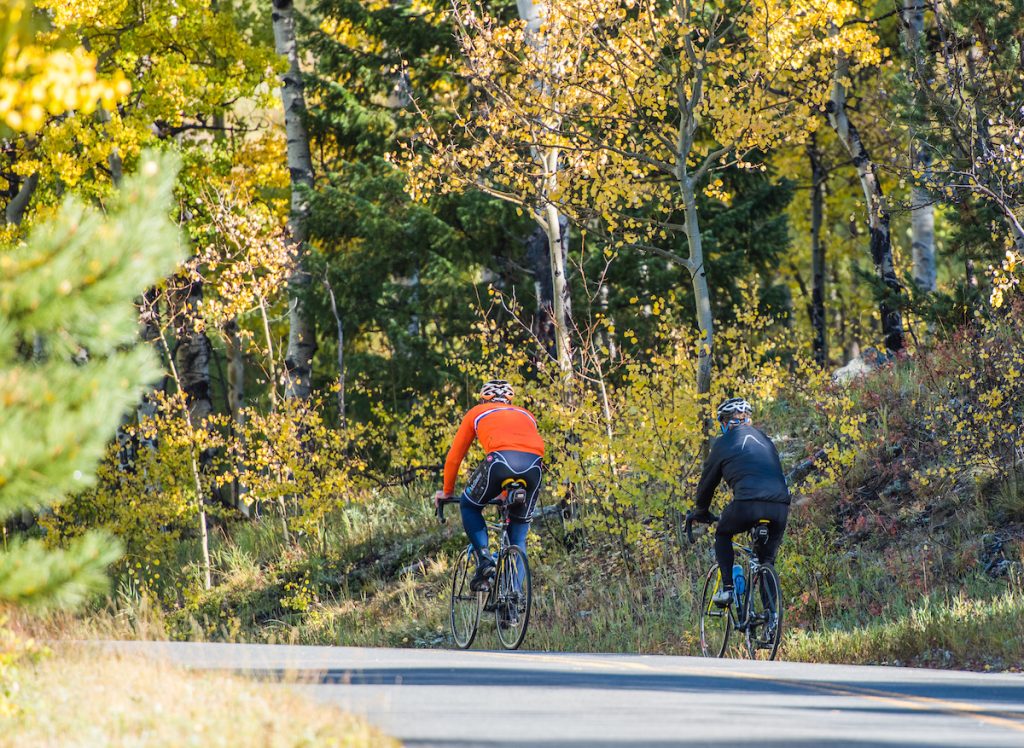
Lawmakers worked with the Colorado Department of Natural Resources to roll out a bill that solidifies Parks and Wildlife’s role in outdoor recreation management. House Bill 1008, also known as the Colorado Outdoor Opportunities Act, represents an initial step toward implementing the Colorado Outdoor Strategy, which was finalized in April 2025.
“This bill ensures that the division has the on-the-ground capacity and expertise to more effectively manage outdoor recreation to help reduce conflict between use and users, integrate recreation planning with wildlife and habitat management and work proactively with communities experiencing recreation pressure,” said Fletcher Jacobs, assistant director of outdoor recreation and lands for Parks and Wildlife, at the bill’s initial committee hearing in February.
Lukens, Taggart, and Sens. Janice Rich, R-Grand Junction, and Janice Marchman, D-Loveland, sponsored the bill.
At the February hearing, the need for Colorado to manage recreation and balance it with conservation and environmental values was widely supported — particularly at a time when the outdoors face growing pressures from population growth, human disturbances, drought, wildfire and more.
According to the fiscal note, implementation will require funds from Parks and Wildlife’s Parks and Recreation Cash Fund of $540,000 in the first year for five new staff positions and around $1.09 million in subsequent years to fund nine total employees. These positions include outdoor recreation managers to coordinate regional planning and development efforts, supervisor roles and data coordination jobs.
The bill passed both chambers and now awaits the governor’s signature.
House Bill 1342: Cracking down on human attractants for bears
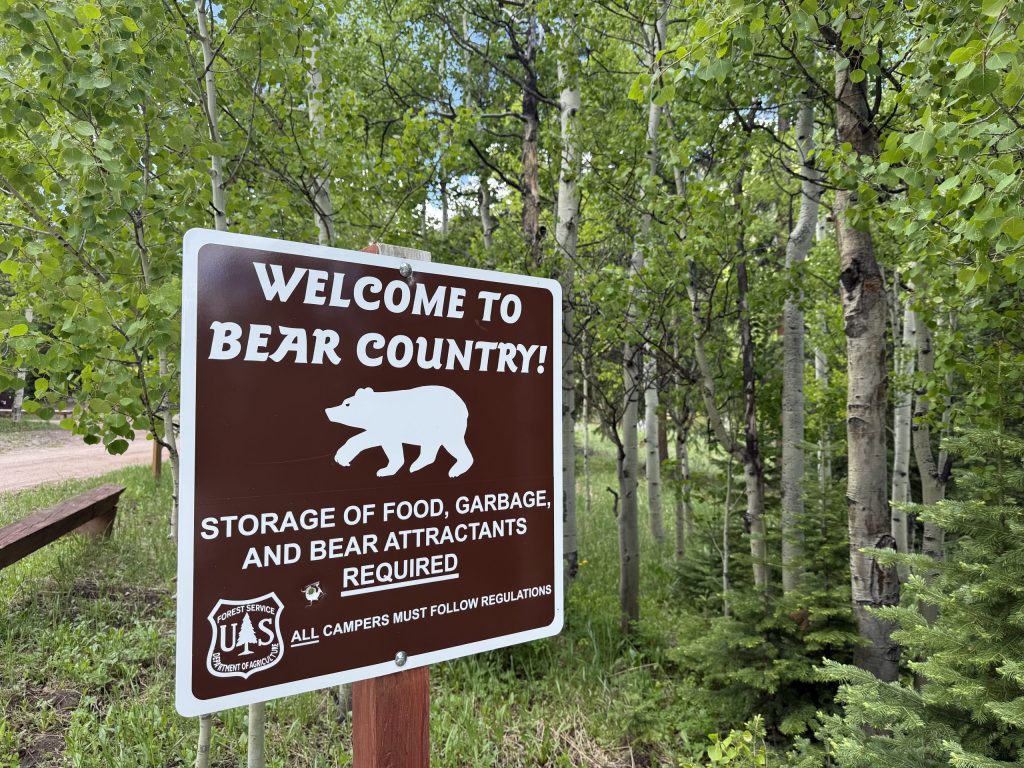
For years, conflict between humans and bears has been on the rise in Colorado — largely driven by human behavior. Coming out of a human-bear conflict working group set up by Parks and Wildlife in 2024, House Bill 1342 tackles one challenging element of the rising conflict: enforcement.
“When a bear becomes habituated to human food sources, typically through unsecured trash or food, relocation or hazing is often no longer an option,” said Frank McGee, the southeast regional manager for Parks and Wildlife, in the bill’s April committee hearing. “To protect human health and safety, officers are often forced into euthanizing the animal. By moving to a negligence standard, officers can intervene the moment the risk is created, shifting the burden of responsibility to human behavior.”
The bill — sponsored by Lukens, Marchman and Rep. Katie Stewart, D-Durango — will lower the standard of evidence required to charge someone for luring black bears, raise the fines for multiple offenders and repeal the requirement that a warning be given under the first offense.
While the original version of the bill proposed shifting the standard from intentional to carelessness as the standard of proof, it was altered based on feedback from district attorneys. Under the final version that passed both chambers, a person can be found guilty for “knowingly placing the food or edible waste in the open in circumstances where there is a reasonable probability of luring a wild bear.”
“We’re not using this bill as a hammer, we’re using it to change behavior,” said Perry Will, a Garfield County Commissioner who spent over 40 years as a wildlife officer, in April. “The goal is not to punish people. It’s to prevent the habits that lead to bear conflicts in the first place.”
The bill awaits the governor’s signature.
House Bill 1323: Idea to ban beaver hunting dies
A four-hour debate over hunting beavers led to one wildlife-related bill being killed in committee. House Bill 1323 — introduced by Reps. Mandy Lindsay, D-Aurora, and Elizabeth Velasco, D-Glenwood Springs, and Sens. Lisa Cutter, D-Evergreen, and Cathy Kipp, D-Fort Collins — would have banned recreational beaver hunting on Colorado public lands.
The ban was touted as a “free” way to bolster Colorado’s wildfire resilience, with beavers providing critical ecosystem benefits in the face of drought, climate change and rising wildfire threats. However, those in opposition argued that the proposal was unnecessary and ran contrary to Parks and Wildlife’s management of beavers, which was cemented in a new strategy last month. Some also claimed the bill’s wildfire justification was a veil for true motivations to completely end hunting.
Senate Bill 165: Annual funding for at-risk wildlife
Each year, lawmakers enact legislation appropriating funds from severance tax revenue to the state’s Conservation Trust Fund. The Colorado Department of Natural Resources submits eligible projects to the legislature annually based on the recommendations of Parks and Wildlife as well as the Colorado Water Conservation Board.
In 2026, Senate Bill 165 appropriated $2.5 million of this revenue to several wildlife conservation projects serving at-risk species. This includes:
- $2.38 million for the Upper Colorado River Endangered Fish Recovery Program and the San Juan River Basin Recovery Implementation Program
- $1.25 million for native terrestrial wildlife conservation
- $1.25 million for native aquatic wildlife conservation
- $60,000 for Rio Grande native fish protection and habitat improvements
- $60,000 for selenium management, research, monitoring, evaluation and control
Senate controversy over CPW commissioner candidates
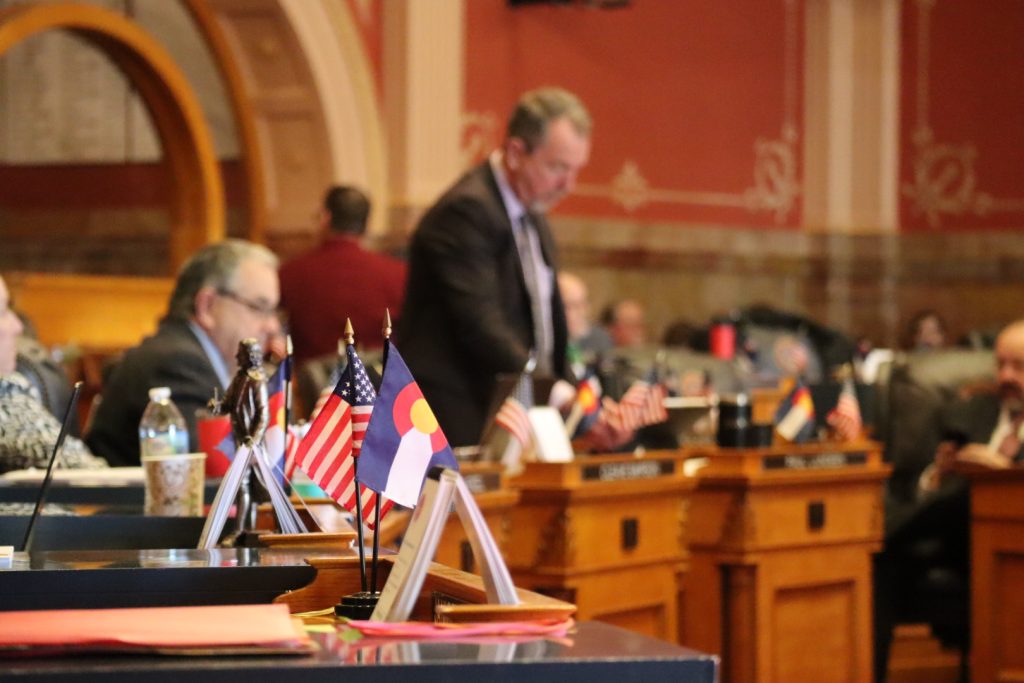
Colorado Parks and Wildlife’s policies and regulations are driven by a 13-person commission. The board’s 11 voting members are nominated by the governor and confirmed by the state Senate. This year, three of Polis’s nominations faced the scrutiny of Senate legislators.
Only one of the nominations made it through: Francis Silva Blayney was unanimously approved by the Senate Agriculture and Natural Resources Committee and by the full Senate. Silva Blayney, who co-owns a fly-fishing outfitter in Colorado Springs with her daughter, was appointed to serve as a sportsperson and outfitter representative on the commission.
The other two nominations — John Emerick and Chris Sichko — were rejected by the committee and withdrew from the process before the full Senate vote. Emerick and Sichko faced pushback from members of the sportspersons and agriculture communities, who argued it would skew the board toward anti-hunting, extreme wildlife beliefs.
Addressing the commission in May, Gibbs said the governor would soon start the process of interviewing and appointing new nominees for the at-large and sportsperson seats that Emerick and Sichko had been nominated for. The governor will also appoint someone to fill the production and agriculture representative seat held by Eden Vardy, who served the last meeting of his term in May.





Support Local Journalism
Support Local Journalism
Readers around Steamboat and Routt County make the Steamboat Pilot & Today’s work possible. Your financial contribution supports our efforts to deliver quality, locally relevant journalism.
Now more than ever, your support is critical to help us keep our community informed about the evolving coronavirus pandemic and the impact it is having locally. Every contribution, however large or small, will make a difference.
Each donation will be used exclusively for the development and creation of increased news coverage.