Colorado governor, western leaders eye multistate plan to boost geothermal energy production
Effort comes after Colorado legislature passes bill to deregulate and incentivize geothermal energy

Robert Tann/Steamboat Pilot & Today
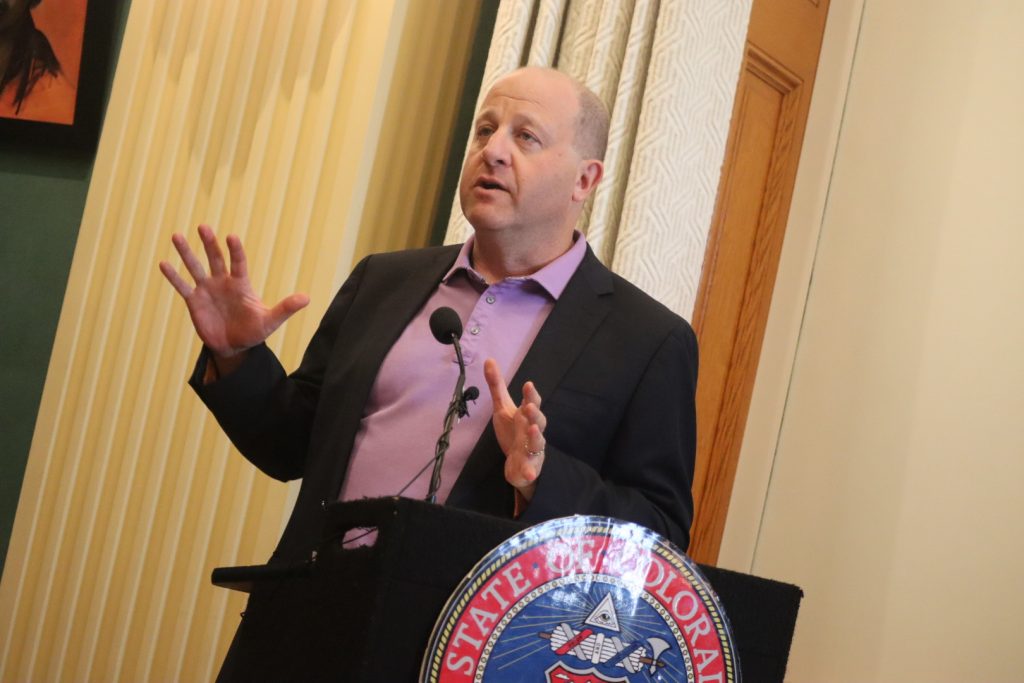
Gov. Jared Polis said Colorado plans to be part of a multistate effort to boost geothermal energy production in the West.
Polis joined Utah Gov. Spencer Cox on Wednesday, May 20, to unveil the partnership between Colorado, Utah, Arizona and New Mexico. Speaking virtually at the event, which was held in downtown Salt Lake City, Polis said greater investment in geothermal energy will “save people money on energy bills; provide reliable, 24/7 energy; create jobs in both tech and on-site; (and) protect clean air.”
“Ninety-five percent of America’s capacity for geothermal is located in the western states, and it’s underutilized,” Polis said. “It’s there, and it’s ready, and we want to pursue it.”
Cox said the focus of the initiative will be on building a geothermal energy workforce and attracting investment.
“If you bring Colorado on board and Arizona on board and New Mexico and all of these companies … now we’ve got something big that’s going to attract a lot of attention and can help us move much more quickly,” Cox said.
Cox also hopes that the group can serve as a conduit between the federal government and local projects when it comes to issues like permitting. Much of the land in the West is federally owned, meaning states that want to unlock more geothermal projects will likely need buy-in from the federal government. In Colorado, the federal government owns over a third of the state’s land.
A multistate alliance, through its delegates in Congress, will help bolster support in Washington for geothermal projects, Cox said.
Geothermal projects grow across western Colorado
Geothermal energy is derived from heat energy that comes from the Earth’s core and is pulled to the surface. A 2024 report by the Colorado Energy and Carbon Management Commission identified three broad uses for geothermal energy.
This includes direct use that does not require energy conversion, such as hot springs, hot water and space heating. Other uses are geothermal power production, which is generated by converting thermal energy into electricity, and geoexchange, which includes using underground pipes to tap into the Earth’s thermal energy to heat and cool structures above the surface.
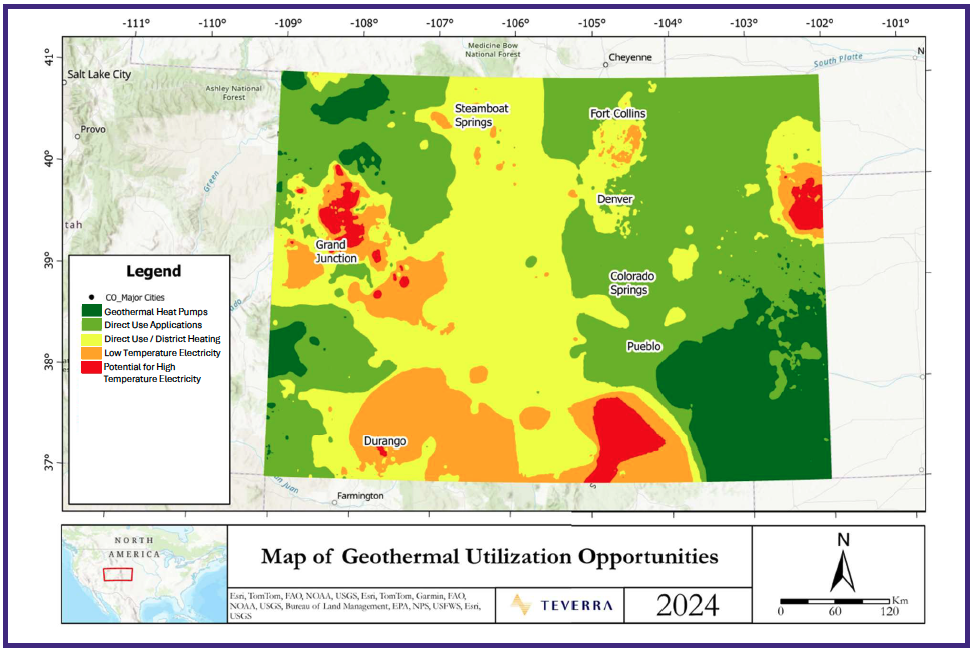
Colorado has invested millions of dollars in recent years in geothermal projects — many of which are concentrated across the Western Slope — through a combination of state grant and tax credit programs.
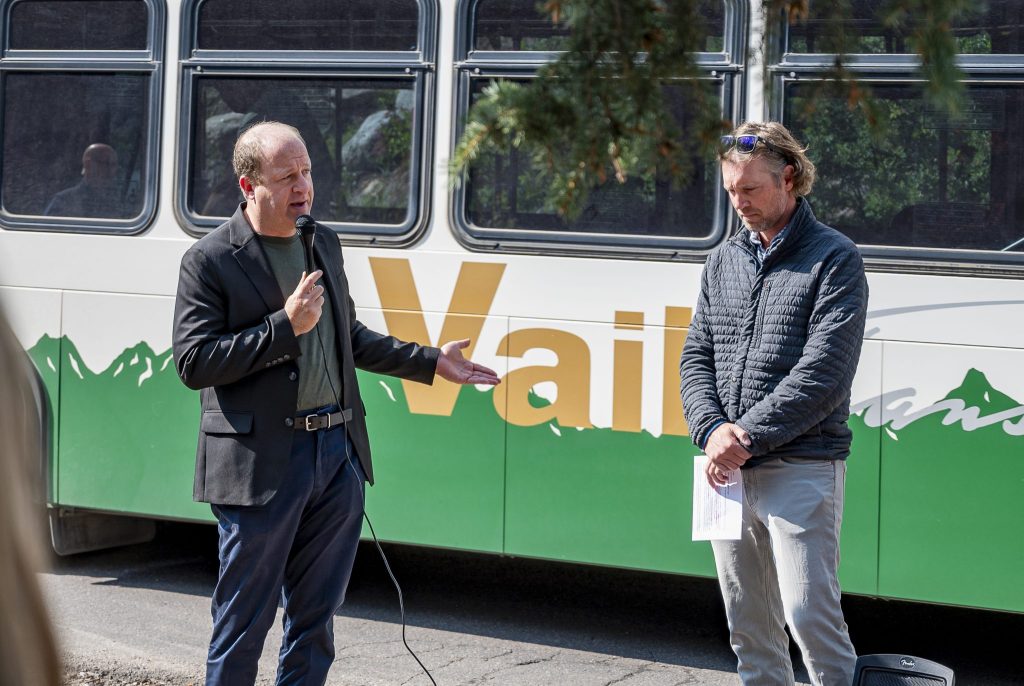
The Aspen School District in April secured $5 million to install thermal energy infrastructure designed to heat and cool several buildings, while the town of Vail received close to $2 million in February to build out a geothermal network using sites like the public library. Other recent state funding has gone to the town of Hayden, which netted nearly $1 million to help install ground-source heat pumps across various sites, and $30,000 to help the Memorial Hospital in Craig study geothermal energy for its facilities.
As Colorado pushes more communities to wean off fossil fuels as part of its goal to reach 100% net-zero greenhouse gas emissions by 2050, some local leaders have looked to geothermal as a key part of their energy portfolio.
Vail town leaders hope investments in geothermal infrastructure will help reduce town-wide emissions by more than 10,000 metric tons annually, while officials in Hayden have floated geothermal energy as a replacement for coal to keep Hayden Station, a coal plant set for retirement, running.
Michael O’Connor, director for the newly-formed multistate group, dubbed the Mountain West Geothermal Consortium, said untapped geothermal energy could provide over 200 gigawatts of “affordable, baseload power” in western Rockies states, based on the findings of a U.S. Department of Energy study.
That represents over a quarter of current peak energy demand for the entire lower 48 states in the U.S., which is around 760 gigawatts, or 760,000 megawatts.
“It’s not a commitment of any sort, but it’s the size of the prize,” O’Connor said during Wednesday’s event in Salt Lake City.
Bill passed to incentivize more geothermal development
The multistate alliance comes on the heels of legislative action in Colorado to incentivize more geothermal energy production.
Senate Bill 142, which passed during this year’s legislative session, would require investor-owned utility providers to include geothermal energy as part of their overall energy resource plan, which they submit to the Colorado Public Utilities Commission every few years. Utilities would have to solicit proposals to develop small-scale geothermal projects of up to 25 megawatts of net capacity, and large-scale projects with more than 25 megawatts of capacity.
Current law requires local governments that build or acquire gas or electric energy systems to first get voter approval. The bill passed by lawmakers removes the need for voter approval for geothermal heating and cooling systems. It would also allow local governments to issue bonds to help pay for thermal energy infrastructure.
Another provision of the bill allows industrial or commercial facilities that recover thermal energy as a by-product of their operations to sell that energy, which would not be subject to regulation by the Public Utilities Commission.
“Geothermal has been around for a long time, but it’s an area that is now receiving a lot of attention,” said Sen. Matt Ball, a Denver Democrat and one of the bill’s lead sponsors, during the legislation’s first committee hearing in April.
Ball said Colorado is well-positioned to be a leader in geothermal energy. Much of the energy production requires digging wells, jobs that can be filled from the state’s oil and gas industry. Colorado also ranks as one of the top states geologically for natural geothermal resources, like hot springs.
“It’s really an industry and a space that has a ton of promise, and it’s one that I think we as a state should really be leaning into,” Ball said.
The bill passed the Senate and House with broad bipartisan support and has been sent to Polis to be signed into law.





Support Local Journalism
Support Local Journalism
Readers around Steamboat and Routt County make the Steamboat Pilot & Today’s work possible. Your financial contribution supports our efforts to deliver quality, locally relevant journalism.
Now more than ever, your support is critical to help us keep our community informed about the evolving coronavirus pandemic and the impact it is having locally. Every contribution, however large or small, will make a difference.
Each donation will be used exclusively for the development and creation of increased news coverage.