Colorado Parks and Wildlife kills 2 wolves from Copper Creek, Three Creek packs following livestock attacks
It’s the fourth lethal removal the agency has completed this summer

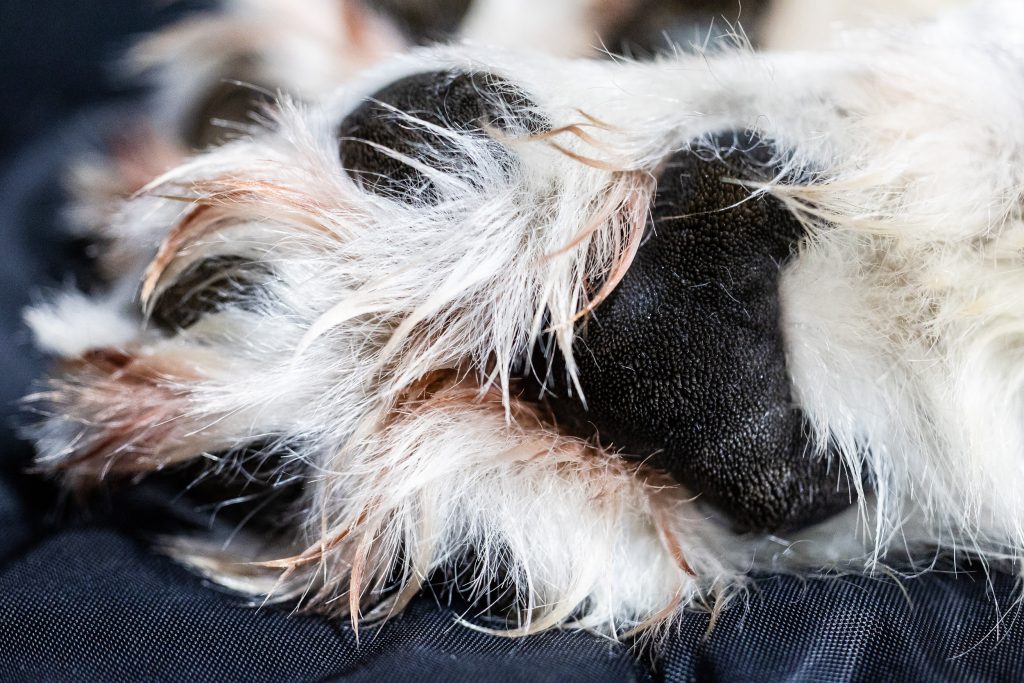
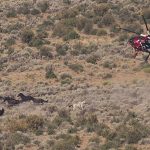
Colorado Parks and Wildlife/Courtesy Photo
Colorado Parks and Wildlife killed two yearlings from two separate wolf packs on Monday, Sept. 8, after the animals’ were tied to repeated livestock attacks near their respective territories.
The state wildlife agency killed one male yearling from the Copper Creek Pack in Pitkin County. According to Parks and Wildlife’s news release Tuesday, the pack was tied to four confirmed attacks on cattle in the county on July 29, Aug. 14, Aug. 28 and Sept. 4.
It also killed a male yearling from the Three Creeks Pack in Rio Blanco County after the pack was tied to four confirmed attacks on sheep, involving 13 lambs and two ewes. The confirmed livestock attacks occurred on Aug. 21, Aug. 29, Aug. 31 and Sept. 6 in the county.
This marks the state’s fourth lethal removal of a gray wolf due to conflict between the predators and livestock this summer, and the fifth since Colorado Parks and Wildlife began the reintroduction effort in December 2023.
Parks and Wildlife killed a yearling from the One Ear Pack in Grand County on Aug. 4. That pack had been tied to four attacks on calves between June 29 and Aug. 1 in Jackson and Grand counties.
Previously, the agency killed a yearling from the Copper Creek Pack in May 2025 in Pitkin County as well as an uncollared wolf from the same litter in June 2026 that had been separated from the pack and was tied to at least 22 sheep attacks during an 11-month period.
Confirmed attacks on livestock by wolves have ramped up this summer as Colorado’s wolf population grows.
“Increased wolf movement in the summertime, in combination with livestock distribution across open allotments, can lead to increased encounters with wolves, and it has,” said Colorado Parks and Wildlife Director Laura Clellan at the agency’s Sept. 2 commission meeting. “These remote open allotments cover tens of thousands of acres and commonly include rough terrain that’s hard to access and traverse. Some of the most effective tools during this time of year are range riders and game cameras that support continuous monitoring and adaptive responses. This is where CPW’s efforts are focused at this time.”
Between Jan. 24 and April 23, the agency confirmed four wolf attacks on livestock. Since June 10, the agency has confirmed 22 attacks — nine in July, eight in August and two in September as of Sept. 8 — in Grand, Pitkin, Rio Blanco, Moffat, Eagle, Routt and Jackson counties.
The authority to kill wolves in Colorado, despite their federally protected status, is granted by its special 10(j) rule with the U.S. Fish and Wildlife Service.
Parks and Wildlife’s decision to euthanize a chronically depredating wolf — defined as three or more depredation events in 30 days — is also guided by an agency management directive. If the definition is met, impacted producers have utilized appropriate nonlethal deterrence methods, and lethal removal is likely to change pack behavior, the agency can kill the responsible animal or animals.
In a Tuesday press release, Parks and Wildlife reported that the attacks in Rio Blanco and Pitkin counties that led to the separate euthanizations “occurred despite producers pursuing non-lethal conflict minimization efforts,” including the use of increased monitoring, active human presence including using range riders and hazing.
Parks and Wildlife reported that its 15 range riders have ridden more than 20,000 miles since May, providing more than 6,000 hours of coverage to producers.
The goal in killing a member of a wolf pack that is repeatedly attacking livestock is to change the group’s behavior — discouraging them from attacking livestock and encouraging them to hunt their natural prey instead.
Parks and Wildlife said in the release that following the Monday euthanizations that it “will now be evaluating whether the removal effort has achieved the agency’s goal of changing the behavior of these packs.”
The state wildlife agency added that it will continue to work with producers to find ways to mitigate conflict between livestock and wolves in northwest Colorado.
The Copper Creek and Three Creek wolf packs are two of four breeding packs in Colorado. The King Mountain Pack has no reproducing adults — after one was killed in a collaring operation and one reportedly by a ranch hand this spring — the four yearlings born to the pack in 2025 were still traveling as a group on the same territory in Routt County, according to Parks and Wildlife.





Support Local Journalism
Support Local Journalism
Readers around Steamboat and Routt County make the Steamboat Pilot & Today’s work possible. Your financial contribution supports our efforts to deliver quality, locally relevant journalism.
Now more than ever, your support is critical to help us keep our community informed about the evolving coronavirus pandemic and the impact it is having locally. Every contribution, however large or small, will make a difference.
Each donation will be used exclusively for the development and creation of increased news coverage.