How is drought impacting Western Slope communities, industries?
Inside Colorado’s Water Conservation Board’s 2026 drought tour as the state faces down a statewide drought emergency


Ali Longwell/Steamboat Pilot & Today
Simply defined, drought is a lack of precipitation that leads to a water shortage. However, defining the human-level impacts of these conditions on communities, ranchers and residents — particularly as Colorado faces historic conditions — is more complex.
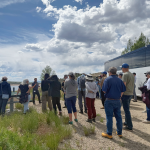
Colorado’s Water Conservation Board drove a busload of state and local electeds, water providers and experts across Grand County on Tuesday, June 2, to show just how drought was seeping into one county in Colorado. Driving from Winter Park Resort to Williams Fork Reservoir, the bus made stops along the Fraser and Colorado rivers, Rocky Mountain National Park and more to hear from the individuals dealing first-hand with the ripple effects of Colorado’s historic drought.
“Drought is stressful,” said Kate Greenberg, Colorado’s commissioner of agriculture, on a stop at Kemp Breeze State Wildlife Area near Parshall. “I think all of us here get it, right? We’re all working on it on the front line in some way or another. Farmers and ranchers are living it in a very personal way. It’s stressful on crops. It’s stressful on animals. And it’s stressful on people and relationships.”
After a historically low snowpack, record-hot winter and early spring melt-off, Colorado officially declared a statewide drought emergency on June 4. With 100% of the state experiencing some level of drought, the state’s rural communities on the Western Slope are feeling the human impacts — from rising needs for mental health services and food relief to industry challenges for agriculture and recreation.
Low snowpack stresses mountain workforce
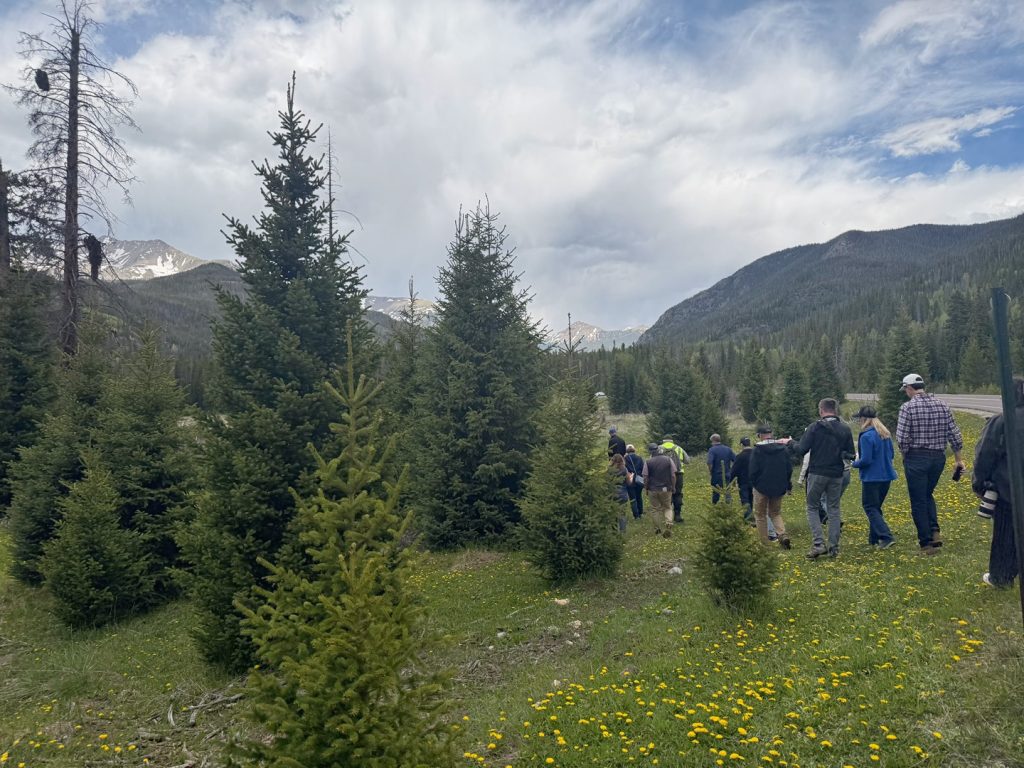
When snow does or doesn’t fall, Colorado’s rural mountain resort communities are among the first to feel the impacts.
“Our mountain communities are certainly resilient, but our economy remains highly dependent on healthy winters and forests,” said Nick Kutrumbos, mayor of Winter Park, as Tuesday’s tour kicked off at The Vintage Hotel at the base of Winter Park Resort.
Doug Laraby, the resort’s planning director, shared that Winter Park’s skier visits were down 29%, primarily attributed to a drop in the Front Range skiers, who typically come up for a day, chasing powder and snowstorms.
“They showed up, but they didn’t quite show up like they used to,” Laraby said, adding that. ” Visitors who come up with plans for the holidays, Christmas and spring break still showed up.”
This drop in skier visits was experienced across Colorado. Colorado Ski Country USA’s annual report estimated that visits dropped 3.3 million from last season, hitting the state’s lowest numbers since the winter of 1991-92.
In town, Kutrumbos reported a drop in sales tax revenue. Winter Park, he said, has seen 10% growth in revenue every year for the past 10-12 years, except for 2020 during the COVID pandemic.
“Year to date, we’re about 10% down,” he said. “In April, we experienced roughly a 37% decrease in sales tax collections.”
While Laraby said Winter Park Resort’s association with Alterra Mountain Co. — which was bolstered by resorts across the country that had good winters — allows the resort to “survive things like this,” he added that “the real big hit to us is our seasonal employees.”
Laraby said that this winter saw hours being cut or shifts eliminated for ski patrol, lift operators and others who rely on those paychecks.
Kutrumbos detailed that the economic headwinds of a slow snow year have extended “beyond businesses and into household finances here locally.”
He shared that Mountain Family Center, a Grand County nonprofit, has seen a 14% increase in hunger relief requests, a 27% increase in food distribution requests through its community and school programming and a 24% increase in housing assistance requests through May. He also reported an increased demand for mental health services, child care tuition assistance and utility assistance requests across the county.
“One low year is manageable, but multiple low snow years, particularly combined with wildfire risk, could fundamentally change the economic outlook for our community,” Kutrumbos said. “The warning signs we’re seeing today suggest that continued drought would not simply affect recreation; it would affect family stability, housing, food security, etc. We can weather the storm for one season, but back-to-back seasons could disrupt our local economy.”
‘Scraping through’ the summer
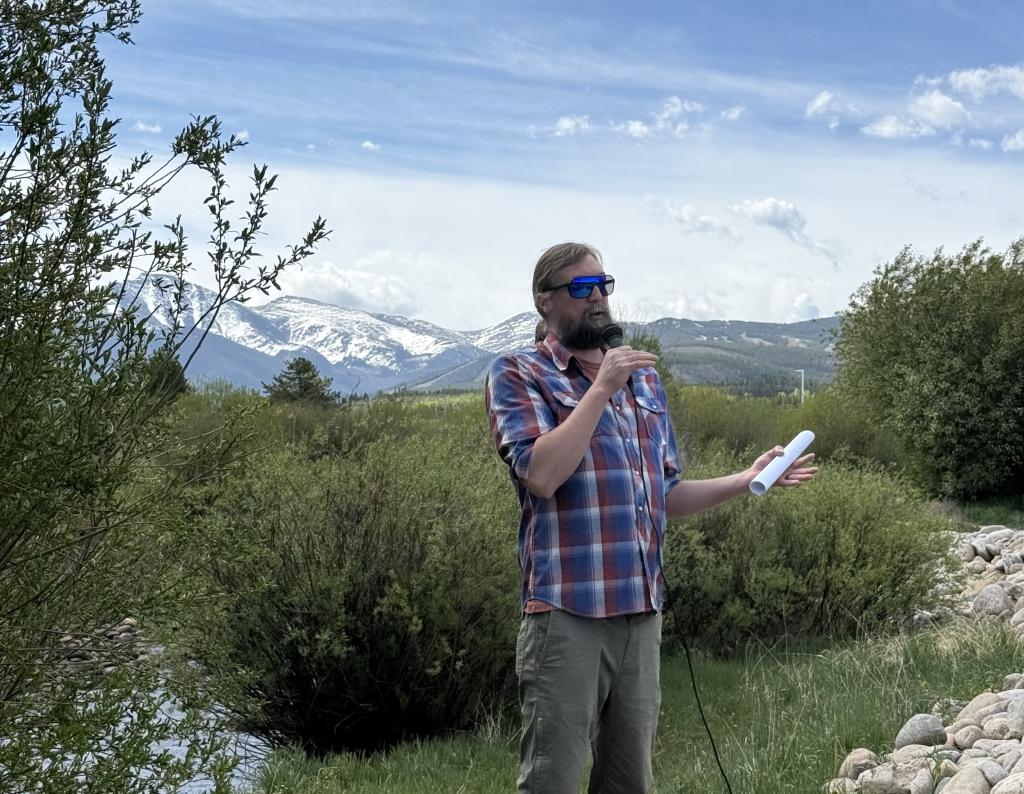
These recreation impacts and economic challenges are expected to persist as summer kicks off — a season that typically brings around half a million people to Colorado to raft, according to a 2024 report from the Colorado River Outfitters Association. The report estimates that commercial rafting directly contributes $90 million in revenue to the state and over $200 million in economic impact.
“One season leads to the next,” said Ryan Snodgrass, co-founder of Downstream Adventures, a whitewater and adventure guiding service. “People have had a tough season in the ski industry; a lot of those workers come and work for us in the summertime, and now they’re in another tough situation. So we’re doing the best we can, but there’s just problems that are hard to overcome.”
Snodgrass said the industry was facing “dire straits as far as the water that’s available to us,” adding that drought and low streamflows mean outfitters see fewer qualified job applicants from out of state, conditions that make it harder to train new guides, less visitors, and, most critically, a shorter season.
“The biggest problem for us is the duration of the season,” he said. “We’re doing OK right now; the water is low, but we are rafting … What this drought’s going to do is basically take away our best part of the season as far as a business goes and making an income.”
Typically, Colorado’s outfitters make the majority of their revenue from the end of June to the end of August, or “high season,” Snodgrass said. But with streamflows peaking earlier — and at much lower flows — this season will be impacted. Snodgrass gave the example of the Fraser River through Winter Park, which he stood next to as he spoke.
“This is a very popular recreational run. Nobody is going to run that this year,” he said. “At this time, it should be seeing between 600 and 800 — maybe more, maybe less — (cubic feet per second) of flow. This morning, it’s at 36.”
“We are literally going to scrape through — metaphorically also — until next year,” he said.
Ranchers are adapting day by day
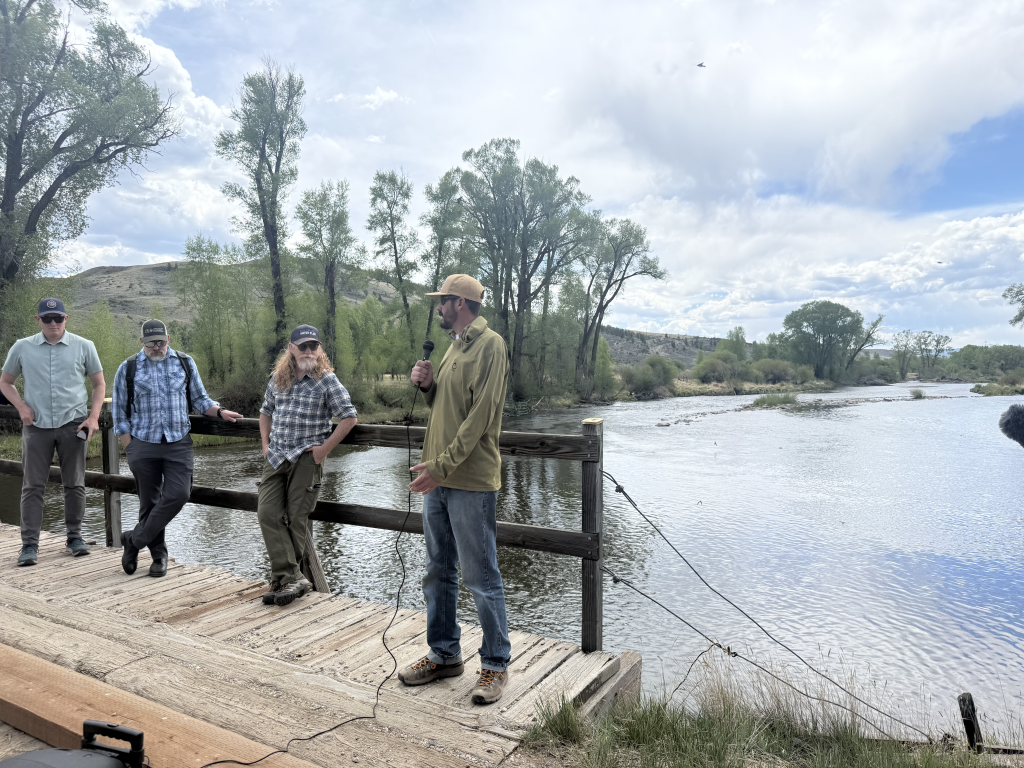
Colorado’s outdoor recreation industry is not the only economic driver grappling with the consequences of drought.
“We really need the entire state, the entire West, really, to step up right now and understand the situation on the ground,” said Doug Bruchez, whose family owns and operates a cattle ranch on the mainstem of the Colorado River in Grand County. “We are seeing historic things happen on the agricultural side.”
Bruchez added that while the mainstem has been “pretty good this year” — owing to partnership and collaboration — “things get a lot more iffy” in tributaries.
“These smaller streams, the water’s just physically not there,” he said. “So when you go up and you’re seeing these hayfields that have historically produced, they are not producing. We are not getting the yields, the forage for our livestock. It’s just not there.”
For example, the Williams Fork River was flowing at around 69 cubic feet per second on Tuesday when it normally should flow between 400 and 700 cfs this time of year, Bruchez said. This year, Bruchez said their ranch was going to irrigate around 20% of its historic hay meadows, managing for water efficiency.
“How do you work with those kinds of numbers?” he said. “As you get water to the most efficient places possible, work with your neighbors, and find out how everybody can feed their livestock and not go out of business this year, and that’s what we are doing on the Williams Fork.”
The partnership and collaboration helping producers today is a product of prior experiences with drought, Bruchez said.
“In 2002, there was not much collaboration. There was not much partnership. Nobody was really talking to each other. And there are so many efficiencies that can happen within a river system based on partnership,” he said.
That experience with the 2002 drought — the most severe in state history — led the Bruchez family to seek out partnerships and programs that would build resiliency in years like this. This included projects to restore and improve irrigation and agricultural infrastructure, research to understand the water needs of high-elevation perennial crops, experiments with drought-tolerant forage like sainfoin and more.
“We know that the work that has been done to date on soil health, on relationships, on partnerships, on community, on melding conservation and production, on expanding market access — that’s what’s paying off in hard years,” Agriculture Commissioner Greenberg said, adding that on the other hand, “there are folks who are reacting on the day-to-day, hour-to-hour right now.”
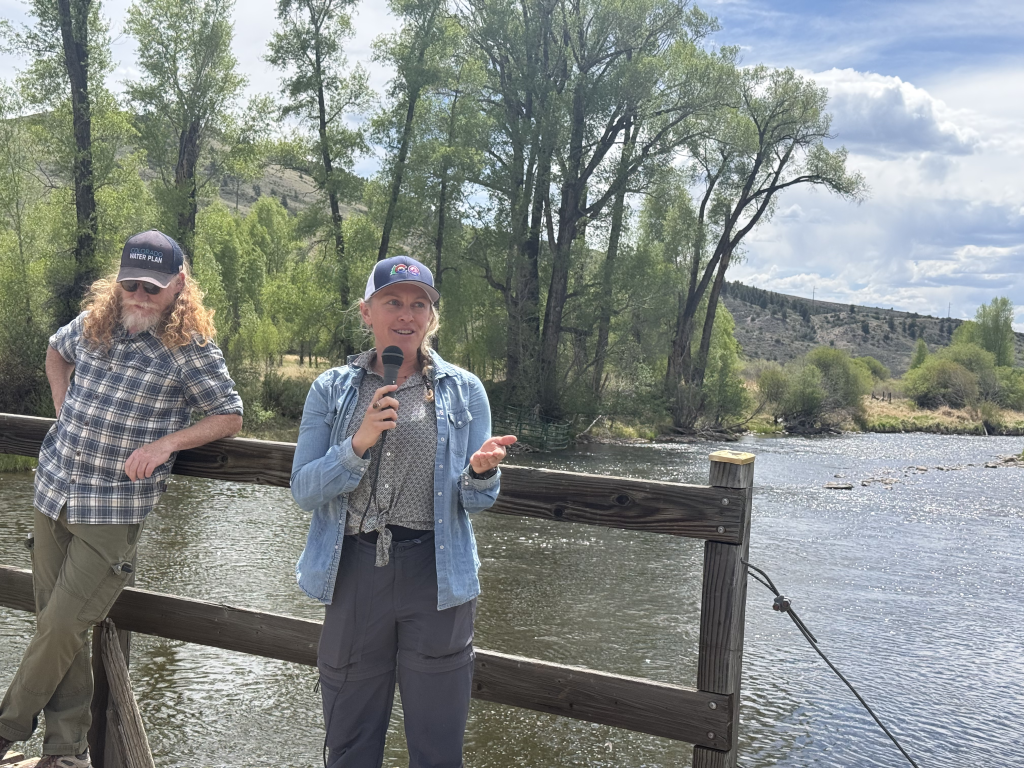
Evanne Caviness, Colorado Department of Agriculture’s director of conservation services who also owns a cow-calf operation in Bayfield, said she has “not talked to a single producer who is not either selling or on the fence about selling a significant portion of their herd,” owing to drought as well as hay production and diesel costs.
“Considering that the cattle economy contributes $5 to $7 billion a year annually to Colorado, this is something we should all be a little shocked to hear,” she said. “We’re talking herd reductions of up to a third from these individual producers. That’s going to be a real structural shift.”
Caviness said that the Ute Mountain Ute Farm & Ranch — a tribe-owned operation with 7,700 irrigated acres and 700 heads of cattle — is receiving 10% of their water allocation this year, meaning they will have to forgo planting 90% of their fields.
“How would your household feel, how would you weather the storm if 90% of your salary was cut in a year and you have to respond in that year?” she said.
In the Uncompahgre River basin, water users are likely to see only 50% of their water allocation this year, said Lindsay DeFrates, deputy director of communications at the Colorado River District.
“The decisions being made there in agriculture at this moment in real time are very, very difficult,” she said. “… especially on small family farms and ranches, groups that have stewarded their land for multiple generations.”
Caviness reported that the Colorado Department of Agriculture has seen significant demand for its conservation programs — including soil health, its climate resilience grant and its stewardship tax credit — and that ranchers are ready and willing to do this work.
“As a state, we have to continue to invest in these areas if we want to continue to have an ag economy and a soul of agriculture that really makes us special,” Caviness added.
Colorado cannot “take our foot off the gas pedal because things feel hard,” Greenberg said. ” … We also need to find the margin to be proactive and continue investing now for years ahead that are probably going to be harder than this year.”







Support Local Journalism
Support Local Journalism
Readers around Steamboat and Routt County make the Steamboat Pilot & Today’s work possible. Your financial contribution supports our efforts to deliver quality, locally relevant journalism.
Now more than ever, your support is critical to help us keep our community informed about the evolving coronavirus pandemic and the impact it is having locally. Every contribution, however large or small, will make a difference.
Each donation will be used exclusively for the development and creation of increased news coverage.