‘Not great’ but ‘OK’: How a dry winter is impacting hay season in the Yampa Valley

Elainna Hemming Follow
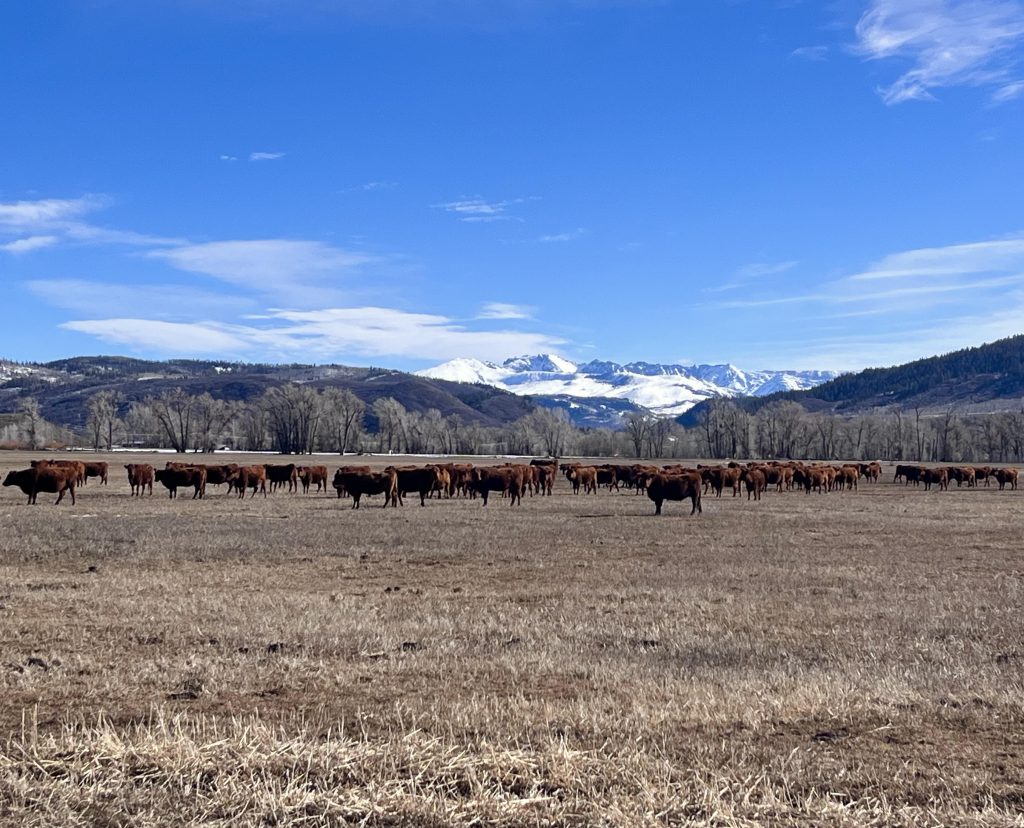
Jay Fetcher/Courtesy photo
Ranchers are constantly adjusting to changing weather conditions and seasonal variations by nature. Jay Fetcher, of Fetcher Ranch in North Routt County, has documented snow melt dates for his hay meadows for each of the 75 years the ranch has been in the family, and said the variation is “incredible.”
A year with low snowpack and a warm spring is just another condition to adjust to in the ranching world. This year, dryland hay broke dormancy early in Routt County, meaning cutting has already started, about two or three weeks earlier than usual. The low snowpack is not only generating concerns for ranchers with irrigated hay but water concerns for those with livestock.
Despite these problems, the general consensus was that this year is expected to be below average, but not detrimental.
“People with dry land probably can expect some reduced yields, but I will say that the rains we’ve gotten over the last couple weeks have brought on grasses in dry land and pasture situation areas better than I would have anticipated,” said Todd Hagenbuch, the county director and agriculture agent for the Colorado State University Routt County Extension.
CJ Mucklow, who previously held Hagenbuch’s position, explained that typical hay yields for dryland is about a ton to the acre; for irrigated hay, it’s about two tons to the acre. Mucklow expected both of these numbers to be much lower this year.
“It’s not great, but it’s OK,” said Mucklow. Both Mucklow and Hagenbuch pointed to the low snowpack impacting irrigated hay the most, as the runoff is often relied on by ranchers to fill their ditches, creeks and streams that flow through their property.
However, irrigated hay production is also impacted by water rights. Jay Fetcher’s father purchased his ranch in 1949 when he was just two years old, meaning their water right along the Elk River is “pretty good,” according to Fetcher. Fetcher only grows native hay through irrigation and does not produce any dryland crops.
He noted that while it is a dry year, he was confident in the consistency of the environment to grow his hay to a decent yield. “I’m very grateful for this place, mainly because of how kind of stable the environment is from a ranching standpoint. We always get snow, and we always have green grass, so it’s kind of more easy to manage,” said Fetcher.
What matters in your community, delivered daily.
Sign up at SteamboatPilot.com/newsletters
Mucklow said that the water delivery system in South Routt is more complex than that of North Routt, as well as much fewer ditches in North Routt.
The second big concern from the lack of snowpack was water for cattle and other livestock. According to Hagenbuch, the snow runoff fills ponds and streams that the animals drink out of, but this year there’s simply no water in a lot of them. For ranchers whose ponds and streams are not filled, they have to haul water in for the livestock.
“That’s the big issue is adequate water for livestock, and it will be all summer,” said Mucklow. Mucklow is currently not needing to haul water on his ranch, but he personally knows several ranchers who are in that position.
Mucklow also said that there is a federal drought program conducted by the U.S Department of Agriculture that compensates ranchers who have to haul water.
Having drinking water for his cattle was also a primary concern for Fetcher earlier in the season. “It was on my mind as we had no snowpack, and the snow was gone,” said Fetcher. On his ranch, they rely on the streams and springs for the cows in the pastures. Fetcher said the recent rains gave him a significant amount of moisture that eased his worries considerably.
Across Routt, however, ranchers will undoubtedly be affected by this. “If you’ve already got the pastures you can use are lower in grass, and there are additional pastures you can’t use because there’s no water, that compounds the situation for livestock producers,” said Hagenbuch.
Overall, Mucklow said the only factor he can be certain about is the early dryland hay being “okay”, or middle-of-the-road in terms of yield. He said it will be “lower,” but not “catastrophic.” Mucklow said the early maturation of the dryland hay is a sign of a “very challenging” year coupled with dry conditions.
“Our agriculture producers are pretty resilient and they’re smart,” said Hagenbuch, explaining that most have a drought plan either formalized or constantly going through their mind. “Because we just don’t know what year drought is going to hit, but especially the last 25 years, they’ve been experiencing it more regularly, and so I think they’re having to make some tough decisions, but I think they’re making educated decisions,” he continued.





Support Local Journalism
Support Local Journalism
Readers around Steamboat and Routt County make the Steamboat Pilot & Today’s work possible. Your financial contribution supports our efforts to deliver quality, locally relevant journalism.
Now more than ever, your support is critical to help us keep our community informed about the evolving coronavirus pandemic and the impact it is having locally. Every contribution, however large or small, will make a difference.
Each donation will be used exclusively for the development and creation of increased news coverage.