Roberts, Lukens recap 2026 legislative session for Steamboat Springs City Council
State lawmakers highlight budget shortfall, housing policy changes, ongoing debate over affordability

Robert Tann/Summit Daily News
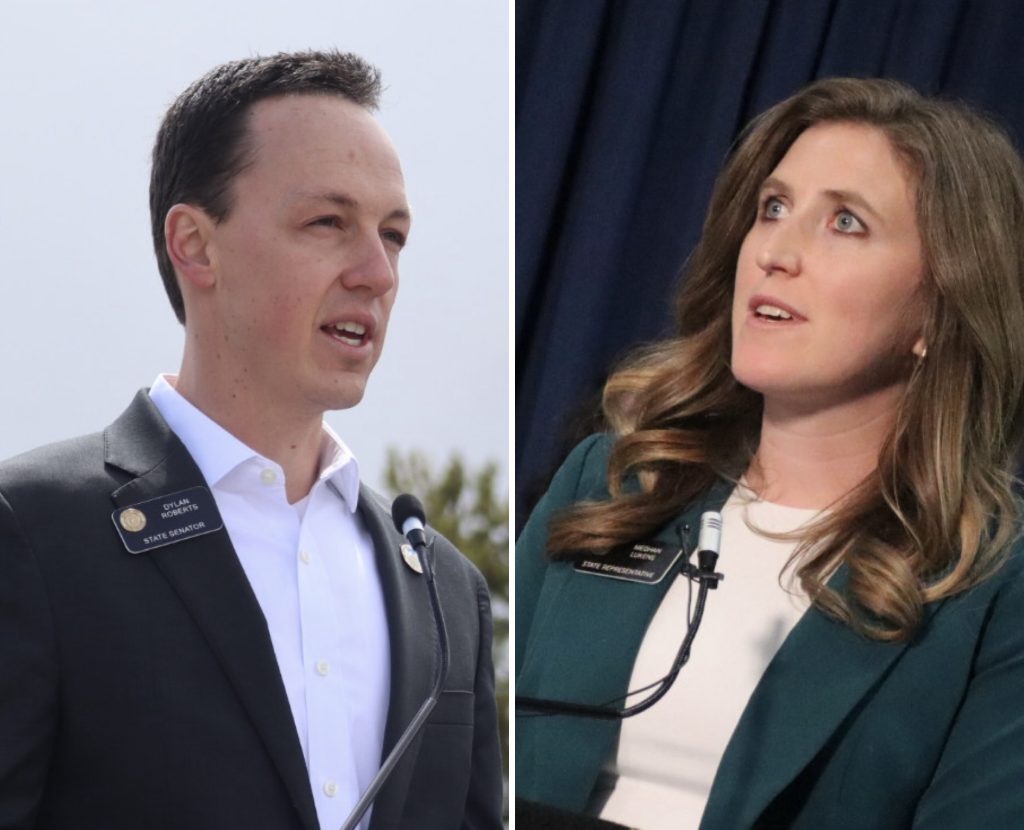
Sen. Dylan Roberts and Rep. Meghan Lukens delivered a wide-ranging recap of the 2026 legislative session to Steamboat Springs City Council last week, highlighting budget constraints, housing reforms and ongoing tensions between local control and statewide policy.
The state lawmakers told council members on June 16 that the session was dominated by a $1.2 billion budget shortfall, forcing officials to make tough cuts while preserving key priorities like K-12 education.
“We walked into the session facing a requirement to cut about $1.2 billion from our state budget,” Roberts said, pointing to declining federal funding, rising Medicaid costs, the implementation of the Big Beautiful Bill and constitutional limits under the Taxpayer’s Bill of Rights. “But we did pass a bipartisan and balanced state budget.”
Lawmakers approved more than 450 bills this year, roughly 85% with bipartisan support, Roberts said, though many drew little public attention. Several measures, however, are expected to have direct impacts on mountain communities like Steamboat Springs, particularly regarding housing and infrastructure.
Housing remained a central focus for Northwest Colorado legislators, with Roberts sponsoring Senate Bill 1 to reduce barriers for workforce housing development. The measure allows local governments to use existing tax revenues for housing projects and expands their ability to buy, sell or lease land for workforce housing, which Roberts said helps “clear up some red tape” for local jurisdictions.
Additional housing-related legislation included House Bill 1065, which allows for transit-oriented development zones tied to future rail projects such as Mountain Rail, and House Bill 1224, which strengthens protections for mobile home park residents attempting to purchase their lots when they come up for sale.
The lawmakers also referenced the Housing Opportunities Made Easier (HOME) Act, which creates an expedited approval process for certain nonprofit institutions — school districts, housing authorities and nonprofits with a history of developing affordable housing, among others — to build affordable housing, though with narrower eligibility than a similar bill that failed in 2025.
Councilor Amy Dickson pressed Roberts and Lukens on what she views as a “missing piece” in the bigger housing conversation: the growing impact of short-term rentals and second-home ownership, and how the proliferation of second and third homes has steadily displaced local workers from Steamboat’s housing market.
“It’s like sand at the beach,” Dickson said. “Next thing you know, it’s everywhere.”
Lukens said a proposed statewide vacancy tax — which would have allowed local governments to ask voters to adopt such a tax — failed in its first committee hearing, in part due to opposition from Front Range officials representing second-home owners.
“There were concerns about whether that should be handled at the state level or left to local control,” Lukens said. “Sometimes with any bill of this nature, it does take a few years.”
Roberts added that similar proposals, including reclassifying second homes as commercial properties versus residential to generate higher property taxes, have also stalled, reflecting a broader divide at the Capitol over whether housing regulations should be set statewide or tailored by individual communities.
Gov. Jared Polis, the lawmakers said, has generally favored local control and signaled opposition to measures like a real estate transfer tax, though both lawmakers noted that his term-limited departure with the upcoming 2026 gubernatorial election could reopen those conversations under a new administration.
In education, Lukens — a former Steamboat Springs High School social studies teacher and current chair of the House Education Committee — highlighted increased funding for public schools as one of the session’s key outcomes.
Lawmakers approved a $440 increase in per-pupil funding, bringing the statewide average to about $12,300, with additional support directed to rural districts.
“It was one of the few areas where we actually saw an increase,” Lukens said.
She also sponsored legislation referring a ballot measure, Proposition NN, to voters this November. The measure — highlighted by Steamboat Springs teachers union representatives as being their biggest legislative priority of the year — would allow excess TABOR revenue to be retained and directed toward K-12 education rather than refunded to taxpayers.
Roberts pointed to several public safety measures, including Senate Bill 35, which invokes stricter penalties for repeat speeding offenders and drivers passing on double yellow lines. He also noted the successful passing of Senate Bill 141, which establishes a voluntary $5 vehicle registration fee to fund wildlife crossings and fencing aimed at reducing vehicle-animal collisions.
In the environmental space, Lukens highlighted the Colorado Outdoor Opportunities Act, which focuses on managing increased recreation on public lands while protecting natural resources, as well as House Bill 1342, which addresses human-bear conflicts by lowering the legal threshold for enforcement against people who negligently attract wildlife.
Council President Steve Muntean asked the officials about whether any “creative, innovative thoughts” are circulating around providing adequate housing for seniors, the fastest-growing Routt County demographic.
Roberts acknowledged those challenges, pointing to existing programs, including portable property tax exemptions that allow seniors to downsize without losing benefits, as well as state funding opportunities for senior housing projects.
Both lawmakers emphasized the importance of continued communication between local officials and state legislators, particularly in educating Front Range policymakers about the unique pressures facing resort communities like Steamboat Springs. That includes challenges with area median income calculations, which can obscure affordability issues in high-cost areas.
Recent legislative changes to Proposition 123 funding have provided more flexibility for rural resort communities, Roberts said, but those adjustments came only after sustained advocacy.
“It took several years of kind of telling that story and talking to our Front Range colleagues about how, even though you think places like Steamboat and Aspen and Vail don’t have affordable housing challenges, that we actually do, and they’re very acute,” said Roberts. “So I think we’re improving in that regard.”
Lukens encouraged local officials to continue communicating with lawmakers about their concerns and sharing on-the-ground impacts.
“When you come and explain what it is like in our rural resort communities, it is very powerful,” she said.
As the lawmakers look ahead to the next session — and a transition in the governor’s office — both suggested that long-debated housing tools, including vacancy taxes and transfer taxes, could resurface. For now, however, much of the responsibility for addressing housing pressures remains at the local level.






Support Local Journalism
Support Local Journalism
Readers around Steamboat and Routt County make the Steamboat Pilot & Today’s work possible. Your financial contribution supports our efforts to deliver quality, locally relevant journalism.
Now more than ever, your support is critical to help us keep our community informed about the evolving coronavirus pandemic and the impact it is having locally. Every contribution, however large or small, will make a difference.
Each donation will be used exclusively for the development and creation of increased news coverage.