Lower Basin states offer short-term plan as conditions worsen on Colorado River
California, Nevada and Arizona say the two-year proposal is a ‘bridge’ to post-2026 operations, while Colorado, New Mexico, Wyoming and Utah push for a return to mediation

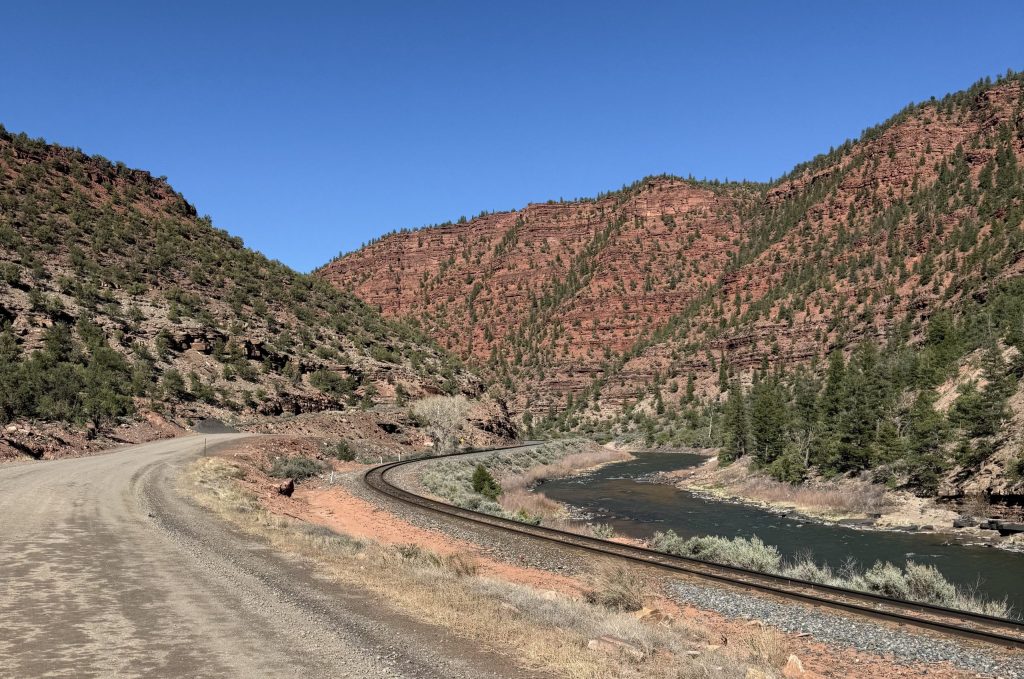
Ali Longwell/The Aspen Times
The three states comprising the Colorado River’s Lower Basin have offered the federal government a short-term plan to address the dangerously low conditions across the river system while negotiations for longer-term solutions remain stalled.
Representatives from California, Arizona and Nevada called their proposal “ambitious and far-reaching” in a May 1 letter to Andrea Travnice, the U.S. Bureau of Reclamation’s assistant secretary of water and science.
It offers 3.2 million acre-feet of voluntary water use cuts across the three states through 2028. The plan is contingent on additional elements, including those that address Lake Powell releases, upper initial unit operations, additional conservation, use of intentionally created surplus and system infrastructure improvements.
“(This proposal) pairs real measurable water contributions with sensible dry-condition operations at Lake Powell and across the upper initial units,” said John Entsminger, general manager of the Southern Nevada Water Authority, in a statement. “Now is the time for every water user in the Basin to double down on water conservation as we face historically dry hydrology.”
Chuck Cullom, executive director of the Upper Colorado River Commission, which represents Colorado, Wyoming, Utah and New Mexico, wrote in a statement that the Lower Basin proposal represents a necessary step toward solutions but raised concerns about its long-term efficacy.
“The Upper Colorado River Commission appreciates the Lower Basin, particularly Arizona and California, beginning their necessary and difficult discussions on how to distribute the necessary, painful cuts in the Lower Basin that are required due to the depleted supplies in Lake Powell and Lake Mead,” Cullom wrote.
“The Upper Division States have long-supported new flexibility in operations in Lake Mead, noting that such flexibility requires a long-term sustainable operating framework that provides operational certainty without destabilizing litigation,” he added. “We have concerns that the proposed flexibilities will accelerate the decline in Lake Mead and cause adverse impacts upstream.”
The three lower division states referred to their proposal as a “near-term bridge through 2028 while long-term operating guidelines are finalized” in a May 1 announcement.
Despite multi-year negotiations, Colorado’s Upper and Lower Basin states have been unable to reach a consensus on the long-term operations of Lake Powell and Lake Mead. The current operational guidelines for the two reservoirs were set in 2007 and will expire this year.
The future guidelines will govern how the Bureau of Reclamation operates the two lakes, particularly under low reservoir conditions; allocates, reduces or increases annual allocations for consumptive use of water from Lake Mead to the Lower Basin states; stores and delivers water that has been saved through conservation efforts; manages and delivers surplus water; manages activities and makes cuts above Lake Powell and more.
In their letter to the Bureau, the Lower Basin states said the “upper division states’ refusal to commit to water use reductions to protect the system” is to blame for the lack of a seven-state consensus.
The Upper Basin states have pushed back on this notion in the past, claiming that they already face natural water shortages driven by the ups and downs of snowpack. This year, the Upper Colorado River Commission said it expects natural reductions “greater than 40% of the proven water rights” across the four states as a result of the winter’s poor snowpack.
“Operations must be supply-focused, adapting to the hotter and drier future that we all face,” Cullum wrote. “Operations must move away from managing crisis to crisis and focus on long-term solutions. Based on current hydrology and Reclamation’s analyses in April, the Lower Basin’s proposed operations for Lake Powell and other reservoirs does not solve the current crisis.”
He wrote that the short-term plan from the Lower Basin “illustrates the need for mediation to work toward a basin-wide consensus operating framework.”
After a final deadline for the seven-state consensus came and went in February, the upper division states called for a return to mediation in late April to deal with the current deadlock and dire hydrological conditions and skirt the threat of litigation.
“The time is now to solve the math problem of the Colorado River. Litigation will not generate any new water in this basin,” said Becky Mitchell, Colorado’s water commissioner and chair of the Upper Colorado River Commission, in a news release. “We must stay at the table and work together on real solutions that reflect today’s hydrology.”
The Lower Basin states said they were “open to that process” in their May 1 announcement.
“However, current conditions require immediate, measurable water reductions from every state,” the states said. “The Lower Basin states stand ready to engage in a meaningful process for long-term solutions while encouraging the Upper Basin to step forward now with verifiable water contributions to help stabilize the system and support a near-term, seven-state bridge.”
Colorado River faces dire conditions
Despite disagreements, the Upper and Lower Basin states both describe the current hydrological conditions as “dire.”
Forecasts for the Colorado River basin paint a bleak picture across the seven basin states.
Water supply for the Upper Basin states — Colorado, New Mexico, Utah and Wyoming — comes predominantly from snowpack, which melts and flows downstream to the Lower Basin states. California, Arizona and Nevada rely on releases from Lake Powell and Lake Mead for their water supply.
This winter, snowpack across the Upper Basin was 23% of normal, marking a historic low. According to the National Drought Information System, the majority of streamflow forecast points in the entire Colorado River basin are predicted to produce less than 30% of the normal runoff.
As a result, the Bureau of Reclamation is anticipating that inflow to Lake Powell will be 29% of the historical average, which it reports is one of the lowest on record. If water levels fall below a certain elevation — below 3,490 feet or roughly 15% of its capacity — it can impact operations, regional power and water supplies as well as reduce hydroelectric power generation. The bureau is projecting it could hit this minimum power pool level by August.
These forecasts have led the Bureau to begin planning for increased releases from Flaming Gorge Reservoir in the Upper Basin and reduced releases from Lake Powell to Lake Mead.







Support Local Journalism
Support Local Journalism
Readers around Steamboat and Routt County make the Steamboat Pilot & Today’s work possible. Your financial contribution supports our efforts to deliver quality, locally relevant journalism.
Now more than ever, your support is critical to help us keep our community informed about the evolving coronavirus pandemic and the impact it is having locally. Every contribution, however large or small, will make a difference.
Each donation will be used exclusively for the development and creation of increased news coverage.