Bureau of Land Management begins wild horse helicopter gathers in Sand Wash Basin
Bureau of Land Management to gather 300 horses, with 55 returned to the range

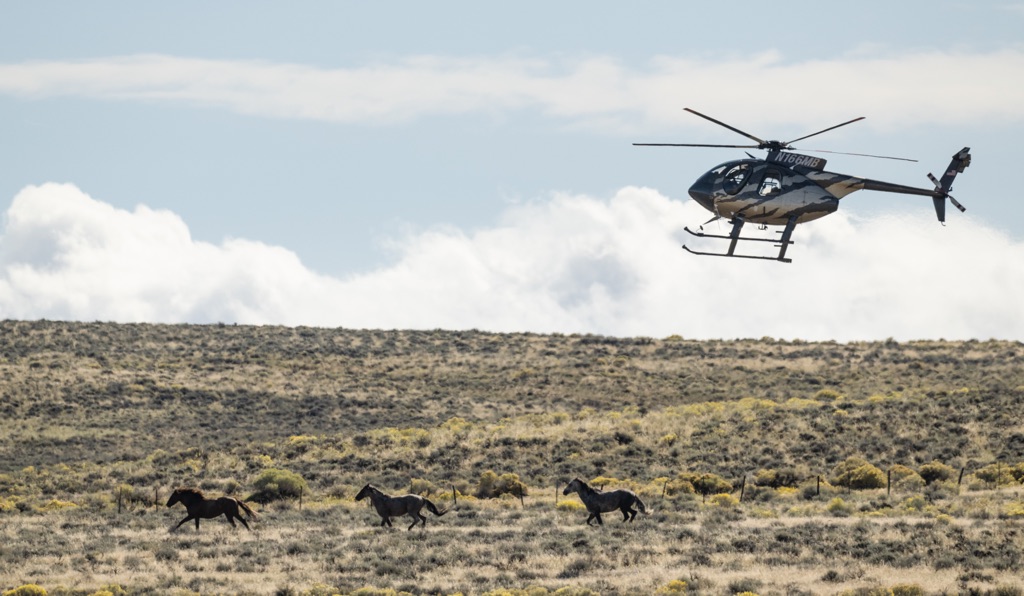
Scott Wilson/Courtesy photo
The U.S. Department of Interior’s Bureau of Land Management has officially begun wild horse gather operations in the Sand Wash Basin Herd Management Area west of Craig, where the agency plans to gather 300 horses — 55 of which will be returned to the range — through helicopter drive-traps over approximately 11 days.
Initially slated to begin on Sept. 10, operations were eventually moved out to Sept. 17. The start of gather operations, however, was delayed until Saturday, Sept. 19 due to “scheduling conflicts,” according to the agency’s website.
As of Sunday, Sept. 20, 11 horses have been gathered, including five stallions, three mares and three foals, with no deaths reported All of those horses were gathered on Saturday; Sunday’s activities were “reconnaissance only,” wrote BLM officials, referring to pre-operational scouting versus the active capture of horses.
Designated public observation days are Sept. 19-24.
Public observation was not allowed on Saturday “due to on-the-ground conditions — impassable roads, flooding, washouts and potential for flooding,” the BLM’s website states.
Monday’s daily gather report was unreleased by publication time.
The Sand Wash Basin gather comes just weeks after a helicopter drive-trap gather in the Piceance-East Douglas/West Douglas Herd Management Area, where the BLM gathered 894 horses over roughly 31 days of operations. Nine horses died.
Since 1971, the BLM has removed nearly 4,400 animals from public rangelands in Colorado, states the agency’s website. The BLM considers the appropriate combined capacity for all herd management areas in the state to be 812 animals.
In five-plus decades since the act was passed, the BLM has conducted gather operations — funded through federal taxpayer dollars — on wild horse and burro populations in roughly 175 herd management areas across 10 Western states. The ultimate aim of the program, according to BLM officials, is to prevent wild horse populations from exceeding the capacity of the land.
Wild horse gathers, particularly those utilizing the helicopter drive-trap method (as opposed to bait traps), have long been a matter of debate between the federal government, ranchers, horse advocates and the public.
The topic remains controversial for a number of reasons: the manner in which the horses are gathered, the impacts of wild horse grazing versus livestock grazing on public lands, the cost of gather operations to American taxpayers, and what happens to the horses after they’re taken from the range.
The New York Times published an investigative report on Aug. 20 claiming that in 2025, sales of wild horses more than doubled, and that traders are using a legal loophole to increase profits when selling them for slaughter.
The commencement of operations in Sand Wash Basin also follows a call from state leaders earlier this month to “immediately halt” wild horse gathers in Colorado, with Gov. Jared Polis and U.S. Rep. Joe Neguse citing the “inhumane and unnecessary” nature of the BLM’s helicopter gather methods.
Back in March, the BLM announced that a bait-trap operation would take place in the Sand Wash Herd Management Area in an effort to reduce the herd by 100 horses, luring them into traps with food or water. Months later, the agency decided to instead gather the horses via helicopter drive traps.
The Sand Wash Basin Herd Management Area can sustainably support 163 to 362 horses, states the agency’s website. The current total estimated population is 505 horses, or 140% “over what the range can sustainably support.”
Of the 55 horses planned to be returned to the range, 22 will be darted with fertility control treatment to “balance herd numbers” and “reduce the need for frequent, large-scale removals.”
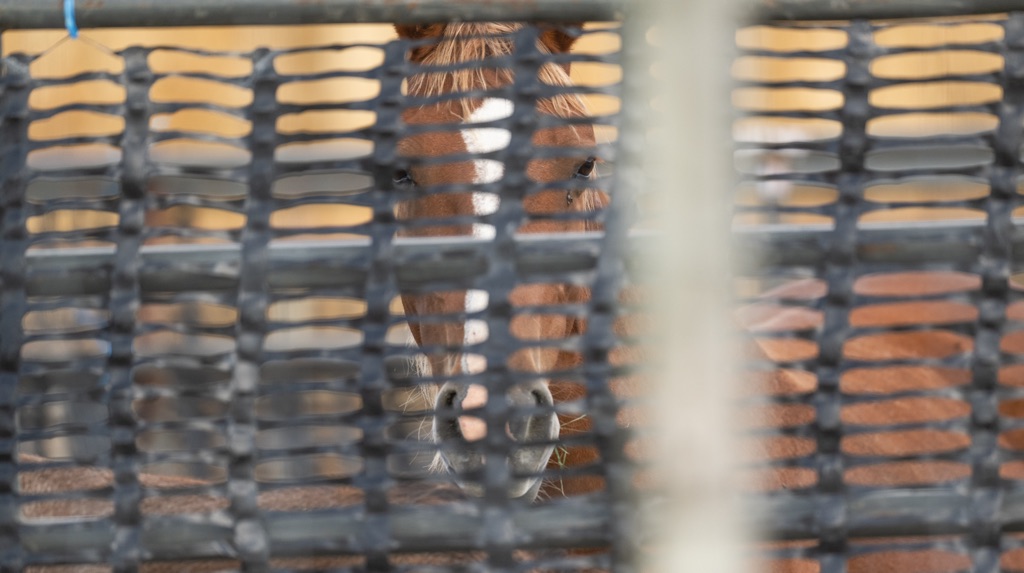
Following the gather, removed horses will be transported to the Wheatland Off-Range Corral Facility in Wheatland, Wyoming, where they will receive veterinary care, vaccinations, identification and evaluation, the BLM’s website states.
Horses deemed suitable for placement “will eventually be made available for adoption or other placement opportunities through the BLM’s Wild Horse and Burro Program,” the website adds.



Support Local Journalism
Support Local Journalism
Readers around Steamboat and Routt County make the Steamboat Pilot & Today’s work possible. Your financial contribution supports our efforts to deliver quality, locally relevant journalism.
Now more than ever, your support is critical to help us keep our community informed about the evolving coronavirus pandemic and the impact it is having locally. Every contribution, however large or small, will make a difference.
Each donation will be used exclusively for the development and creation of increased news coverage.