Inside the Piceance-East Douglas wild horse gather: A fight over horses, habitat and Western lands
Helicopters, holding facilities and a Colorado wild horse debate with no easy answer

John F. Russell/Steamboat Pilot & Today
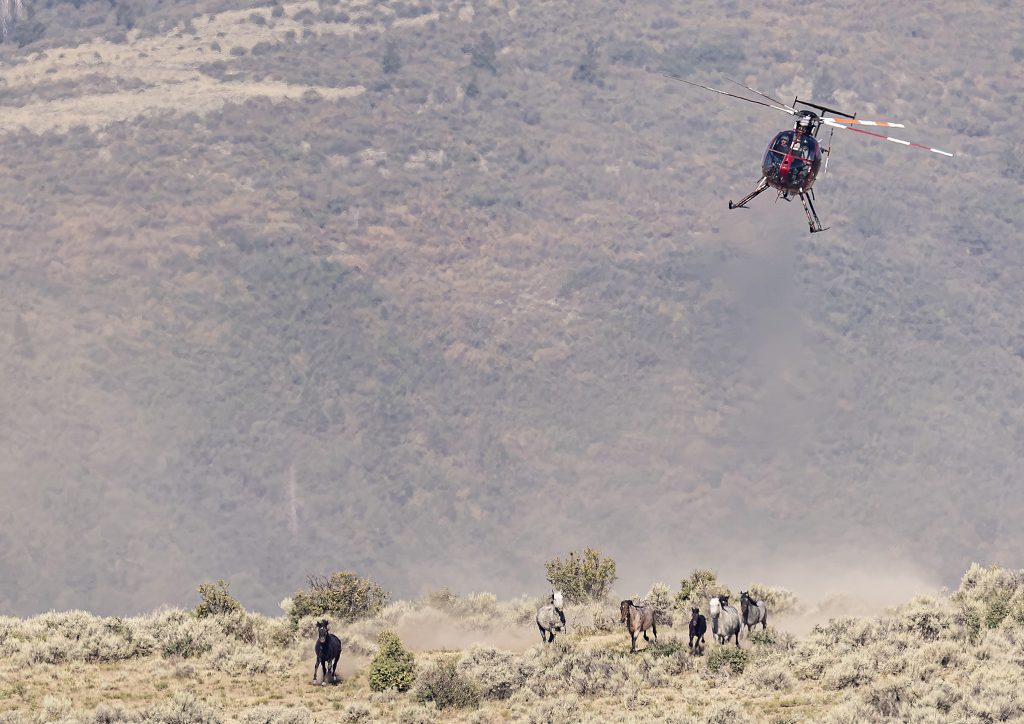
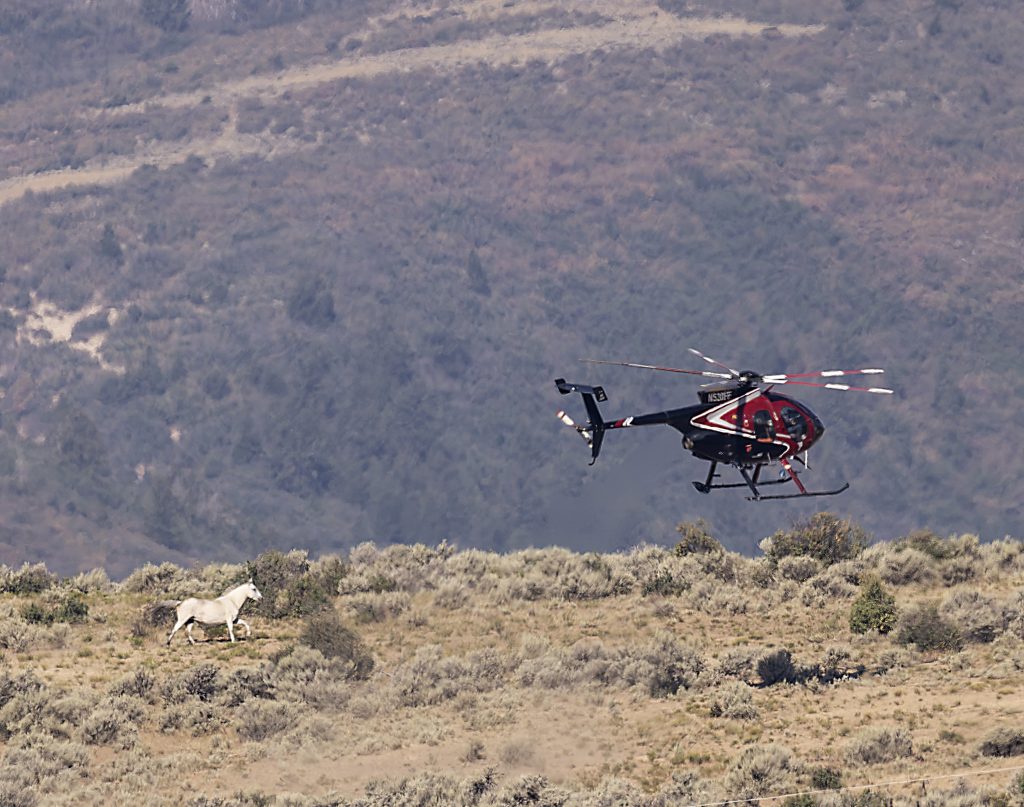
A helicopter buzzes over the trees near an oil refinery in Northwest Colorado’s Piceance Basin, veering strategically around power lines toward a small band of wild horses as it seeks to drive as many as it can across the rugged landscape into a catch pen.
A white horse flips around, running the opposite direction. The helicopter follows suit and cuts off its escape.
“It’s too close,” says one wild horse advocate of the helicopter. “It’s too low.”
The wild horses — the white horse included — are then driven into the catch pen, hidden behind a group of Juniper trees and obscured from the viewer’s line of sight.
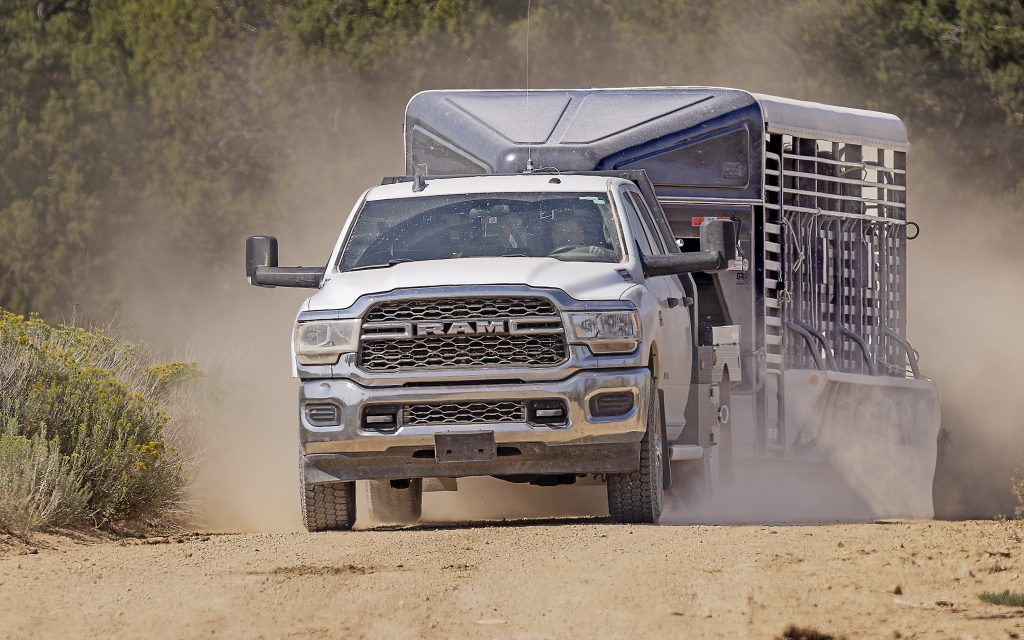
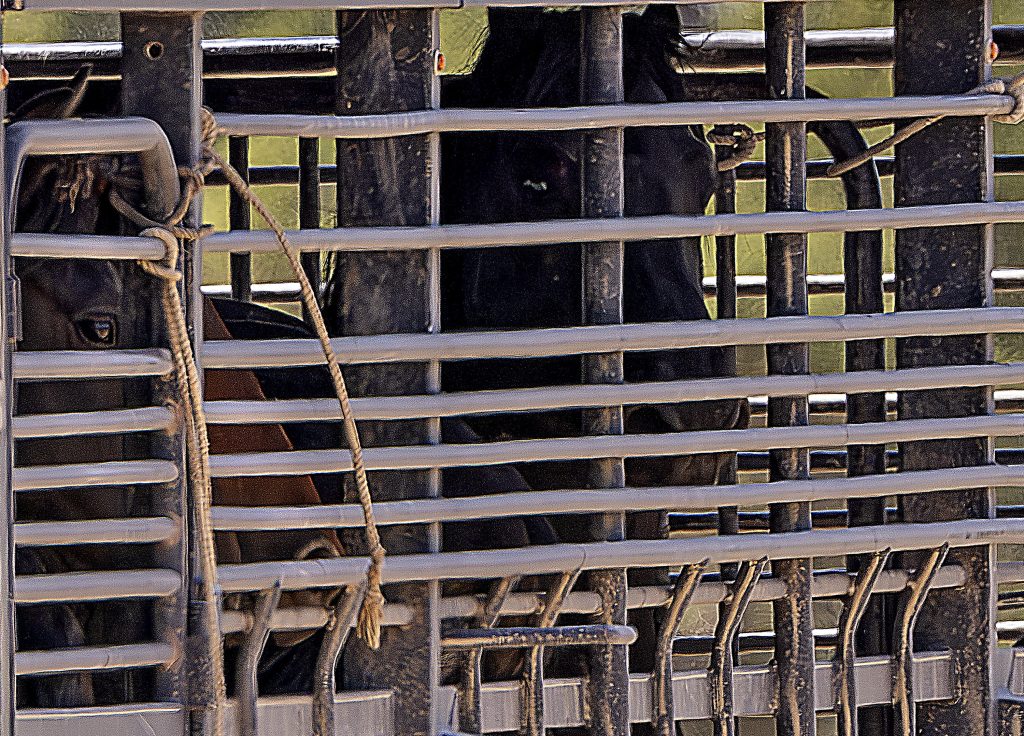
Shortly after, a newly filled horse trailer stumbles along a dirt road, kicking up clouds of dust in its wake as it takes the horses to a temporary holding center.
It’s a scene that can prove upsetting to the ordinary viewer. For the Bureau of Land Management and some members of the ranching community, it’s a necessary, if ugly, reality of keeping wild horse populations at established levels for the sake of preserving public lands and natural resources.
For American taxpayers, it can be expensive — and for some wild horse advocates, it’s the stuff of nightmares.
In 1971, Congress passed the Wild Free-Roaming Horses and Burros Act, declaring the animals as “living symbols of the historic and pioneer spirit of the West” that “enrich the lives of the American people.” The act states that wild horses and burros are “fast disappearing from the American scene.”
The law requires the federal government to protect wild horses as part of public lands, but the government says protecting both the horses and those lands requires removing many of the horses.
In the over five decades since the act was passed, the BLM has conducted gather operations — funded through federal taxpayer dollars — on wild horse and burro populations in roughly 175 herd management areas across 10 Western states. The ultimate aim of the program, according to BLM officials, is to prevent wild horse populations from exceeding the capacity of the land.
BLM Colorado manages four wild horse and burro herd management areas on around 400,000 acres throughout the state: Piceance-East Douglas Creek, Sand Wash Basin, Little Book Cliffs (all located in Northwest Colorado) and Spring Creek Basin (in Southwest Colorado).
Since 1971, the BLM has removed nearly 4,400 animals from public rangelands in Colorado, states the agency’s website. The BLM considers appropriate combined capacity for all herd management areas in the state to be 812 animals.
The Piceance-East Douglas area — where a month-long gather is now taking place — currently supports around 1,145 wild horses, significantly above the established “appropriate management level” of 135-235 horses.
A gather is simultaneously taking place at the West Douglas Herd Area, which is not formally included in the agency’s aforementioned list of Colorado herd management areas.
The West Douglas Herd Area is “not suitable for wild horse management due to a lack of forage and water,” states the BLM’s site. In other words, all wild horses in the West Douglas area will be removed.
Between the two herd areas, the BLM plans to gather around 1,025 wild horses total, removing 1,011 from the range and returning 14 horses to Piceance-East Douglas. Ten of those horses will receive fertility control treatment to help slow future population growth.
The gather, which commenced Aug. 1, is expected to last roughly 30 days, or until all 1,025 horses are removed.
As of Aug. 19, the BLM is over halfway through the Piceance-East Douglas/West Douglas gather, with 754 wild horses gathered (including 292 stallions, 313 mares and 148 foals), 671 horses shipped (including 246 stallions, 313 mares and 137 foals), zero horses released and five deaths.
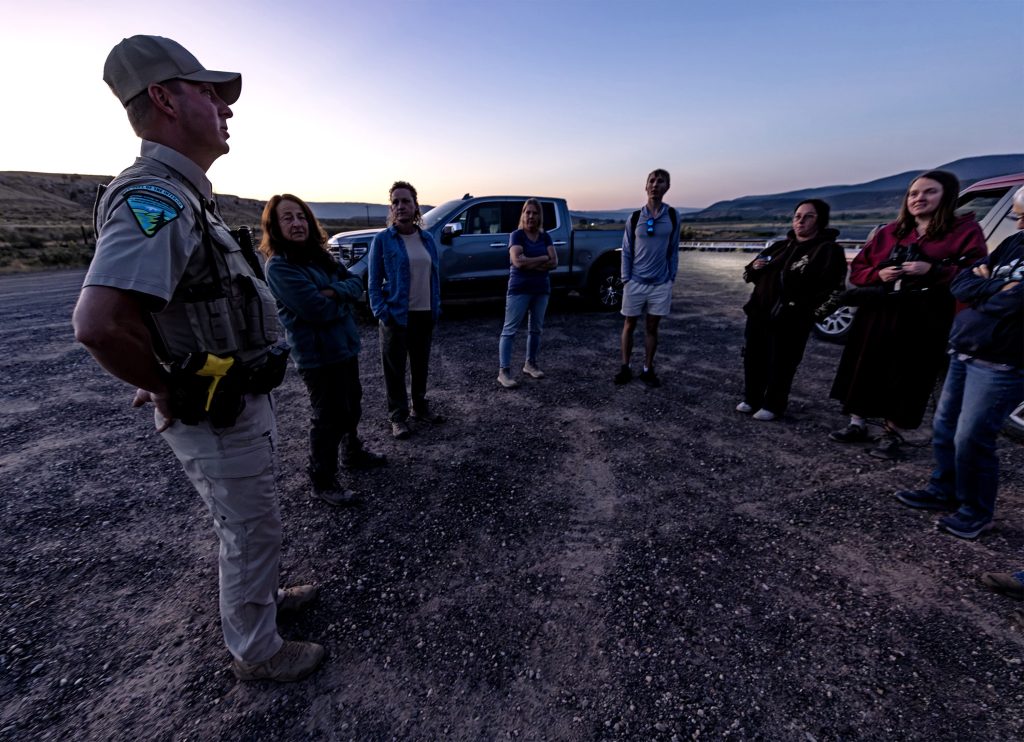
The viewing process, experienced firsthand by newspaper staff on Wednesday, Aug. 5, is strictly controlled. Observers must convene before sunrise at a location chosen by BLM officials proximal to the viewing site.
Once the day’s attendees have arrived, hopefully with a high-clearance vehicle, observers — often consisting of wild horse advocates, ranchers and members of the press — follow a BLM representative, caravan-style, to the site.
At the viewing site, usually a mile or more from the gather operation itself, observers, who are asked to wear dark, muted colors to the observation area, are instructed to remain relatively still when the helicopter is overhead and to stay quiet if horses are near.
A BLM public information officer is present to answer questions from attendees. Also present is a BLM law enforcement officer, armed with a gun for “safety purposes,” according to BLM officials.
The contractor — in this case, C D Warner Livestock LLC — chooses the location of the gather each day. BLM officials then work with the contractor to determine a viewing area that provides relative visibility at a healthy distance.
Once attendees are at the observation site, they are not permitted to leave until the contractor’s operations are complete, barring emergencies. Sometimes, observation days can last as long as 10 hours.
Department of Interior Public Affairs Specialist Heather Marsh, the BLM official who led the caravan of observers on Aug. 5, noted three “trigger points” for ceasing operations: temperatures reaching 95 degrees, the number of horses gathered that day and the contractor choosing to stop operations for any reason, be it “operation malfunctions” or a personnel injury.
The exhaustive nature of the BLM’s policies around horse gather observations, said Marsh, is not to avoid transparency, but to ensure safety of the viewers and the integrity of the operation.
How the gather works
While the mere act of gathering wild horses and changing their fates — for better or worse — is in itself controversial in some respects, the helicopter drive-trap methodology used to do so has also been a topic of past debate.
The helicopter pilot scouts aerially, searching for groupings of wild horses, using wind from the helicopter’s rotator blades to drive the horses toward the trap. Marsh explained that the contractor will often bring a “prodder horse” to the gather that lures the wild horses into the pen.
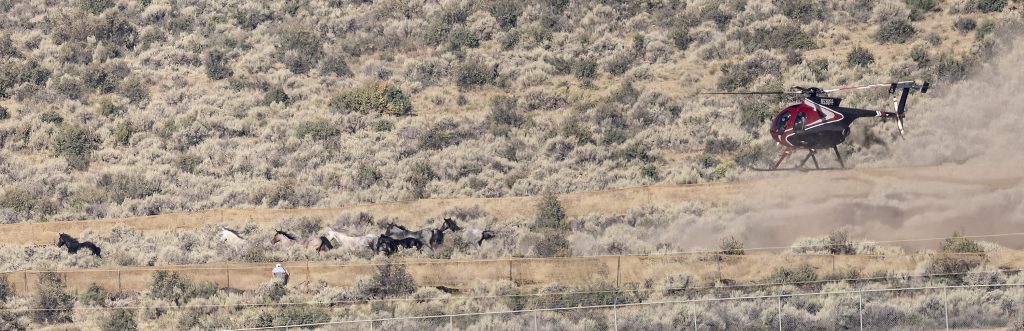
There is no minimum distance at which the helicopter is required to stay back from the horses, and no maximum distance at which the helicopter can run the horses across the landscape, according to a BLM spokesperson.
The horses are given a few minutes to settle before they’re loaded onto a trailer and taken to a temporary holding facility, said Marsh. Once there, the horses are separated into stallions, mares, geldings and foals, with foals and mares kept together, “to prevent (the horses) from getting agitated and hurting each other,” she added.
The following day, the horses are taken to another holding facility in Wyoming, after which point they’re prepared for adoption.
According to Marsh, the two most commonly used methods to gather wild horses are helicopter drive traps and bait traps, the latter of which was used at the Sand Wash Basin Herd Management Area west of Maybell in a July 2025 gather.
When asked why the BLM conducts helicopter drive traps instead of year-round bait traps, the spokesperson said that the “right approach is not one method for every herd,” but “using the right tool for the landscape and the management need.”
“Sometimes that means bait trapping. Sometimes it means fertility control,” wrote the spokesperson, “And in some cases, when populations are significantly above what the land can support, a helicopter-assisted gather is the safest and most effective option.”
In the case of the Piceance-East Douglas and West Douglas herd areas, which cover over 313,000 acres, the BLM needs “a method that can efficiently reach enough animals to bring the population back into balance with what the land can support,” the spokesperson added.
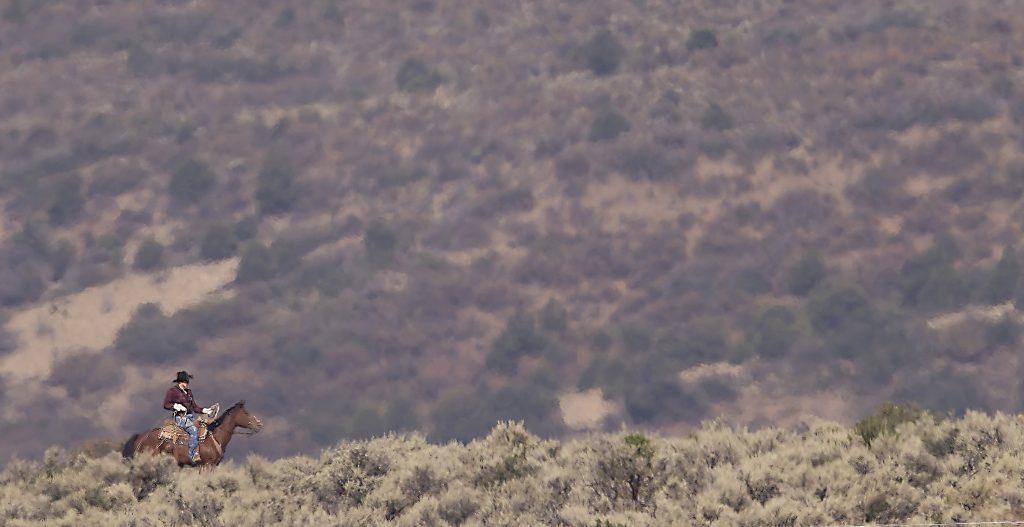
A number of personnel are on-site or on call during the operation, Marsh said, including a veterinarian, who supervises medical care of the horses, and a contracting officer representative, who ensures that the contractor is following all rules.
The BLM spokesperson said that while deaths during gathers are relatively rare, and injuries generally uncommon, those risks do exist, and are often exacerbated by “pre-existing conditions that were not apparent before capture.”
“Other situations may involve injuries during travel across the landscape, interactions among horses, or, in rare circumstances, an animal that is suffering from a condition where humane euthanasia is the most appropriate option,” wrote the spokesperson, who added that injuries can also occasionally happen during capture, handling or transportation.
The BLM states on its site that all gather operations are conducted in accordance with their Comprehensive Animal Welfare Program, “which establishes standards for the humane care and handling of wild horses throughout gather operations.”
“If we stopped conducting gathers, wild horse populations would continue to grow beyond what many landscapes can sustainably support,” wrote the BLM spokesperson.
“When populations grow beyond the capacity of the land, competition increases for limited forage and water,” the spokesperson continued. “That can affect not only the horses themselves, but also wildlife, vegetation, soils, and the long-term health of the ecosystem.”
“Managing populations before conditions become a crisis gives us a better chance of protecting both,” the spokesperson added.
The cost of the operation — and what happens after
The BLM spokesperson could not provide an estimated cost of the Piceance-East Douglas/West Douglas gather, noting that the final cost will be determined once the operation is complete.
According to USASpending.gov, the contractor operating this month’s gather, C D Warner Livestock LLC, was awarded $679,249 by the BLM in a July 9, 2026 contract award based in Meeker for horse gather operations at Piceance-East Douglas/West Douglas.
The spokesperson also noted that the contractor’s payment is only one part of the overall cost.
“A successful gather requires many resources beyond the helicopter operation,” wrote the spokesperson, “including BLM personnel, veterinary support, temporary holding, transportation, animal care, identification, planning, and compliance with animal welfare standards.”
The spokesperson could not provide specifics when asked how much the agency typically spends annually on wild horse gathers in Colorado, noting that “costs vary from year to year” due to population numbers, herd conditions and other factors.
The Congressional Research Service reported in January that Congress appropriated $142 million for BLM management of wild horses and burros in 2025. Relative to the $20.4 million allocated for management efforts in 2000, the 2025 expenditure represented a nearly 600% increase in nominal dollars and about a 270% increase in 2025 dollars.
Another layer to the multifaceted issue of wild horse trapping is what happens to the animals post-gather.
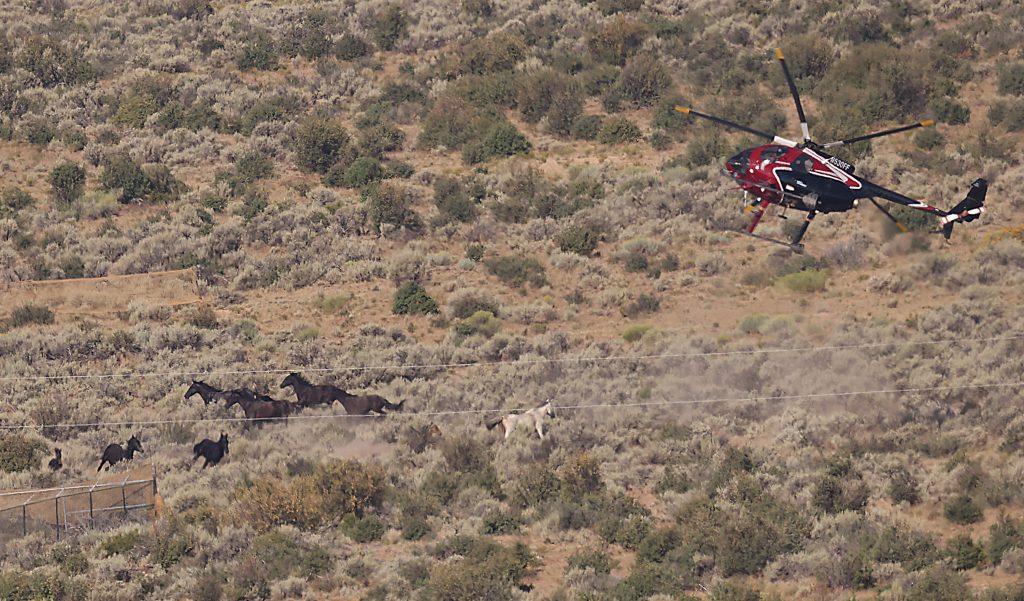
After a horse is trapped, it receives a health evaluation, vaccinations, deworming and permanent identification through a “freeze mark,” said the BLM spokesperson. They are then placed into an adoption program and cared for in off-range holding facilities “until long-term placement is available.”
The spokesperson emphasized that the adoption process is meant to place horses with “qualified individuals who are committed to providing humane, lifelong care.” The adopter is carefully screened in an effort to ensure that they have adequate facilities and care capabilities before receiving the horse’s title, officials added.
The BLM maintains records on horses while they are part of the federal program. Once adopted, however, and the title is transferred over to its new owner, the horse becomes privately owned, and the BLM “no longer has authority over that animal’s future ownership or care.”
Some advocates, then, raise concerns that many of the wild horses will end up in “feedlots” — intensive animal feeding operations — or, worse, that they will be shipped off to Canada and Mexico, where the slaughter of horses and consumption of horse meat is legal.
Because the BLM cannot track the animals post-adoption, the fate of many of the wild horses ultimately remains unknown.
Advocates and ranchers
Many of the wild horse advocates that attend gather observations, often present on behalf of an organization, are there to document what they see and preserve their observations as history. Some are there hoping to speak with BLM officials face-to-face and get their opinions on the record to members of the press.
Other advocates are simply there to bear witness: to honor the trapped horses in their final moments of freedom.
Advocates with American Wild Horse Conservation state that helicopter drive-traps cause “extreme stress,” with the “noise and relentless pursuit” of such gather operations leaving horses “terrified and exhausted.”
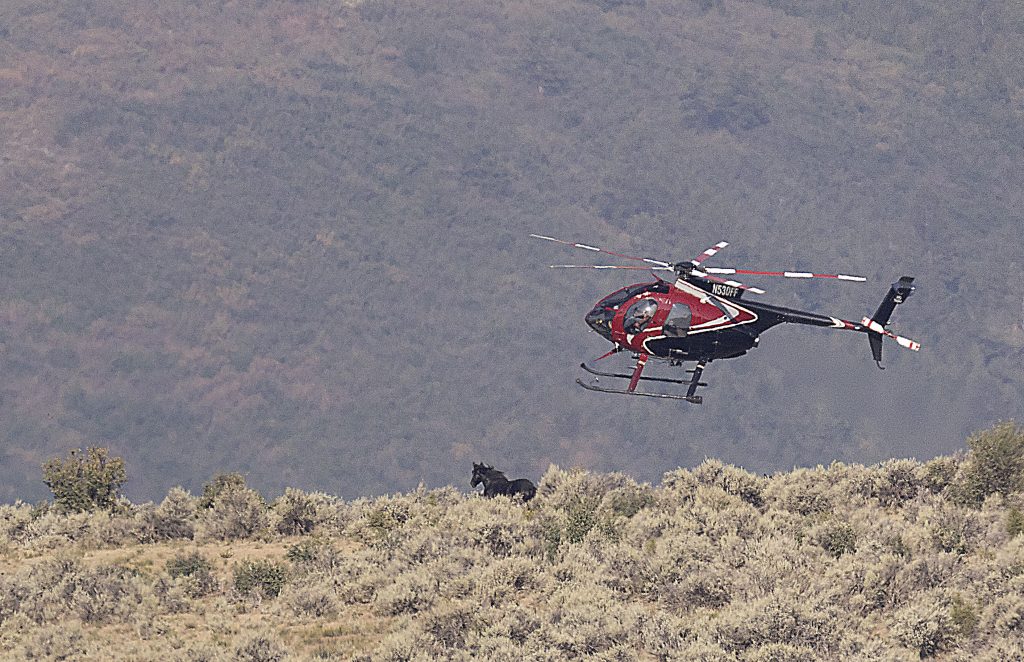
“This cruel practice results in broken families and severe physical and psychological trauma for the animals,” states the organization’s website. “Once wild horses and burros are rounded up, they are funneled into federal holding facilities where they are held, sometimes for life, separated from all they hold dear.”
According to American Wild Horse Conservation, over 60,000 wild horses are currently held in captivity “with no prospects for release,” adding that BLM data shows a continuous increase in the number of horses in holding facilities, “jeopardizing the long-term survival of wild horse populations as more are removed from the wild each year.”
Wild horse advocates have also expressed concerns that narrowing wild horse populations leads to genetic inbreeding, as well as “compensatory reproduction,” or a higher birth rate among a group of horses in which some have been removed.
On potential mutations from narrowing horse populations, Marsh said that horses are often moved to and from herd management areas to ensure “genetic diversity.”
For Bonnie Eddy, executive director of the Colorado Wool Growers Association — a membership-based organization of sheep producers and lamb feeders in Colorado — the gathers are necessary to prevent overgrazed lands amid arid Western landscapes, a condition that can require “decades to recover.”
She said such conditions are especially prevalent in Sand Wash Basin, where the BLM has scheduled a helicopter drive-trap gather for Sept. 10-30.
In Northwest Colorado, specifically, she said she’s had members with sheep permits who have been “forced to take non-use on their grazing allotment, literally for decades, due to overgrazing by wild horses.”
“Many times when sheep ranchers are hauling water for their sheep, the wild horses will come in and drink the water before the sheep even have a chance to get there,” explained Eddy. “Horses will paw and destroy water tanks in ponds that are meant for domestic livestock, and this often occurs on private property, as well as the grazing allotments.”
She called the “misinformation” around helicopter gathers “distressing,” noting what she referred to as sensationalized imagery of the moments just before the horses are driven into the pen.
On what common ground, if any, has been reached between the BLM, wild horse advocates and ranchers, Eddy said the bureau’s efforts have been “interfered with” by litigation from advocates, and spoke plainly on the latter group.
“You’ve had activists in Northwest Colorado trespass onto private ranches and private property and tear down fences to access water springs and private water rights,” she said. “So not any love lost there.”
She believes the BLM “oversells the benefits of adoption,” emphasizing that the level of preparation and resources required to take care of a horse long-term is not something adopters can often realistically provide.
Asked where she draws the line on an acceptable level of risk to wild horses in the name of managing the land, Eddy said “letting horses die from starvation and dehydration in excessive degradation to the landscape” is “certainly a line” for her.
“Many wild horse advocates would rather let horses die on the range due to overpopulation than to humanely gather with a helicopter,” said Eddy. “If they were better grounded in the reality of what really happens on the ground, they would be more engaged in investing money in long-term holding and some of those solutions.”
As the Aug. 5 gather concluded and the helicopter landed for the final time on that arid Wednesday, Tessa Archibald, an equine policy associate with the Animal Welfare Institute, summarized her view of the day’s events.
“These horses’ lives just changed forever,” she said.


Support Local Journalism
Support Local Journalism
Readers around Steamboat and Routt County make the Steamboat Pilot & Today’s work possible. Your financial contribution supports our efforts to deliver quality, locally relevant journalism.
Now more than ever, your support is critical to help us keep our community informed about the evolving coronavirus pandemic and the impact it is having locally. Every contribution, however large or small, will make a difference.
Each donation will be used exclusively for the development and creation of increased news coverage.