Two new soil moisture, climate monitoring stations add to watershed data

Suzie Romig Follow
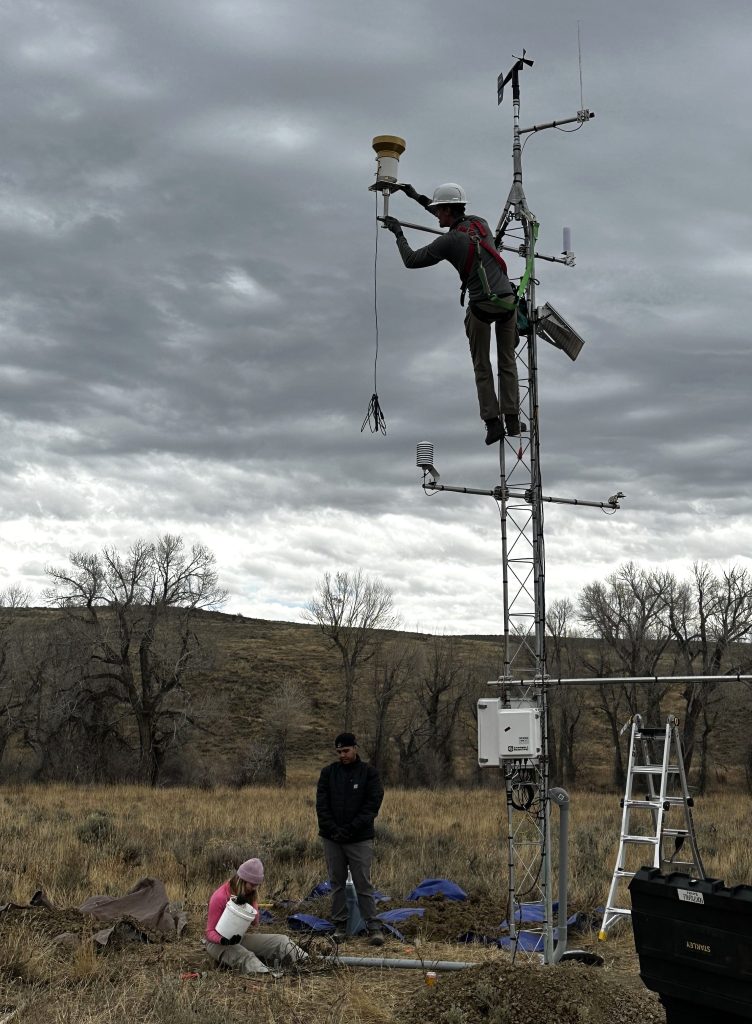
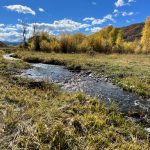
Madison Muxworthy/Courtesy photo
As two new soil moisture and climate monitoring stations were installed in early November in Routt County, regional water experts say the continued expansion of the monitoring network is critical to understanding spring water runoff, especially as the climate becomes hotter and drier.
“Expanding the network will generate additional observations and sample a wider range of soil and hydrological conditions, helping water managers to better determine exactly what is happening to snowpack in the basin and improve predictions of springtime reservoir inflows,” explained Madison Muxworthy, soil moisture, water and snow program manager at project partner Yampa Valley Sustainability Council.
“We see this climate and soil monitoring effort as an important piece of an overall strategy to better understand how water resources are changing in the Colorado River Basin, both from near-term operations and to long-term planning perspectives,” said Amy Moyer, director of strategic partnerships at the Colorado River District, which helped fund the stations.
The two new stations were installed in the Upper Yampa River Basin on private property, one on the Howe Ranch about 10 miles north of Hayden and another about seven miles northwest of Steamboat Springs. The new stations record soil temperature and moisture at six different depths down to 40 inches in the soil. The stations also include meteorological sensors measuring wind speed and direction, precipitation, snow depth, temperature, relative humidity, pressure and solar radiation.
The project team conducted a successful pilot installation near Stagecoach Reservoir in September 2022 and is working to expand the network of new monitoring stations to six by 2026 with funding from the Upper Yampa Water Conservancy District, Colorado River District and the Colorado Water Conservation Board.
“The data collected from these stations will not only assist local water managers like UYWCD, but could lead to a more collaborative approach to water management decisions downstream,” said Andy Rossi, conservancy district general manager.
Muxworthy said the new stations are meant to supplement information from the long-standing Natural Resources Conservation Service SNOTEL stations, which are largely at higher elevations. The new complementary stations are specifically located in data-gap areas across multiple elevations in the valley.
Muxworthy said the climate monitoring network is motivated by increasing uncertainty in “snow-to-flow” predictions of water availability in the Colorado River Basin.
“Water managers are finding it harder to predict how much snowmelt runoff will enter rivers and reservoirs in the Colorado River Basin, and one theory is that drier soils are absorbing snowmelt like a sponge,” Muxworthy said. “The hypothesis is that warming temperatures in recent years are causing soils to dry out and winter snowfall to evaporate, leading to reduced springtime runoff.”
Organizers say the installations represent collaboration between the sustainability council, students and professors at Colorado Mountain College and the Center for Western Weather and Water Extremes (CW3E) at Scripps Institution of Oceanography at the University of California San Diego.
“Soil moisture is an under-observed reservoir of water in the basin,” said Marty Ralph, director of CW3E and principal investigator on the project.
Data from the stations are publicly available in near-real-time on the CW3E, MesoWest and NOAA Physical Science Laboratory websites.
Emily Howe and Jeremiah Psiropoulos at the Howe Ranch said they are hosting a station location to help provide a better understanding of how water behaves in the Elkhead watershed.
“As biologists ourselves, we’re excited to contribute data to scientists working to understand hydrology and climate change in our community,” the couple said.

Support Local Journalism
Support Local Journalism
Readers around Steamboat and Routt County make the Steamboat Pilot & Today’s work possible. Your financial contribution supports our efforts to deliver quality, locally relevant journalism.
Now more than ever, your support is critical to help us keep our community informed about the evolving coronavirus pandemic and the impact it is having locally. Every contribution, however large or small, will make a difference.
Each donation will be used exclusively for the development and creation of increased news coverage.