Steamboat leaders say D.C. fly-in strengthened ties, sharpened local advocacy
First-ever event included talks on water, housing, permitting reform

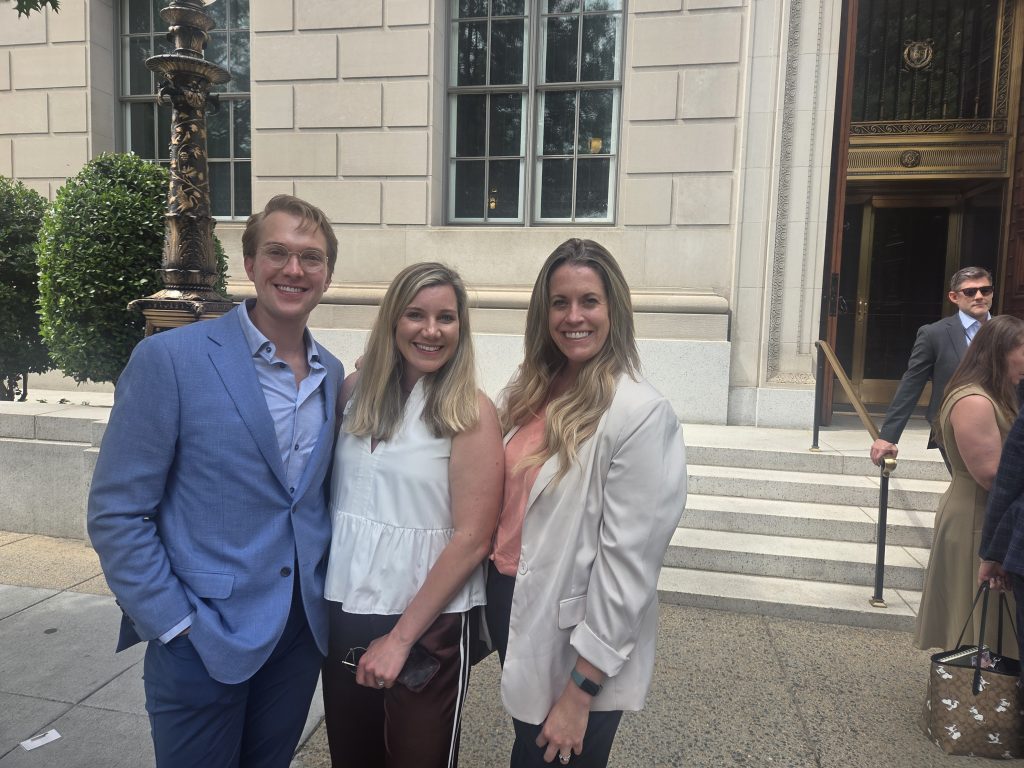
Steamboat Springs Chamber/Courtesy photo
Steamboat Springs officials and business leaders returned earlier this month from a first-of-its-kind trip to Washington, D.C., emphasizing relationship-building with federal lawmakers and a renewed focus on local advocacy around issues like water, housing and permitting.
The event, organized by a coalition of Colorado chambers of commerce, brought roughly 30 participants from Steamboat Springs, Vail, Grand Junction, Greeley, Fort Collins and Arvada to meet with members of the state’s congressional delegation and policy experts. For the Steamboat Springs Chamber, it marked the first time participating in such an effort.
“One of the main things chambers can and should be doing is being an advocate politically,” said Steamboat Chamber CEO Sarah Leonard, “and of the best ways we can do that is by forming and creating these relationships.”
The two-day trip included briefings at the U.S. Chamber of Commerce on federal policy trends — including energy, immigration and water — followed by meetings on Capitol Hill with Colorado representatives and their staff.
Leonard said those face-to-face conversations are critical for rural communities like Steamboat, where decisions made on the Front Range or in Washington can have outsized local impacts.
“We just don’t have the population that they do, so often the decisions made there are made for us,” Leonard said. “Having those relationships and having people think, ‘If I’m making a decision here, how is this going to affect rural Colorado?’ And being able to just kind of call people up and say, ‘Hey, did you think about this before you go through with a bill?'”
Water emerged as one of the most pressing topics during the trip, particularly as negotiations over the future of the Colorado River Compact remain uncertain.
Councilor Bryan Swintek, who also attended the fly-in, told Steamboat Springs City Council on June 16 that the outlook for a multi-state agreement is unclear.
What matters in your community, delivered right to your inbox.
Sign up at SteamboatPilot.com/newsletters
“It’s not looking very likely that the states will come to an agreement,” Swintek said. “If it does end up being a decision at the federal level, we will need to advocate for what we need.”
For Northwest Colorado communities, where key headwaters like the Yampa River originate, the stakes are high. Leonard said protecting water resources is essential not only for ranching but also for the region’s outdoor recreation economy.
“Water is of critical importance to our ranching community, to our outdoor recreation community, and especially being a community where a lot of these headwaters originate,” she said. “Making sure that we’re fighting for a good deal is important.”
Housing and affordability were also central themes. While some federal proposals — such as potential changes to lending rules for community banks — could provide incremental help, Swintek said local solutions will remain essential.
“The big theme from being in D.C. is that no one is coming to save us,” Swintek said. “It is up to us to make decisions for the community that we want.”
That message was echoed by Michael Ann LaMotte, director of development and strategic initiatives for Steamboat Ski & Resort Corp., who attended on behalf of the resort.
“Federal policy plays a major role in shaping the challenges and opportunities we’re navigating as an industry,” said LaMotte in a statement to the newspaper. “Being at the table in D.C. was a unique opportunity to speak directly about solutions that support our employees, guests and local community.”
LaMotte added that early and consistent engagement is key.
“One of the biggest takeaways was how important it is for communities like Steamboat to get engaged early and stay engaged, whether it’s housing, water or infrastructure,” she added. “Advocating for ourselves ensures we shape policy instead of reacting to it later.”
Another major point of discussion noted by both Leonard and Swintek was permitting reform, which participants said is gaining bipartisan traction in Washington. The issue centers on the length and complexity of federal permitting processes for infrastructure and energy projects.
Leonard said the current system can significantly delay projects.
“If you want to build a bridge, it could take five years to permit it and a year-and-a-half to build it,” she said. “It doesn’t make a lot of sense.”
Swintek said there is growing momentum from both political parties to streamline permitting, driven in part by frustrations over canceled projects and broader concerns about economic competitiveness.
“There is a lot of optimism on the Hill that they’ll be able to pass a bill that will reduce the amount of time, and make it so that the goal of the permitting process is better aligned with the intentions, rather than using it to slow the process down,” Swintek said, adding that the issue is also tied to national security and the country’s ability to build infrastructure quickly.
Data centers also came up during the trip as an example of the kinds of large-scale projects communities may one day need to confront more directly. Leonard and Swintek both described the issue as one worth watching, especially given questions about water, power and infrastructure.
Beyond specific policy discussions, attendees repeatedly emphasized the value of relationship-building and storytelling when advocating for local needs.
Swintek said one piece of advice that stood out came from who he referred to as a “cynical” Washington lobbyist: Communities often fail to advocate effectively because they do not tell their stories clearly or follow up afterward.
“Root it in your story — the why,” Swintek said. “That’s what’s memorable. Not data points.”
Leonard said she was struck by the willingness of lawmakers from both parties to engage in those conversations.
“I was honestly a little worried going to Washington that it would just be so contentious,” she said, adding that she felt “hopeful” upon the end of the trip. “But everyone we talked to was looking for ways forward that benefited the people living and working in Colorado.”
Organizers hope to build on the inaugural trip by expanding participation in future years, potentially making the fly-in an annual event.
For Steamboat participants, the takeaway was clear: Maintaining a seat at the table — and continuing to show up — will be key to shaping policies that affect the Yampa Valley.





Support Local Journalism
Support Local Journalism
Readers around Steamboat and Routt County make the Steamboat Pilot & Today’s work possible. Your financial contribution supports our efforts to deliver quality, locally relevant journalism.
Now more than ever, your support is critical to help us keep our community informed about the evolving coronavirus pandemic and the impact it is having locally. Every contribution, however large or small, will make a difference.
Each donation will be used exclusively for the development and creation of increased news coverage.