Routt Recreation and Conservation Roundtable launches pledge project to create environmental stewards
Organization works to enhance partnerships, collaboration, communication
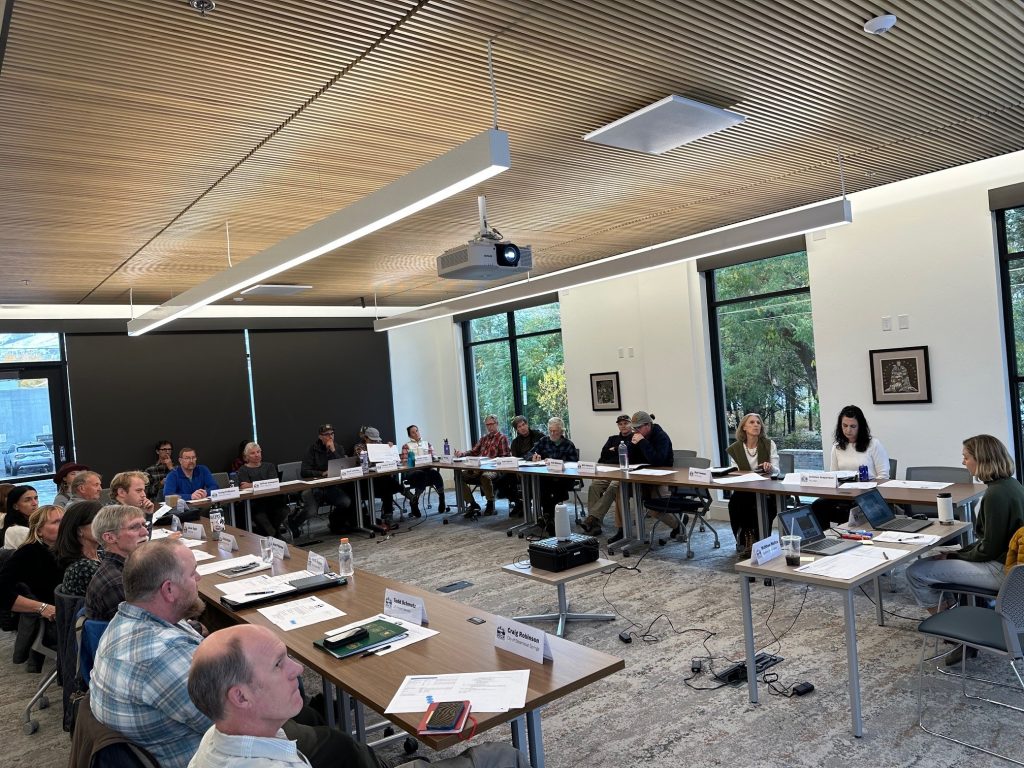
Matthew Mulica/Courtesy photo
The Routt Recreation and Conservation Roundtable seeks to balance the enjoyment of Routt County’s natural environment with the conservation of natural resources and wildlife.
The Roundtable aims to facilitate coordination among entities like the U.S. Forest Service, Colorado Department of Natural Resources, Colorado Parks and Wildlife and the U.S. Bureau of Land Management.
“We provide fluidity between a lot of different groups to help coordinate communication,” said Matthew Mulica, the RRCR’s facilitator. “The better the communication between the groups, the better the outcome.”
While there are many projects the organization is working on, two currently stand out.
The first is a pledge campaign to facilitate the creation of environmental stewards. The second project is the removal of noxious weeds.
“The pledge is trying to facilitate awareness of how behaviors can lead to environmental harm,” said Mulica. “We want to decrease the impact that humans have on the natural environment.”
The Roundtable was created in 2019, during the height of the Mad Rabbit Trails controversy, and provides non-binding recommendations to land managers in Routt County.
Controversy arose when the Colorado Department of Natural Resources objected to how the Forest Service handled installation of 49 miles of non-motorized, motorized and adaptive routes, along with rehabilitation of roughly 36 miles of unofficial trails that currently exist in the area.
The Mad Rabbit trails project, which includes Forest Service land in the Rabbit Ears Pass area to the south and the Mad Creek area to the north, has been in the works since 2017.
“Objectors said that the project did not address the cumulative impact of the trails on elk and other wildlife,” said Mulica. “We went through every segment of trail, and established where there was a high probability of wildlife impacts.”
The pledge opens with the promise to “respect the land, water, other users and wildlife every time I head into nature.”
Those who have signed the pledge online are then entered into a Big Agnes giveaway of a six-person tent, two sleeping bags, two sleeping pads and a Yeti cooler.
“The giveaway is a way to incentivize people,” explained Mulica. “The main idea is to get people talking and participating. The more people who take the pledge, the better.”
The giveaway winners will be announced after Oct. 31.
The noxious weed program serves to remove whitetop, Russian olive and tamarisk from the slopes of Emerald Mountain and the Steamboat Springs Pro Rodeo Grounds. It combines the efforts of Keep Routt Wild, Friends of the Yampa, Friends of Wilderness, the city of Steamboat Springs, Routt County, the Forest Service, BLM, private landowners and community volunteers.
It is expected to be a three-year program that includes annual invasive species inventory and mapping, targeted treatment, monitoring, volunteers, landowner outreach and education efforts.
“Emerald Mountain is a vector, because so many people recreate on it,” said Mulica. “The seeds of these plants — especially whitetop — get into the socks and tires of bikes and are transported throughout the Yampa Valley.”
The Roundtable’s noxious weed program hopes to eliminate Steamboat as the genesis for the spread of the invasive plants.
The whitetop outcompetes native plants, while the tamarisk is found along the banks of the Yampa River and soaks up massive amounts of water.
“In an already dry year, we don’t need a non-native plant that uses so much water,” said Mulica.
Interns from the Rocky Mountain Youth Corps are also taking surveys and removing the invasive plants wherever possible.
The Roundtable also keeps a webcam to observe the conditions of the Dry Lake parking lot and is actively working to remove a mile of barbed wire in the Routt National Forest near the Elk River. It also has flyers, poster and stickers around Steamboat hoping to catch the attention of visitors and push them to be better environmental stewards.
“The goal is to create a sustainable Steamboat that does as little to harm the environment as possible,” said Mulica. “We’ve got so many concurrent projects that overlap with other organizations so we can do the best job possible.”








Support Local Journalism
Support Local Journalism
Readers around Steamboat and Routt County make the Steamboat Pilot & Today’s work possible. Your financial contribution supports our efforts to deliver quality, locally relevant journalism.
Now more than ever, your support is critical to help us keep our community informed about the evolving coronavirus pandemic and the impact it is having locally. Every contribution, however large or small, will make a difference.
Each donation will be used exclusively for the development and creation of increased news coverage.