Master Gardener: First year they sleep, second year they creep — third year they leap
Master Gardner
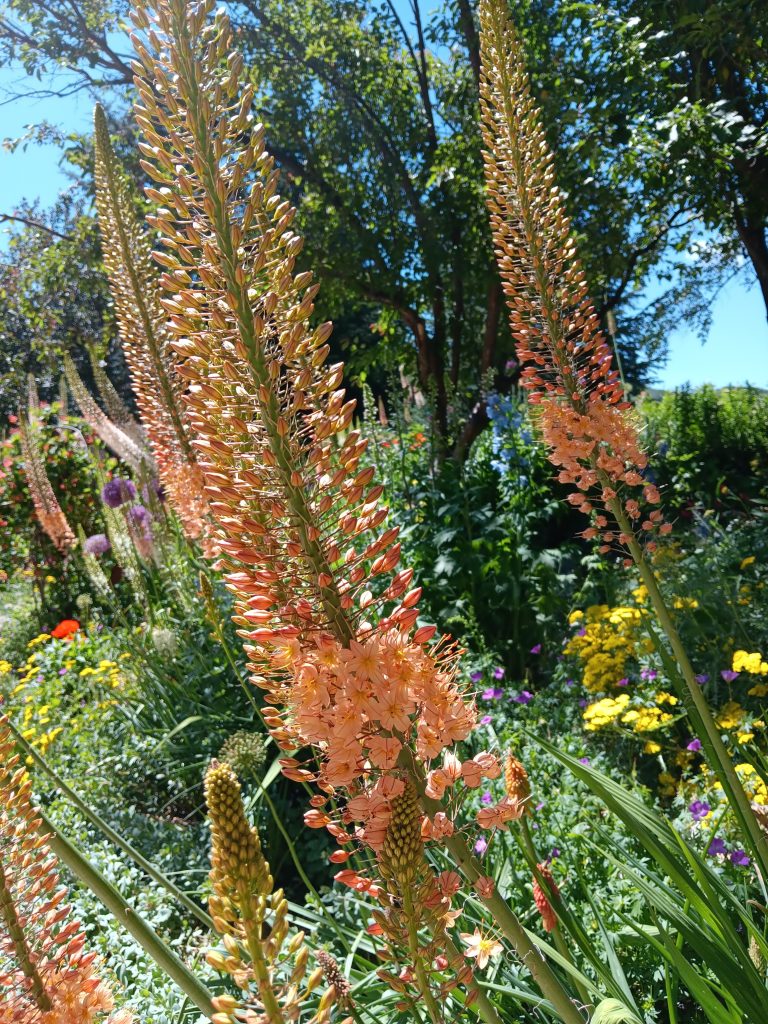
Gwen Skinner/Courtesy photo
Every spring in Routt County, hopeful gardeners plant perennials and then spend the rest of the season staring at them “I paid good money for you,” we whisper to a tiny, unimpressive sprout. “Do something.”
That’s when it helps to remember the oldest gardening truth in the book:
First year they sleep. Second year they creep. Third year they leap.
This isn’t just a catchy saying, it’s a survival mantra for anyone who has ever planted a perennial and expected instant gratification.
In the first year, plants are busy underground. They’re building roots, getting settled, figuring out where they’ve landed. Above ground, they might look like they’re doing absolutely nothing. Below ground, they’re laying the foundation for everything to come. Think of it as the plant equivalent of moving into a new house. The first week is about settling in. No one should expect you to host a dinner party.
The second year is when they test the waters. A little bigger. A little bolder. They start stretching out, maybe filling in a bit, but still not exactly stealing the show. This is the “don’t give up on me yet” phase. You might finally notice a few more blooms, a sturdier stem, or a patch that looks less like a sad science experiment and more like an actual garden.
Then comes year three, the leap. Suddenly that shy little plant is dominating the flower bed, spilling onto the path, and making you wonder if you planted one or twelve. You go from worrying it won’t survive to wondering if you need to start charging it rent.
In Routt County, where our growing season is short and our patience gets tested by late frosts and early snowstorms, this timeline can feel especially slow. But here’s the good news: perennials that take time to establish are often the toughest in the long run. Deep roots mean better drought tolerance, stronger cold resistance, and a plant that can handle our famously unpredictable springs.
This rule also saves gardeners from one of the most common mistakes, over-planting. In year one, we panic at all that empty space and squeeze in “just a few more plants.” By year three, everything is touching everything else, nobody is getting along, and you’re digging things up in July wondering how it all went so wrong.
So, if your new garden looks sparse, take a breath. You’re not failing. You’re just in the sleeping phase. Gardening teaches patience whether we ask for it or not. And around here, where we wait nine months for tomatoes and celebrate the first tulip like it’s a national holiday, patience is already part of the job description.
Trust the process. Let them sleep. Let them creep. And get ready, because when they leap, they really leap.
Sarah Storm is a Master Gardener in Steamboat Springs and the School Programs Manager at Yampatika and she connects people of all ages across Northwest Colorado to the outdoors through hands-on lessons in science, sustainability, and stewardship.
Have gardening questions? The CSU Routt County Extension Office and Master Gardener help desk are ready to help. Stop by Thursdays, 10 a.m.–1 p.m., May through September. Call (970) 879-0825 or email rcextension@co.routt.co.us.






Support Local Journalism
Support Local Journalism
Readers around Steamboat and Routt County make the Steamboat Pilot & Today’s work possible. Your financial contribution supports our efforts to deliver quality, locally relevant journalism.
Now more than ever, your support is critical to help us keep our community informed about the evolving coronavirus pandemic and the impact it is having locally. Every contribution, however large or small, will make a difference.
Each donation will be used exclusively for the development and creation of increased news coverage.