Environment Colorado gathers data to better understand wildlife-vehicle conflict
Residents can download app that could help identify best locations for wildlife crossings
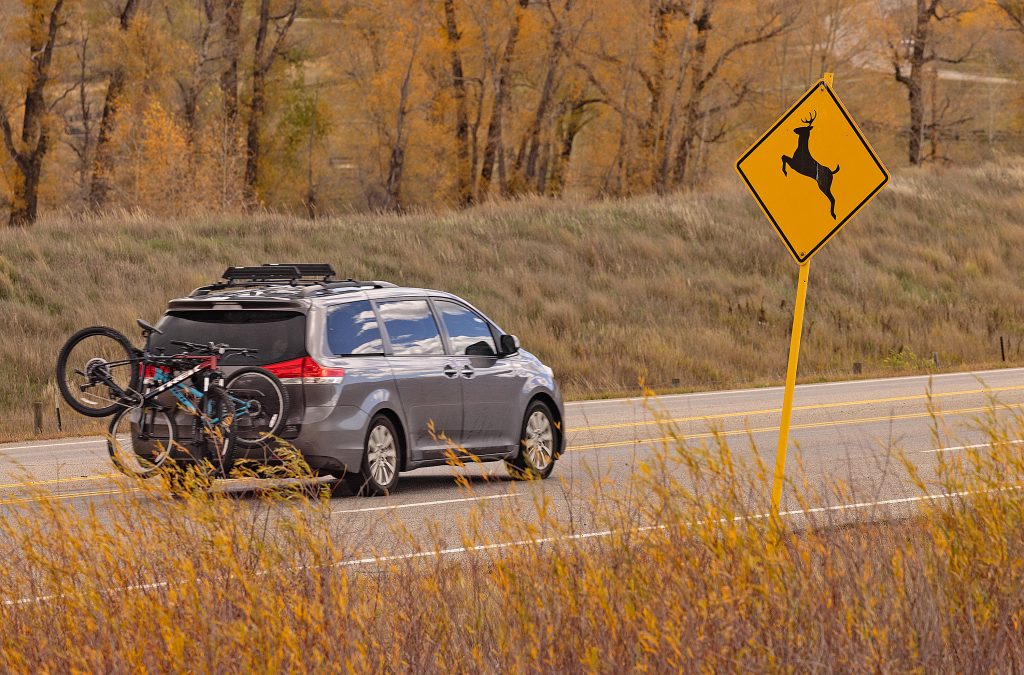
John F. Russell/Steamboat Pilot & Today
There are an estimated one-million vertebrates — animals with a backbone and internal skeleton — killed on U.S. roads each day. That equates to about 11 per second nationwide.
As such, Environment Colorado is conducting wildlife survey campaigns and asking drivers to be on the lookout for signs of animals on the roadside, both dead and alive.
“We are trying to map where animal encounters are occurring, and trying to identify trends that may arise from the data set,” said Andrew Rothman, wildlife campaigns director for Environment America. “We want people to pay attention to the wildlife as they are driving.”
Rothman partnered with Environment Colorado advocate Henry Stiles last weekend to conduct one of these surveys and try to fill in some of the data for themselves.
The organization conducted the survey between Oct. 2-11 — however, that does not mean the public cannot continue to help out after that window closes.
“The public can continue collecting data,” said Rothman. “We just won’t be processing it with the data set we are collecting between Oct. 2-11.”
Much of the current data supports that animals are hit at a higher rate in the fall months as deer, elk and moose are in their rut, and bears, squirrels and foxes fatten up for winter.
Once the data is complete, the solution to vehicle-animal collisions is building wildlife crossings across major roadways in areas where the data points to high casualties.
The data that Rothman and Stiles collected will go toward deciding where to build one of the best solutions for wildlife collisions — wildlife crossings. Wildlife crossings are throughways that wildlife can use to cross major highways and roadways without coming into contact with cars.
Colorado is a leader in wildlife crossings, and a hallmark is the Greenland Overpass spanning Interstate 25 between Larkspur and Monument.
“Roads do two things. They cut up habitat and limit migration,” said Rothman. “Something like the Greenland Overpass gives wildlife an avenue to cross safely. Once one makes it across, we see species begin to utilize the overpasses more and more.”
If placed in areas of high collision rates, the wildlife crossing data says that collisions are reduced by up to 90%, according to Rothman.
More than 25 states have established wildlife crossings. Funding is being spurred by the federal Wildlife Crossings Pilot Program.
“It’s been a wildly successful program so far,” said Rothman. “We hope it continues and expands.”
Funding for the program is set to expire, unless it is reauthorized. It’s likely that it will not be funded until the next Congress is seated after the midterm election.
Fencing provides a funnel for the animals and is a guide to direct them across the overpasses.
“There is good fencing and bad fencing,” said Rothman. “Good fencing is the type that funnels the wildlife across the crossings. Bad is the type that may trap animals such as Pronghorn Antelope.”
Pronghorn are not good jumpers and can often get stuck in the fencing.
However, the Greenland Overpass recently had it’s first Pronghorn crossing, which Rothman and Stiles consider a massive success.
To get involved, download the app called ROaDS, created by the Center for Large Landscape Conservation.
It’s based off the ArcGIS Survey123 app — once downloaded, continue to follow the instructions until you see the ROaDs Colorado project.
There are options to identify crows who may be scavenging roadkill or deer who’ve been hit by cars.
“We tried to make it comprehensive and user-friendly,” said Rothman. “There are many different options to identify wildlife — both alive and dead.”
“The overarching goal of this project is to protect the wildlife that calls Colorado home,” said Rothman. “It’s really important to remember that we share the land with them, and our needs are not separate from theirs. The goal is to help them thrive and continue their migration patterns, just like it is for us to be able to travel using roadways.”


Support Local Journalism
Support Local Journalism
Readers around Steamboat and Routt County make the Steamboat Pilot & Today’s work possible. Your financial contribution supports our efforts to deliver quality, locally relevant journalism.
Now more than ever, your support is critical to help us keep our community informed about the evolving coronavirus pandemic and the impact it is having locally. Every contribution, however large or small, will make a difference.
Each donation will be used exclusively for the development and creation of increased news coverage.