Community Agriculture Alliance: The Summer Ranch
Community Agriculture Alliance
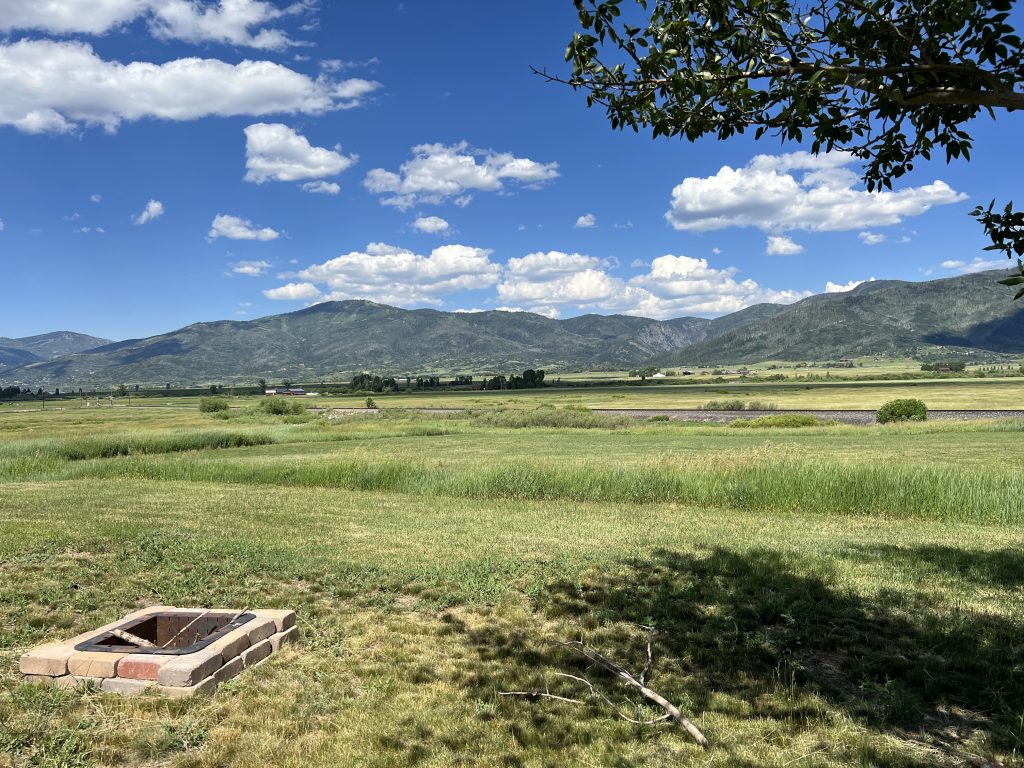
4-H Art of Ranching project/Courtesy photo
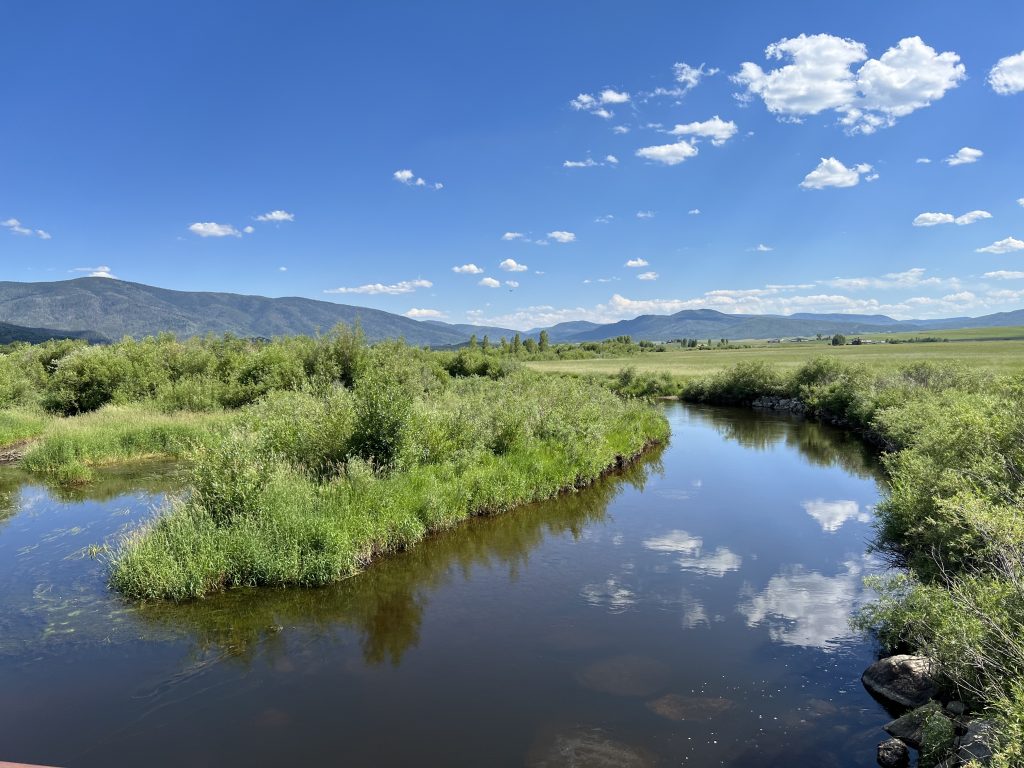
Approximately eight miles south of Steamboat Springs where the Yampa River spreads widest, and the remnants of Sidney lie, is the 153‐acre Summer Ranch, which sits just off the confluence of Colorado Highway 131 and County Road 14.
The Summer Ranch contributes to Colorado’s agricultural history not only through the raising of cattle, grain, hay and rodeo, but also through the connection between tourism and agricultural settlement throughout Colorado.
Settlement
John (Johann) Summer was born in January 1844 at Weiler by Feldkirch, Austria. John immigrated to the U.S. in the early 1870s. Upon arriving in Denver with some friends, he worked for the P.H. Zang Brewing Company. His trade was a cooper, a person who makes and repairs beer barrels.
After working in this role for some time, his wife, Philapina, left Europe to join John in Colorado. Once the couple was reunited, they quickly pursued starting a family having a daughter, Josephine, and a son, John, while living in Denver.
However, life in Denver was not enough to sustain the family. Noted as a very industrious family, the Summer clan was always looking for their next best opportunity at making a living and establishing a home in Colorado. After working in Denver for a while, John decided to go to Georgetown, which looked most promising as the silver mines were booming.
The family joined John in Georgetown in 1875 after the birth of Joseph Frances, the third of the Summer children. Louis Summer was born next in Georgetown on Sept. 10, 1876 — the same year Colorado became a state. Next came Henry, Adolph and August, as the years continued 12 children would be born to John and Philipina, six boys and six girls.
In the mid‐1880s, John moved near the Big Chief Mine where he started a saloon there. The success John achieved in Big Chief led John to become a successful saloon owner in several mining towns: Georgetown, Big Chief and Empire. As the mining boom slowed, John began to look toward a move and a change in profession, not to mention, Philipina wanted her husband to consider ending his saloon days and move to a ranch, which she felt would be a better life for the children.
Around 1885 John took most of the family — John Jr. and Joesphine stayed home to tend to the businesses — on a weeklong vacation to Middle Park. On this trip the kids met ranchers and cowboys in the area, looking at them as if they were superheroes.
In 1889, when Louis was 13 years old, he and his brother John went back to Middle Park to help Leopold Miller in the hayfields. The Miller Ranch they labored on was where the Fraser River empties into the Grand, so they often saw steers being pushed to market. These steers were called “prime beef,” as they had been fattened on native bluestem and wire grass in Routt County. These steers seemed to promise a good ranching life in Routt County, and it never left the mind of the boys.
After a failed search in Ogden, Utah, John Sr. and his brothers, Joe and Adolph, along with a friend by the name of Stutz, headed for Routt County to look for a homestead in the spring of 1889. John was successful in his search through Routt County and took over a homestead relinquishment in the small settlement of Sidney in 1889. At that time, Sidney consisted of nothing more than a saloon, post office and only a few homes. Two local men were hired to build the family a home, and following its completion, the family could start their new life in Routt County.
In September 1889, John Summer and his wife and children traveled by wagon from Empire to the Yampa Valley as part of the growing surge of homesteaders pushing west to ranch and raise cattle. In addition to the cabin built by the locals, the land already contained a makeshift barn, a shed and a small corral.
Coming into town just before winter in 1889, for the Summer family, self‐reliance was the key ingredient to survival. After that first winter their industrious nature led to managing a hay crop, horses, milk cows, cattle, chickens and a garden. The boys in the family also contributed additional sources of food which consisted of hunted game, fish and wild berries. The work on the blossoming ranch kept all hands busy but fed.
Expansion and transition
As the family of 12 children grew, some stayed in the area and some moved on. Louis stayed. He bought land and got into the cattle business, always thinking about the “prime beef” that comes from Routt County.
He initially had 160 acres where Emerald Meadows is now until crickets ruined his grain crop one year. He then sold that land for some nearby irrigated hay meadows. Louis married May Radford, the daughter of a local rancher, on Valentine’s Day in 1907. They had two children: Evelyn, born in 1911, and Vernon, born in 1917.
In the 1920s life changed for the worse as Louis, along with countless others, lost his savings and went broke when the cattle market collapsed. In 1927 Louis moved back to the original ranch with his family and rented from his father. Vernon and his sister attended the Sidney school and eventually transferred to Steamboat Springs for high school.
At the completion of high school in 1934, Vernon’s dream was to be a rancher. Working alongside his father, he was determined to stay on the land and be his own boss. When John Summer Sr. died in 1936, his will divided his estate among his surviving children. Although the ranch was not left to Louis, the debts he carried with his father were forgiven. Freed from that obligation, and with an understanding that Vernon would stay on and work the land, they were able to arrange financing to purchase the ranch from the estate. In 1938 the original quarter section appraised for $4,500 and the upper pasture for $2,500, all of which now belonged to Louis and Vernon.
Together, Vernon and his father continued to raise hay, grain and cattle. Some springs, the cow/calf operation even grew as large as 250 head. The life of a cattle rancher was busy, but often rewarding. The cycle generally consisted of shipping cattle to market in Denver, originally from the Sidney stockyard, and later trucking over the pass, feeding through the winters with a team, calving in the spring, mending and building fences and putting up hay.
Vernon and Louis always did the work together, often splitting the duties required to run the ranch. In his later years, Louis would drive a team while Vernon bucked the hay, for Louis and Vernon both, working the land was what they loved. As a rancher, Louis Summer was active up until 1955, the year he died.
Due to the good relationship between Louis and Vernon, Vernon was able to absorb the ranching knowledge his father had acquired over his lifetime. Using this passed on knowledge and building off of it, Vernon successfully continued the cattle operation and the haying operation, taking over the main ranch after his fathers death.
In 1962 Vernon married Edythe Chritton and together they built a new home, replacing the original homestead that was torn down in 1945, and rejuvenating the home his father had built during his stint owning the ranch. Vernon was a steward of the land over the years as he ran his ranch. He seeded all of the hay meadows, improving the quality of the hay and the production yield.
Vernon’s expertise is memorialized in the numerous awards he received for his care of the land. Some of these awards included the Conservation Award in 1981, The Goodyear Award in 1981, the Colorado Centennial Farm Program award in 1989 at the State Fair in Pueblo, the 1994 Leckenby Award and in 1995 the County Centennial award.
In addition to being an expert horseman and trainer, Vernon served the Steamboat Springs community in many ways. He was chairman of the town’s first planning commission and served along with his wife, Edythe, on the Tread of Pioneers Museum board of directors.
Vernon rodeoed for a very long time — largely calf roping and team roping. In an effort to share his passions, Vernon often mentored young ropers in the team roping events locally. He was also known to share his stories with various members of the community, as well as lend a helping hand wherever he could. In 2012, at the age of 95 Vernon passed away. With no children, Jane and Allan White, Vernon’s neighbors and friends, were left to care for his estate. Vernon, remembered fondly by his community, wanted his estate to continue to be used for agricultural purposes and it was up to Jane and Allan to grant his wishes.
The ranch today
The Summer estate in 2012 consisted of two properties, a 153-acre lower ranch (the main household), and a 286-acre upper ranch. Both properties are under conservation easements and are about four miles apart.
In order to make his living, Vernon used both pieces to support his cattle and hay operations. With this in mind it was the hope of Jane and Allan that these properties would be sold together, in a way that honored Vernon. Ultimately, Jane and Allan built a committee and accepted letters of interest from prospective buyers. After the initial examination the committee narrowed down the pool of candidates and conducted interviews with the remaining interested parties.
Instead of focusing on the highest bidder, the committee focused more on the individual and their goals for the land. Dr. Lee Meyring, a local veterinarian, was one of the interested parties who submitted a proposal to the committee.
Ultimately, it was decided that Dr. Meyring would be awarded the main homestead of 153-acres, while the other 286-acre property was sold to another interested party. The decision to separate the properties did not come lightly, but with increasing property values, and decreasing markets, running a ranch full-time in addition to other professional obligations did not suit any of the bidders.
Dr. Lee Meyring now owns and manages the Summer Ranch, never forgetting the property’s legacy. In fact, every so often Lee finds pieces of the ranch’s history surfacing in his horse pastures. Dr. Meyring and his family now raise hogs and horses on the ranch which they show at the Routt County Fair.
In addition to his vet practice, Dr. Meyring is very involved in the community and 4-H specifically. As a mentor and leader, Dr. Meyring continues the Summer legacy leaving an impact on generations of Routt County youth, while simultaneously shaping the future of the ranch.
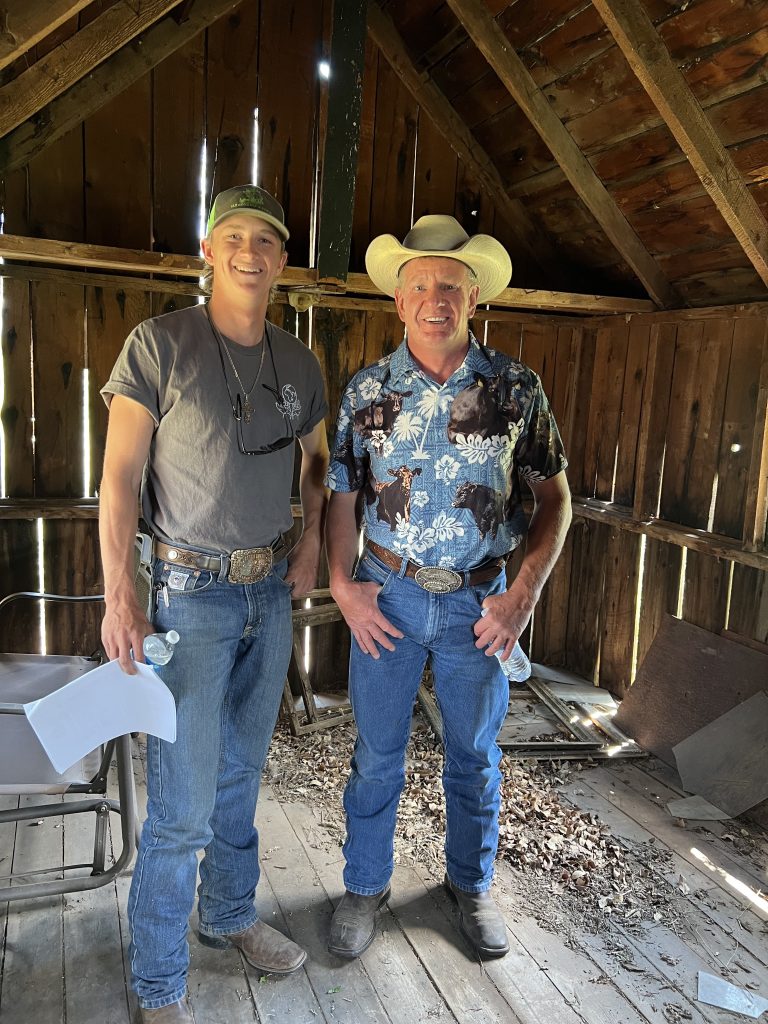
Dale Mize is a Ph.D. student at the University of Illinois and AOR Project Consultant. References include Dr. Lee Meyring, Oral History with Boden Tuminello and the Art of Ranching Project, July 11, 2022; Dr. Lee Meyring, Personal Collection, Steamboat Springs; Jane McCloud and Allan White, Oral History with Boden Tuminello and the Art of Ranching Project, Aug. 1, 2022; Louis Summer, Memoir (Transcription); and the Tread of Pioneers Museum in Steamboat Springs. For additional information, check out Jim Stanko’s “Historic Context of Routt County,” Lauren Lafferty Schaffer’s “Agricultural Context of Routt County” and the Tread of Pioneers Museum.


Support Local Journalism
Support Local Journalism
Readers around Steamboat and Routt County make the Steamboat Pilot & Today’s work possible. Your financial contribution supports our efforts to deliver quality, locally relevant journalism.
Now more than ever, your support is critical to help us keep our community informed about the evolving coronavirus pandemic and the impact it is having locally. Every contribution, however large or small, will make a difference.
Each donation will be used exclusively for the development and creation of increased news coverage.