Community Ag Alliance: Semotan Ranch, Part 2 — Horse-breeding
Jessica Bedell
Leisl Carr Childers
Community Agriculture Alliance
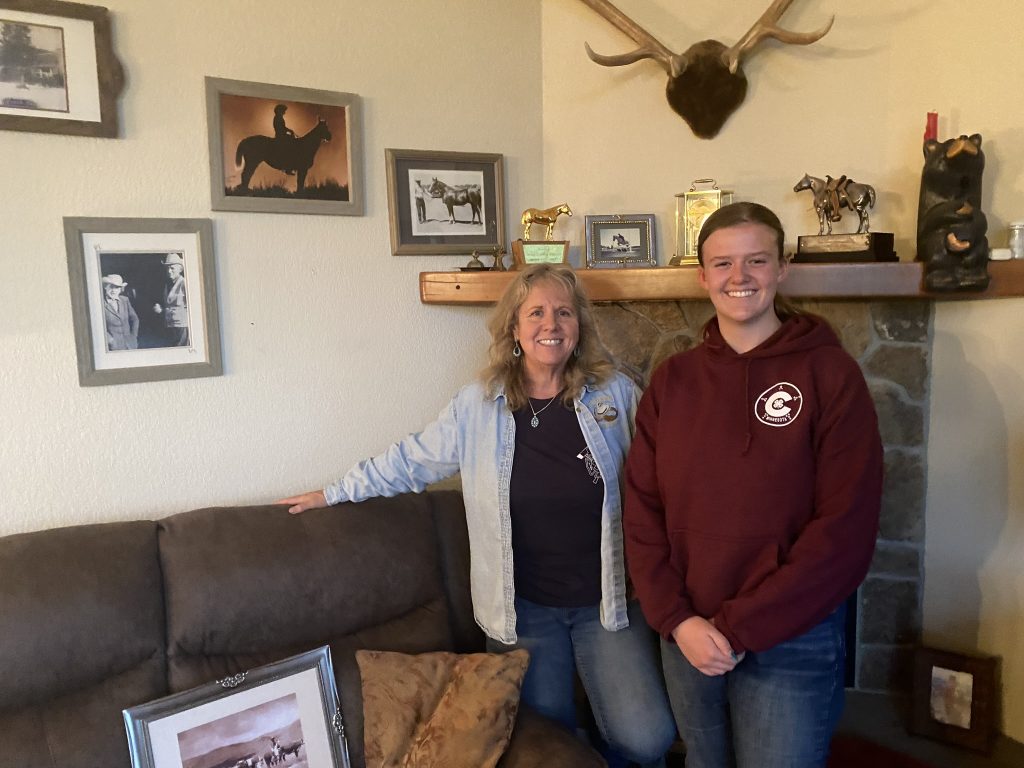
Community Agriculture Alliance/Courtesy photo
The Semotan ranch is located on County Road 56 just two miles west of the Moonhill bridge in Clark.
Trenia Sanford, interviewed by 4-H youth Jessica Bedell, shared a history of the family for the Art of Ranching project. The Semotan ranch has been located in the same 10-square-mile area in Long Gulch since its inception in 1886.
During the mid-twentieth century, Quentin and Evelyn Semotan built a successful horse-breeding operation. The Great Depression had been tough on Rout County ranches. Many in Long Gulch and the Yampa Valley were not able to sustain themselves and some of the ranchers had to sell and move out.
As they left, Evelyn Semotan bought the land with her egg money. She gave the families who had to move out whatever provisions and resources she had to make their transition off the ranch easier. Evelyn provided this support despite the Semotans’ own financial difficulty. By the time Evelyn stopped buying land, the Semotans had 2,500 acres
Their success increased after Quentin bought a 2-year-old stallion, Star Duster, at the National Western Stock Show in 1945. According to Evelyn, initially Star Duster did not show much promise. He was young, not at all fully developed and “stocked,” which meant stiff from the train ride. He wasn’t in very good shape.
Yet, Quentin saw something in him. He trained him, rode him, worked cattle on him, and developed him into an excellent cow horse. Not many people used their stallions as their working mounts, but Quentin and Evelyn both rode, bred and showed their studs.
Star Duster and Quentin beat the famous Texas Quarter Horse stallion Poco Bueno in Denver’s Stallion Championship, and Evelyn remembered the owner saying, “Bet you can’t beat us in Texas.” The man offered to transport Quentin, his family and Star Duster to Texas for the 1948 Champion of Champions Quarter Horse show. Star Duster beat Poco Bueno there, too.
Star Duster was so famous that on the way to the horse show in Texas, the owner of the popular Broadmoor hotel opened up a display stall for him so people could come and visit Star Duster. Star Duster only lost one show in his entire career. The trophies and ribbons from these shows are on display at the Hayden Heritage Museum.
Greyhound buses full of people from all over the United States came to the Semotan ranch to see Star Duster and his colts. Evelyn would make pies and tea for 40 people with each visit. Star Duster even came into the house on Christmas Day to pose for a photo with the family.
As Star Duster and the Semotan name grew in popularity, so did the American Quarter Horse breed. The Semotans continued to breed, raise, and sell horses and as well as registered Hereford cattle. “Some years the cattle supported the ranch, other years it was the horses,” Trenia recalled.
Evelyn kept the records of all the activities that happened on the ranch and the pedigrees of all of the horses the Semotans raised, carefully gathering and documenting all the early quarter horses. Because of her recordkeeping, she was able to supply the new quarter horse association with important records and wrote and recorded the important history of the breed.
She provided AQHA with the records of other family’s horses such as the Peavy family, Coke Roberts, and Si Dawson. If not for her handwritten documents of how the breed started, there might not be any record of those early horses.
In 1957, Quentin and Evelyn stopped breeding Star Duster as they he had bred most of the mares in the area. They sold the famed stallion to J. Ralph Bell, a breeder in Visalia, California. This allowed the family to bring in new blood lines.
The Semotans continued to promote Star Duster colts and kept the mares from his lineage to breed to outside blood stallions, specifically for producing racehorses, ranch horses and other breeding stock. Quentin served as president of the Rocky Mountain Quarter Horse Association and on emerging AQHA committees.
He traveled extensively as a horse show and fair judge. Evelyn donated time to the Red Cross and Steamboat Springs’ emerging electric cooperative, and went door to door to raise funds to help build Routt Memorial Hospital.
While they managed their horse business, they also raised cattle, dairy cows, chickens, and did everyday ranch work along with many other activities. They leased out their hay land for shares rather than incur debt purchasing hay equipment. Trenia remembers her grandfather saying that quite a few ranches had to sell out because of debt.
The Semotan Ranch is the last original family ranch in Long Gulch and Deep Creek.
Part 3 of this story covers the family’s recent history. More information on the Semotan family and ranch is available in a book called Pioneer Horse Breeders, ISBN 978-0-578-53365-0.



Support Local Journalism
Support Local Journalism
Readers around Steamboat and Routt County make the Steamboat Pilot & Today’s work possible. Your financial contribution supports our efforts to deliver quality, locally relevant journalism.
Now more than ever, your support is critical to help us keep our community informed about the evolving coronavirus pandemic and the impact it is having locally. Every contribution, however large or small, will make a difference.
Each donation will be used exclusively for the development and creation of increased news coverage.