Community Ag Alliance: Data driven cattle selection
JK Cattle Company
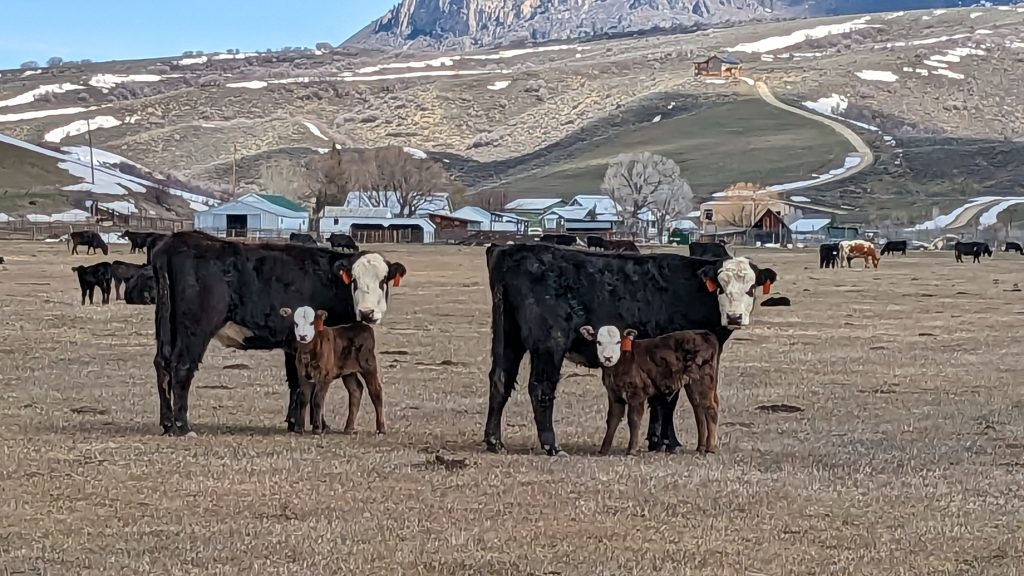
Community Agriculture Alliance/Courtesy photo
Most ranches in the Yampa Valley are cow/calf ranch operations, meaning the cows are kept year-round, and each year a calf is born and sold at weaning time. A cow will typically be productive for 10 years and then need to be replaced. Ranchers can either purchase a new cow or replace from within their own calf crop.
Looking through their heifer calves, they will choose which ones to keep as replacements by looking at the body, birth weight, gain and other visual clues. The other heifer calves will be sold with the steer calves into the beef production line. The kept heifers will grow, mature to breeding age and then be incorporated into the cow herd.
Lately the beef industry has added genetic testing to help in the selection process. There are known genetic markers in the DNA that are economically advantageous such as growth or carcass merit.
A genetic marker test is merged into Genomic-Enhanced Expected Progeny Difference (EPD). An EPD is a genetic prediction of how the offspring of a cow will perform. It has the same predictive accuracy as waiting years for that animal to birth more than 10 calves.
The JK Cattle Company had been choosing bulls and cows based on size and market performance, and these qualities were showing up in the herd, which was great. However, we started to notice that our cows were losing maternal qualities. Our younger cows introduced into the herd had small udders resulting in low milk production, a lower breed-back percentage (not getting pregnant after having a calf) and most notable, losing mothering ability.
We were having new moms who gave birth and not immediately get up to lick off newborn calves, which stimulates heat production and the urge to drink milk. We had problems with cows not staying near the calf, making it hard for the calf to get milk regularly, and we had cows outright abandoning the calf making it an orphan.
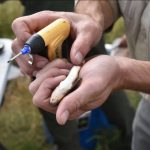
We wanted to change these tendencies, so we turned to genetic testing. JK Cattle company has been using this technology for the last few years. We use a hole-punch-like tool to take a sample out of the ear. It is collected and mailed off. The data is returned to us with individual EPDs, and we start making decisions.
EPD data on each heifer allows for us to increase the maternal traits in our herd but also keep market traits that provide for a quality beef product. For the third year in a row, we specifically looked at milk production, pregnancy rate, longevity, yearling and weaning weights, and docility. Adding in what the heifer looks like, we decide which ones to keep.
Our choices have made a difference. We had less calving deaths, less orphans, weaning weights were great and all of our first-calf cows bred back. It may seem intuitive to want to keep great cows, but our decision tools were limited on how to know if a young calf would make a good mom. Now that we have embraced the new technology we can make better informed decisions.
Krista Monger is the owner and manager of JK Cattle Company.




Support Local Journalism
Support Local Journalism
Readers around Steamboat and Routt County make the Steamboat Pilot & Today’s work possible. Your financial contribution supports our efforts to deliver quality, locally relevant journalism.
Now more than ever, your support is critical to help us keep our community informed about the evolving coronavirus pandemic and the impact it is having locally. Every contribution, however large or small, will make a difference.
Each donation will be used exclusively for the development and creation of increased news coverage.