Colorado’s approaching monsoon season and El Nino conditions create hope for above-normal rainfall
Colorado mountains are forecast to see above-normal precipitation throughout the summer, though wetter conditions will likely overlap with hotter temperatures

John F. Russell/Steamboat Pilot & Today
Colorado is headed toward a potentially wetter-than-normal summer, with promises of an active monsoon season and growing confidence in developing El Nino conditions. However, with hotter temperatures likely, this summer could look different from the mountains’ last El Nino visit.
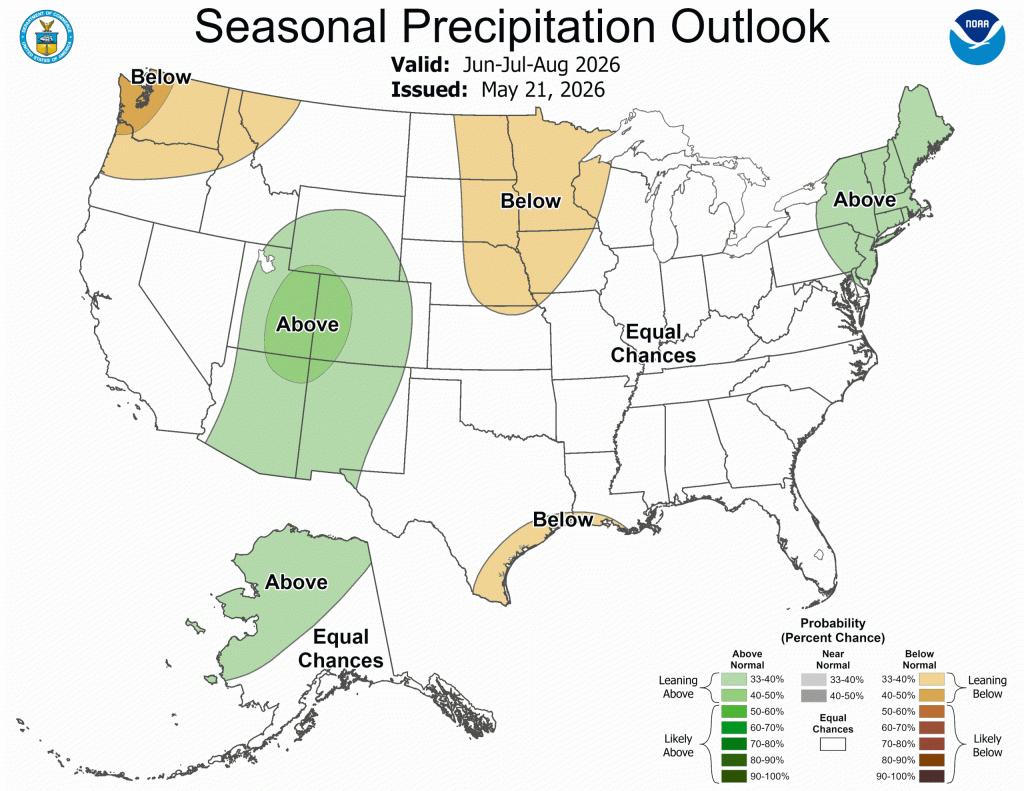
The Climate Prediction Center’s seasonal precipitation outlook shows above-normal chances for rainfall in Colorado from June through September, with the Western Slope and Utah border seeing the highest likelihood of above-average rainfall.
Forecasts also show a strong possibility that Colorado will see an active monsoon season, according to Peter Goble, assistant state climatologist at the Colorado Climate Center.
“There’s definitely some reason to believe that this monsoon season might be an active one right now … especially for Western Colorado,” he said. “Like almost anything in the forecast, that’s not a certainty, but it looks more promising than a normal summer.”
The forecasts for summer showers coincide with those predicting the fast arrival of El Nino conditions, though Goble said he doesn’t currently see a strong tie between El Nino and stronger summer precipitation.
El Nino conditions are defined by unusually warm ocean surface temperatures and have historically resulted in higher odds of above-average precipitation for parts of Colorado.
While neutral conditions have reigned over the past month — meaning neither El Nino or La Nina conditions have influenced global weather patterns — at least one seasonal forecasting model, the North American Multi-Model Ensemble, favors El Nino conditions to form by next month and persist through the end of the year.
“We are still technically in neutral conditions, but it’s getting close (to El Nino) based on some of the ways that we measure sea surface temperatures,” Goble said.
A release published by the center on May 14 predicted that El Nino is likely to emerge during what’s left of spring, with an 82% chance that it will materialize between May and July and continue through the Northern Hemisphere for the upcoming winter. The center predicts a 96% chance that El Nino will remain from December through February 2027.
Historically, El Nino conditions have brought wetter summers and falls, but drier than normal winters to the Northern Rockies. The last time Colorado saw El Nino conditions in the summer was in 2023, which created “a really wet late spring and summer east of the Continental Divide,” Goble said.
Rainfall that year varied significantly across the region, however. Goble said that towns like Vail and Breckenridge saw above-average snowfall for the season, while Aspen was drier than normal.
“That’s not necessarily the way it was every El Nino summer,” Goble said. “There is a statistically significant correlation between El Nino and precipitation for northern and eastern Colorado in summer, but not so much western Colorado.”
While confidence in the arrival of El Nino has increased since last month, there is still some uncertainty in the peak strength of El Nino, according to the Climate Prediction Center. Goble said seasonal forecasts are not very good at pinpointing where exactly the precipitation is going to fall, so it remains to be seen whether this summer follows more recent El Nino patterns or not.
“That still depends on individual storms, especially in the summer season when you can have these thunderstorms that are really small and spatial, but produce several inches of precipitation very quickly,” he said. “Right now, the only thing that we can really say is that, for most of Colorado, these dynamical forecasts of monsoon season … raise the probability of a wet summer for most if not all of the state. Probably the further south and west you go, the higher your confidence gets.”
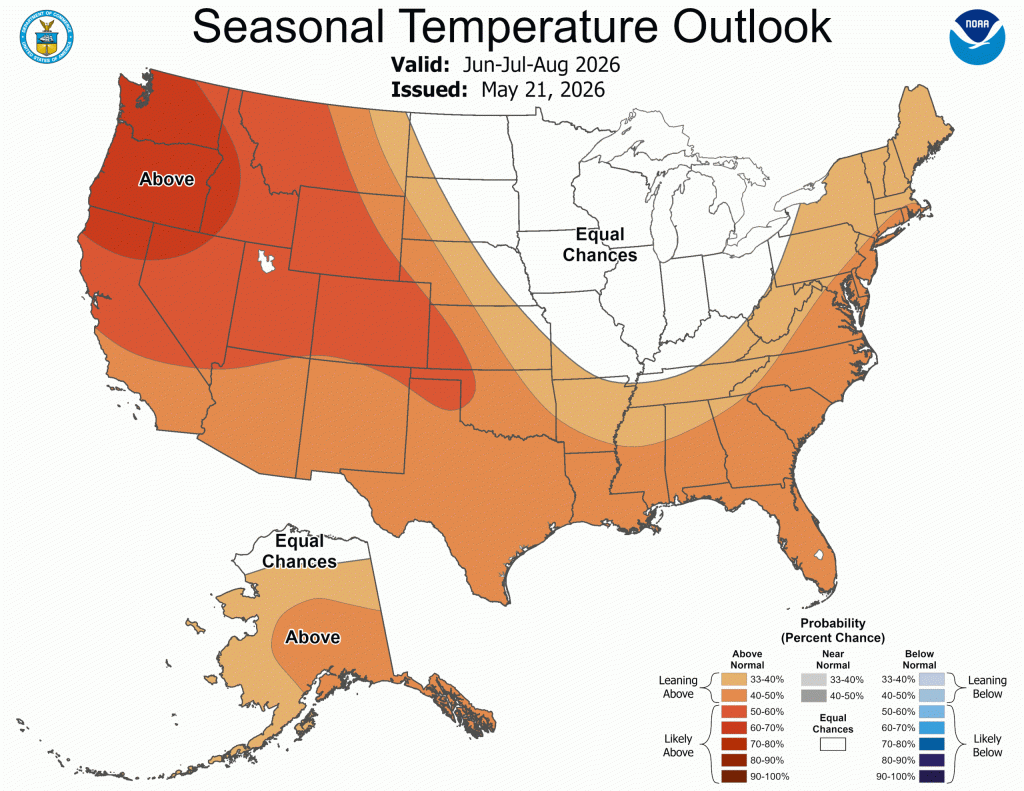
At the same time that Colorado is getting more moisture, the state is expected to experience above-normal temperatures for the summer. This means that, while above-normal rainfall could spell good news for keeping fire risk at bay, vegetation will absorb much of the additional moisture.
“This is where you kind of can’t get around talking about climate change, is that our summers are just warmer than they used to be,” Goble said. “When it comes to drought, that’s concerning, because these warmer temperatures do make it so that the water that’s in the ground in our soils gets used up by vegetation more quickly.”
Parts of more than 10 Western Slope counties remain in the highest drought category despite May’s precipitation, according to May 26 data published by the U.S. Drought Monitor.
Colorado’s unseasonal heat during the second half of March melted out a significant portion of the snowpack earlier than normal. In April, “things turned significantly for the better for Western Colorado,” but it fell short of hitting a new peak for the season, Goble said. Even if Colorado were to see precipitation levels that were significantly above average this summer, Goble said the only thing that can make up lost moisture from a low winter snowpack is a good winter snowpack.
“What’s left is we’ve got some caches of snow still above tree line … and we are on track, I think, for most of that to melt out by the end of June,” Goble said. “However … our major reservoirs and our major rivers really rely on the snowpack and that spring snow melt to deliver the biggest boost to the water supply. So even if we do have a wetter-than-normal summer, it’s highly unlikely to undo the losses to our water supply incurred by the record-low snowpack.”









Support Local Journalism
Support Local Journalism
Readers around Steamboat and Routt County make the Steamboat Pilot & Today’s work possible. Your financial contribution supports our efforts to deliver quality, locally relevant journalism.
Now more than ever, your support is critical to help us keep our community informed about the evolving coronavirus pandemic and the impact it is having locally. Every contribution, however large or small, will make a difference.
Each donation will be used exclusively for the development and creation of increased news coverage.