What the polls say about the primary races for Colorado governor
The race between Democratic candidates Michael Bennet and Phil Weiser appears to have tightened. On the Republican side, Victor Marx has a commanding lead.

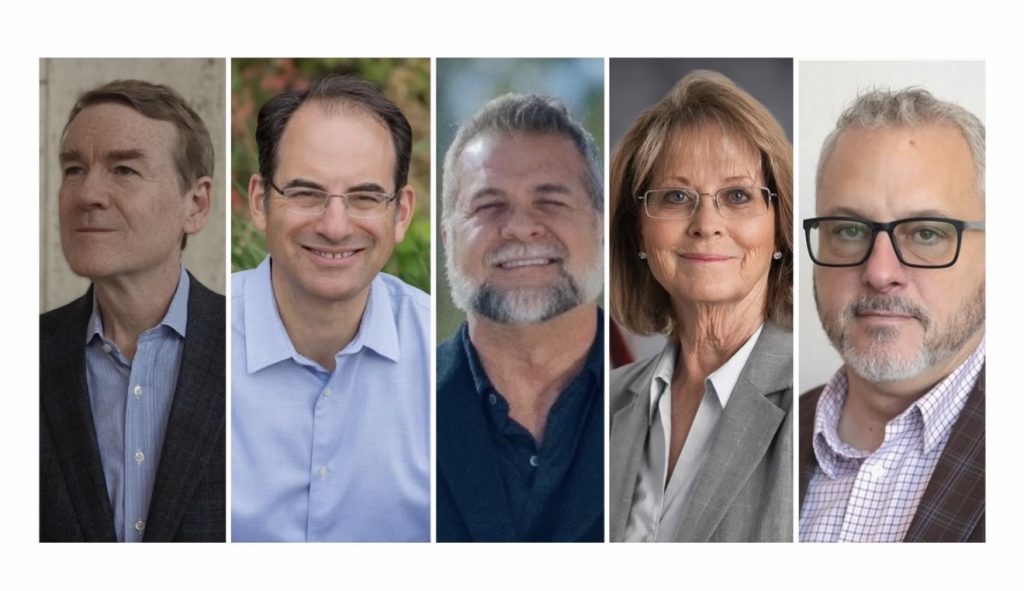
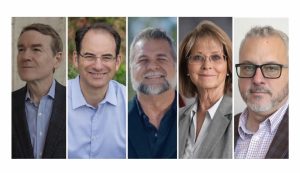
Courtesy photos
Colorado voters next week will decide which Democratic and Republican candidates will face off in November to be the state’s next governor.
Two Democrats, U.S. Sen. Michael Bennet and Colorado Attorney General Phil Weiser, are running for their party’s nomination. In the Republican primary, nonprofit leader Victor Marx is facing off against two state legislators, Sen. Barb Kirkmeyer and Rep. Scott Bottoms.
The primaries will be held on Tuesday, June 30. Polling on the race has largely been carried out by firms with partisan leanings on behalf of candidates or groups supporting their campaigns. While some polls show certain candidates with strong leads, around a quarter of voters said they were still undecided in recent surveys.
Unaffiliated voters make up roughly half the state’s electorate and have the opportunity to vote in either primary, though they cannot vote in both. Here’s what the latest polls show about the state of the race.
Race tightens between Bennet and Weiser
Publicly available polling shows the race between Bennet and Weiser has tightened over the past year.
The two most recent polls show each candidate with a modest single-digit lead over the other. That comes after earlier polling this year and last showed Bennet with commanding double-digit leads.
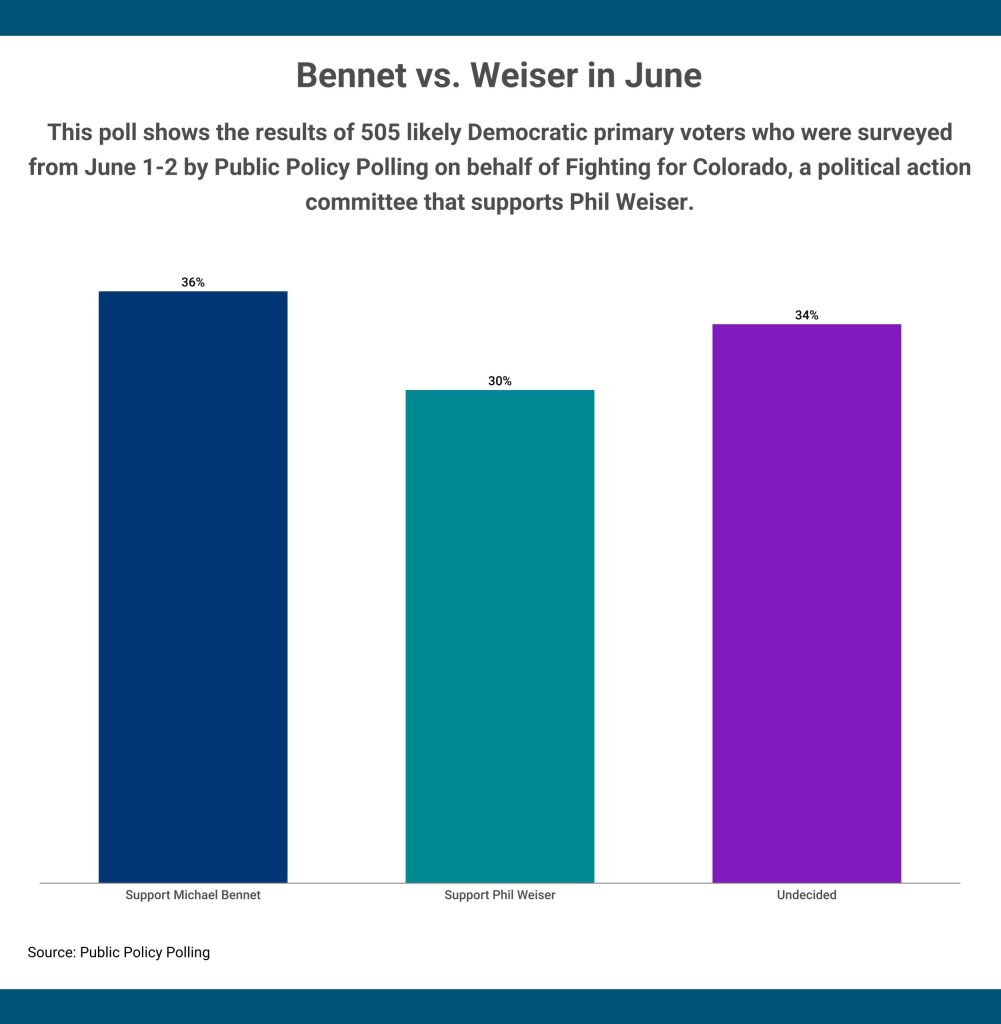
A poll conducted June 1-2 shows Bennet with a six-percentage-point lead over Weiser. The poll of 505 likely Democratic primary voters was conducted by Public Policy Polling, a Democratic-aligned national polling group, via landline and text. It was commissioned by Fighting for Colorado, a political action committee that supports Weiser. Fighting for Colorado has raised $1,282,311 and spent $714,785 to support Weiser’s campaign, according to filings with the Secretary of State’s Office.
Asked which candidate they’d vote for if the election were held at the beginning of June, 36% said Bennet, 30% said Weiser and 34% were unsure. The same poll also showed 50% of likely voters viewed Bennet favorably, 21% viewed him unfavorably and 29% were unsure. For Weiser, 41% viewed him favorably,13% viewed him unfavorably and 46% were unsure. It has a margin of error of 4.4%.
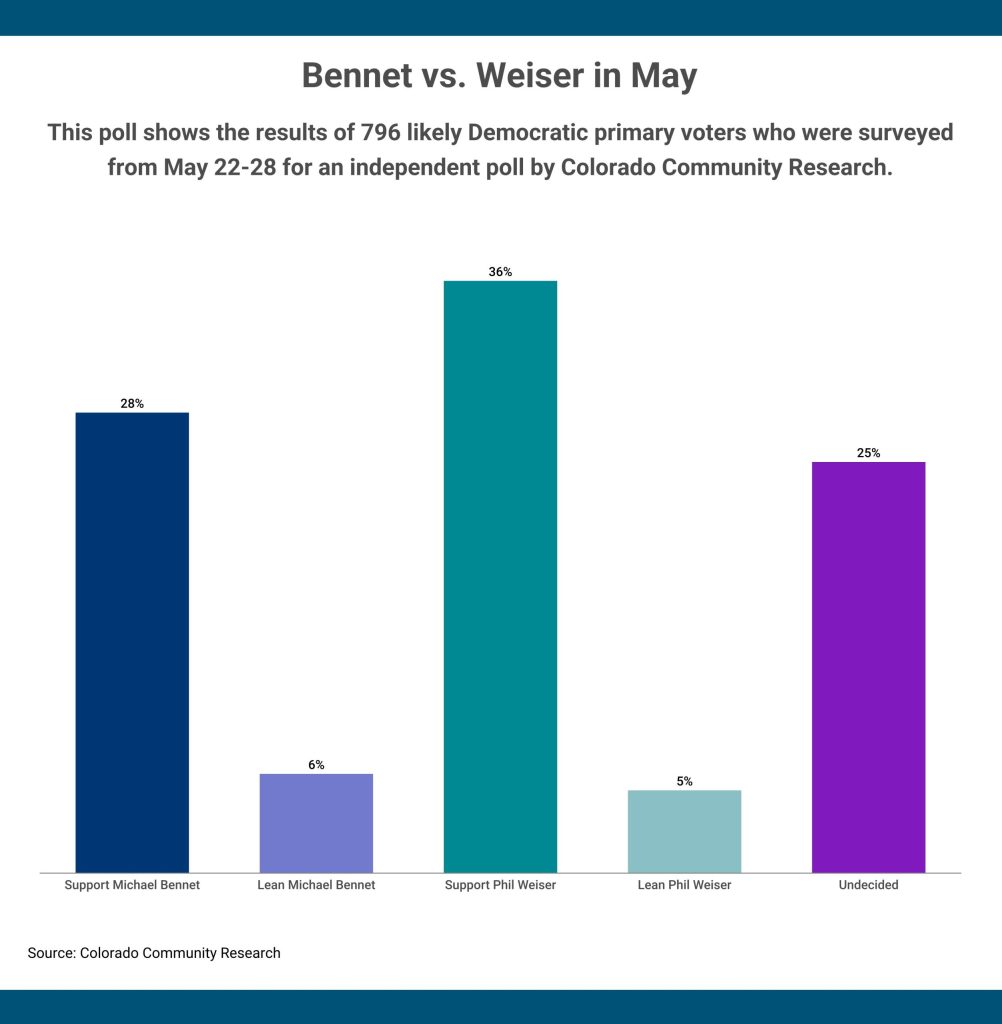
Another poll conducted May 22-28 by Colorado Community Research shows Weiser with an eight-percentage-point lead over Bennet. Weiser’s lead drops slightly to seven percentage points when accounting for likely voters who are leaning toward either candidate. Twenty-five percent of those surveyed said they were undecided.
The poll was conducted among 796 likely Democratic primary voters through an online survey link sent via text. Colorado Community Research has largely worked with Democratic candidates and progressive groups. The polling group said it conducted the survey independently and that it had a margin of error of 4%.
The poll also showed a stronger preference for Weiser among voters who expressed more frustration with the Democratic Party.
Of the likely voters who described Democrats as “ineffective,” 48% supported Weiser, 24% supported Bennet and about 29% were undecided. Of voters who said they view the party as more “reactionary” than “visionary,” 47% supported Weiser, 27% supported Bennet and 27% were undecided.
These recent polls show a much tighter race compared to several months ago.
A poll of 800 likely Democratic primary voters conducted by Keating Research, Inc., a Colorado-based firm, from Jan. 26 to Feb. 1 showed Bennet with a 27-percentage-point lead. Fifty-three percent of surveyed voters said they would back Bennet compared to 26% for Weiser. Twenty percent were undecided.
The poll had a 3.5% margin of error.
A poll of 600 likely Democratic primary voters commissioned by Bennet’s campaign last year showed the senator had a 31-percentage-point advantage, with 53% of voters supporting Bennet, 22% supporting Weiser and 25% undecided. The survey was conducted June 9-11 by Global Strategy Group, a national Democratic-aligned polling firm, and had a 4% margin of error. It did not state how voters were contacted.
Marx has a commanding lead in GOP poll
The first, and so far only, publicly released poll of Republican candidates shows Marx with a large lead over his two GOP opponents.
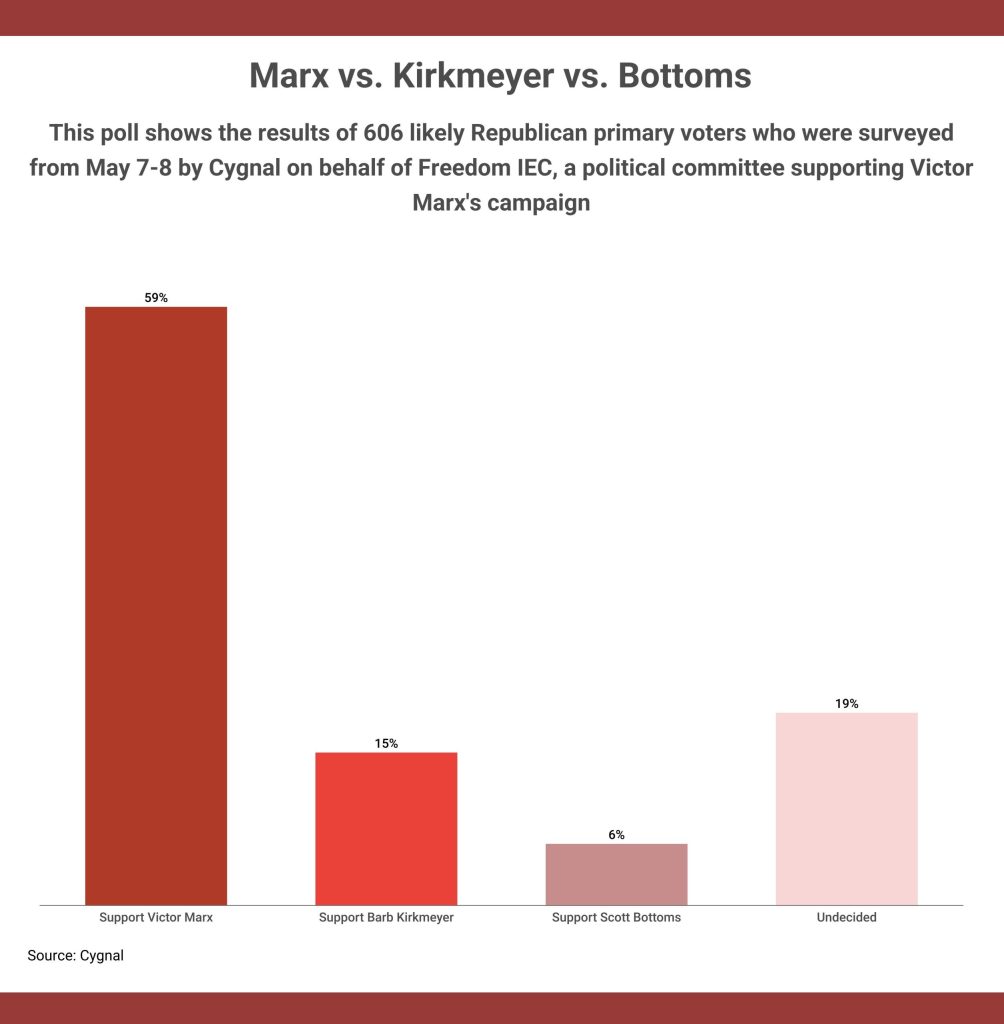
The poll of 606 likely voters in the Republican primary was conducted May 7-8 by Cynal, a national polling firm that works with conservative candidates and groups. It was commissioned by Freedom IEC, a political action committee supporting Marx. Freedom IEC has raised $497,850 and spent $476,203 to support Marx’s campaign, according to filings with the Secretary of State’s Office.
Of those surveyed for the poll, 59.2% said they would vote for Marx compared to 15.1% who backed Kirkmeyer and 6.3% who backed Bottoms. Just over 19% were undecided.
The poll did not specify how voters were contacted.
The poll reported that the top three issues facing voters were taxes and government spending at 21.2%, cost of living at 17.7% and illegal immigration at 16.2%.
The survey also asked voters about the direction of Colorado and their appetite for change. Nearly 86% said the state was headed in the wrong direction, while 12% said it was headed in the right direction and nearly 2% were unsure.
Over 75% of respondents said the state needed a change in leadership, while over 8% said there should be some change, nearly 13% said there should be continuity and 3% were unsure.





Support Local Journalism
Support Local Journalism
Readers around Steamboat and Routt County make the Steamboat Pilot & Today’s work possible. Your financial contribution supports our efforts to deliver quality, locally relevant journalism.
Now more than ever, your support is critical to help us keep our community informed about the evolving coronavirus pandemic and the impact it is having locally. Every contribution, however large or small, will make a difference.
Each donation will be used exclusively for the development and creation of increased news coverage.