CAA: Conception to consumption
Community Agriculture Alliance
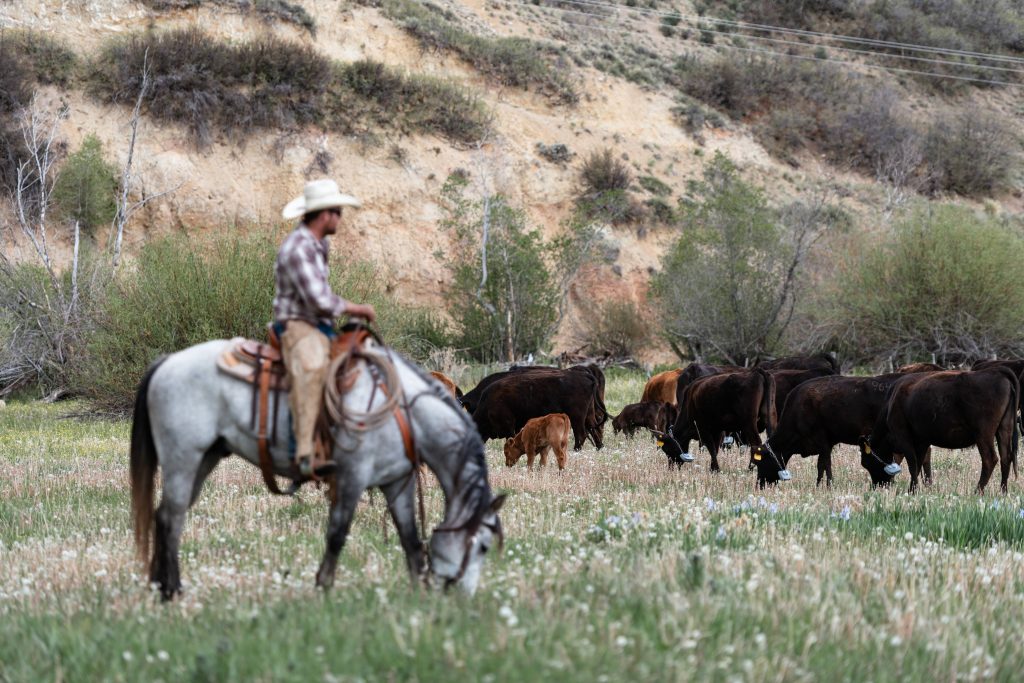
Let’s talk beef. The United States’ commercial cattle industry is an absolute economic and innovative force.
Insulin production, vaccine and antibiotic development, artificial insemination, embryo transfer, in-vitro fertilization, cryopreservation, ultrasound technology (and any other reproductive technology you can possibly think of), genomic testing, digestive monitoring devices, row-crop production/precision agriculture, Hazard Analysis and Critical Control Points (HACCP), epidemiology and biosecurity, the list goes on and on …
It is undeniable, the commercial cattle industry has been a proving ground for technologies that have infiltrated human society and improve biological efficiency in our modern world. These leaps and bounds in innovation are not infallible.
We have absolutely paid the ecological, environmental, and human health price for these advancements along the way, yet two paradoxical realities can coexists driven by one ultimate truth:
The consumer, knowingly or unknowingly, has all the power … You drive every technological and economic advancement. You dictate each and every industry trend and fad. You determine where we reinvest returns. You determine the direction of our industry.
Back to beef. Due to the pressure to produce more beef with fewer resources, the commercial cattle industry has split into areas of expertise in order to create efficiencies and create economies of scale. An extremely elementary explanation of the beef lifecycle is as follows:
Cow/Calf Operation: This is the foundation of our cattle industry. There are roughly 600,000 producers in this sector. Cows are bred by bulls and 283 days later a calf is born. These producers wean their calves at roughly 550lbs or 7 months of age and get paid by the pound of live calf produced.
Stocker/backgrounder: A stocker operation buys weaned calves from cow/calf producers and their sole objective is to cheaply and efficiently put weight on weaned calves. They will commonly buy calves at 550 lbs. or 7 months old and sell cattle at 850lbs or 17 months old.
Because there is a lot of overlap between the cow/calf and stocker, and between the stocker and feedlot producer, the exact number of producers that participate in this phase of the cattle industry is constantly changing and is not precisely known but is estimated around 50,000 producers/year.
They get paid from their cost basis of cattle, cost of gain, and sale price per live weight pound produced.
Feedlot: Feedlots aggregate cattle from the stocker operations and consolidate to a centralized location to feed cattle until a slaughter weight.
They will commonly buy cattle at 850 lbs. or 17 months of age and feed them to a finished weight of 1300 lbs. and 20 months of age. There are roughly 1000 feedlots that have a capacity of over 1000 head of cattle on feed. They get paid from their cost basis of cattle, cost of gain, grade of carcass produced, and pounds of beef produced.
Packer operations: There are 4 packing operations (2 of which are majority owned by companies outside the US) that buy, slaughter, process, and distribute 80-85% of the beef sold to consumers in the US.
Because they own a majority of the feedyard capacity, they get paid from their cost basis of cattle, processing and distribution costs and sale of boxed beef and sale of aggregated byproducts.
The commercial cattle industry deserves recognition for creating one of the world’s most efficient food production systems. It has continually adapted to consumer expectations for affordability, consistency, and food safety. It has paved the way for industrial, reproductive, and medical innovation. It has created
an environment so dependable, secure, and complex, the consumer has resigned to accept status quo as “as good as its going to get.”
However, so many decisions in the commercial cattle industry are made in isolation and focused on the individual industry sector.
There are producers here in the Yampa Valley that care for the land and the animal from conception to consumption offering the opportunity to enjoy not only an exceptional product but also a closer connection to the land, the livestock, and the families who have cared for them every step of the way.
Determine the direction of our industry.
Chase Hall is the manager of Yampa Valley Ranch








Support Local Journalism
Support Local Journalism
Readers around Steamboat and Routt County make the Steamboat Pilot & Today’s work possible. Your financial contribution supports our efforts to deliver quality, locally relevant journalism.
Now more than ever, your support is critical to help us keep our community informed about the evolving coronavirus pandemic and the impact it is having locally. Every contribution, however large or small, will make a difference.
Each donation will be used exclusively for the development and creation of increased news coverage.