‘A homecoming of sorts’: Yonder Mountain String Band returns to Steamboat Springs Jan. 22 for performance at Strings
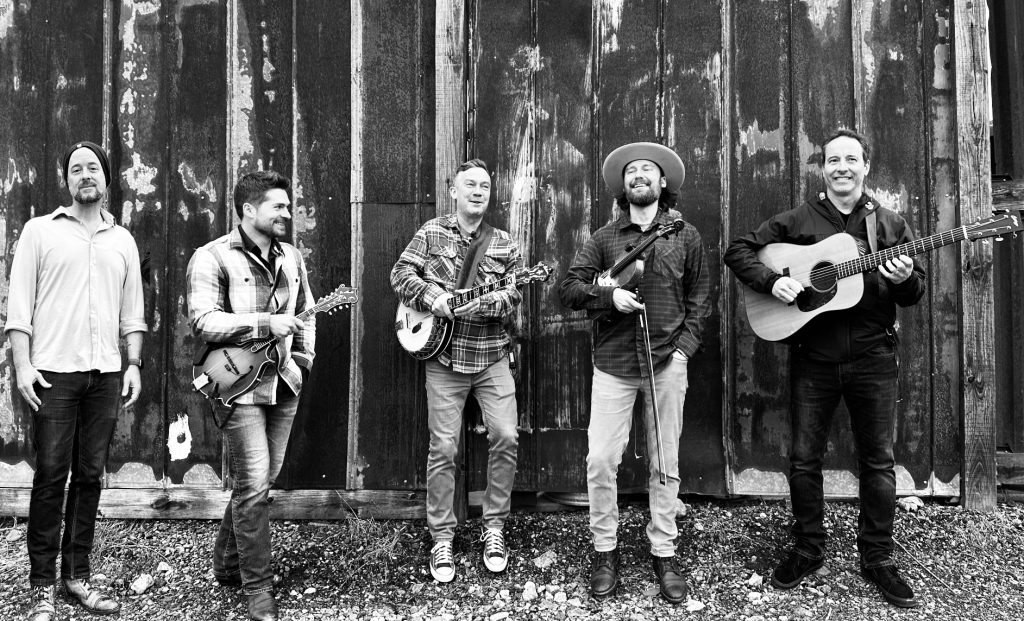
Courtesy Photo/Robin Vega
Yonder Mountain String Band has never been a group built around rigid onstage or offstage plans. Despite that fact, their annual pilgrimage to Steamboat Springs has become a type of homecoming for the group. Concurrently, it has also developed into one of the most anticipated performances for music lovers throughout the Yampa Valley.
The bluegrass-infused group returns to the Strings Music Festival for a 7 p.m. show on Jan. 22.
The band’s origin story started with a simple question asked in a bar in 1998, and a quick answer that turned into a long-running career.
Adam Aijala did not move to Colorado with the intent of helping to build one of Colorado’s most iconic bluegrass groups. Instead, the recent college graduate came west with a forestry degree in hand and a friend in Nederland who promised a music scene full of “open pickin’ circles” and possibilities.
Not long after, Aijala found himself in a bar called the Verve, guitar in hand, trading harmonies with banjo player Dave Johnston and mandolinist Jeff Austin.
“I went and got a beer at the bar and I turned around,” Aijala said. “Dave and Jeff were both in my face and asked, ‘Do you want to be in a band?’ I said, ‘OK.'”
That moment marked the beginning of Yonder Mountain String Band.
Nearly three decades later, the group continues to carry forward the spontaneous energy that defined their creation.
The band’s relationship with Steamboat Springs has also grown over the years through a variety of performances including festival appearances and stand-alone concerts. Aijala said the reception that they receive in the Yampa Valley stands out, including during the group’s past performances at Strings.
“I feel welcome every time we come,” he said. “It almost feels like a homecoming of sorts. We don’t live there, but it just feels nice whenever we play because it’s a warm reception.”
Aijala described the Steamboat crowd as easy to read and said the audience’s response is evident in the energy and attentiveness of the room, even when fans are not especially loud.
“A lot of times it is visual,” he said regarding playing at Strings. “Seeing smiling faces is always a good indication that people are having a good time.”
The fixation on creating a meaningful live experience has been central to Yonder since its earliest days. The band played a major role in popularizing a musical style that blends bluegrass instrumentation with improvisation and the extended song structures of jam bands.
Over time, the group became a defining name in the jamgrass genre as they stretched traditional acoustic playing styles into longer, experimental performances.
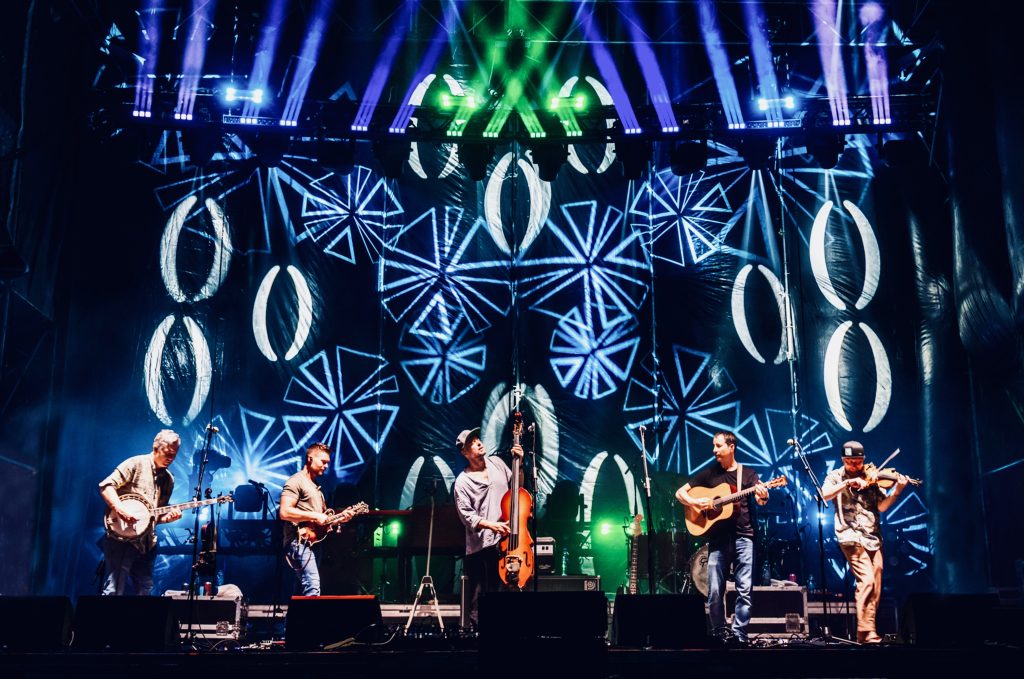
Many of the members of Yonder Mountain String Band were not musicians who grew up in bluegrass households, and Aijala said the collective core of the band arrived in the genre through other paths.
Aijala described his musical background starting with punk, hardcore and metal before he shifted into classic rock and the Grateful Dead. He said he was introduced to bluegrass after learning that Jerry Garcia had played in Old and in the Way. From there, he fell down the rabbit hole and explored artists such as David Grisman and Peter Rowan. With every step, he went deeper into the genre’s history and foundations.
He noted that musical discovery took more effort in the 1990s than it does now.
“It’s almost laughable now with how accessible music is,” Aijala said. “But back then, I felt like I had no direction. I didn’t know where to look.”
The solution came through community. After he met Johnston and Austin, they passed him mixtapes which were loaded with bluegrass artists.
“That’s how I really was introduced to Jimmy Martin, Joe McCoury Band, Bill Monroe and a lot of the early stuff,” he said.
The four founding-era members also brought different nonbluegrass influences into the mix. Aijala said Johnston had a similar background to his own, shaped by skate culture and the music that came with it. Kaufmann grew up around jazz and big band music through his father before he found his way to bluegrass through groups like Bela Fleck and the Flecktones and Phish. Austin, Aijala said, was a Deadhead who also took in a range of other material, including show tunes, when he was younger.
Those combined influences became part of what the band turned into as it started to write original music. While the members came together through a strong bluegrass strain, they quickly realized the material they were creating did not always fit inside the genre’s traditional definitions.
“We started showing each other our originals,” Aijala said. “That’s when we noticed that our music was sort of bluegrass, but not totally bluegrass.”
Instead of narrowing the sound to fit a template, the band wrote songs that reflected individual voices with collective input. Aijala said that approach became a defining feature of the group’s identity.
The band’s creative process has been evolving ever since, but the basic structure remains similar. Aijala said that early in their history, the members worked together more on arrangements and structure than on lyrics. Over time, lyric writing became more collective.
“Back in those days, we didn’t help each other as much with lyrics as we do now,” he said. “We now work together on the lyrics a lot.”
Yonder’s lineup has shifted over the years, a change that has also influenced its sound. Aijala said the band has moved through multiple “incarnations” while maintaining the original idea of giving each member space to bring individuality to the music. The current lineup includes Aijala, Johnston and Kaufmann alongside newer members Nick Piccininni and Coleman Smith.
That evolution also shows up in the studio. The band released “Nowhere Next” in November 2024 and has already recorded another album.
“This is the quickest turnaround we’ve ever done between having two records back to back,” he said.
The band recorded the album in March 2025 and finished additional work later in the year.
Aijala said one track on the upcoming project is a long piece built around a live studio jam. The band recorded the core song, and then just kept on playing.
“We did it all live,” he said. “We played the song. After the song ended, we just riffed.”
The band captured two takes that ran about 20 minutes each, then selected one and made small edits that resulted in the final track.
“It’s mostly all just one take,” Aijala said. “That was really cool.”
The approach reflects how Yonder has handled its live shows for years by establishing structure while still allowing room for improvisation.
“We don’t do the same set lists,” he said. “We don’t even know what we’re really doing until hours before the show.”
The band’s goal, he said, is to build a set with momentum and variety.
“We try to build a show that ebbs, flows and keeps people interested,” Aijala said. “We have a system when we do set lists, and usually we try to make one for people with no attention span.”
That mix of planning and flexibility will be part of the Jan. 22 performance at Strings. Aijala said the band has already played two songs from the upcoming album and expects to keep blending their new works into its sets.
“I would think we’ll do at least one of the new ones,” he said. “But as far as anything beyond that, we just try to build a show.”
For Steamboat Springs, the band hopes for the familiar engaged audience and an energetic connection between the stage and dance floor.
For more information on the Jan. 22 performance at Strings, or to purchase tickets, visit StringsMusicFestival.com/events.

Support Local Journalism
Support Local Journalism
Readers around Steamboat and Routt County make the Steamboat Pilot & Today’s work possible. Your financial contribution supports our efforts to deliver quality, locally relevant journalism.
Now more than ever, your support is critical to help us keep our community informed about the evolving coronavirus pandemic and the impact it is having locally. Every contribution, however large or small, will make a difference.
Each donation will be used exclusively for the development and creation of increased news coverage.