Yampa Valley Housing Authority opts against November 2026 Slate Creek annexation measure
Ballot question for long-proposed housing project now targeted for 2027

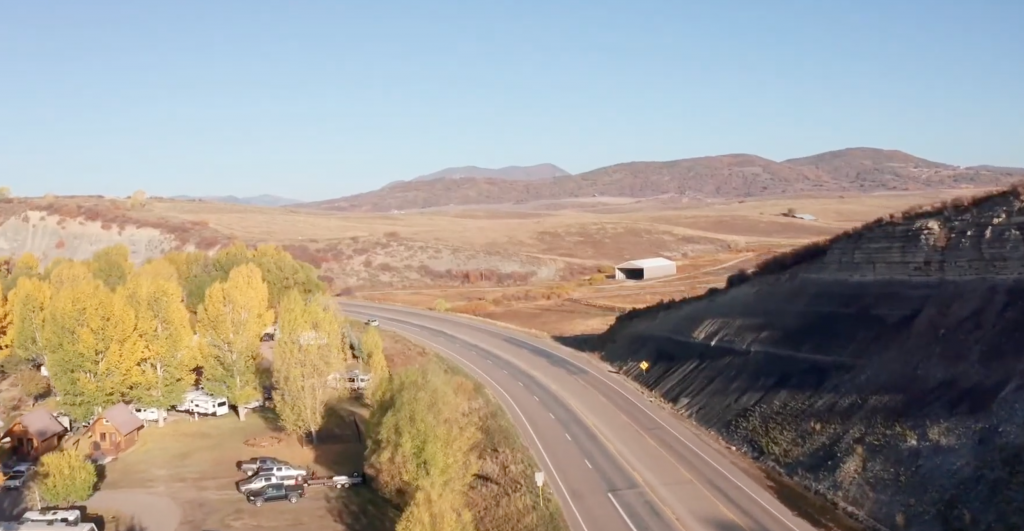
Yampa Valley Housing Authority/Courtesy photo
The Yampa Valley Housing Authority has decided against submitting a petition to the Steamboat Springs City Clerk to put an annexation measure for the Slate Creek Neighborhood — formerly known as Brown Ranch — on the November 2026 ballot, instead formally committing to their original roadmap to put the annexation question on the November 2027 ballot.
The decision came after an hour-and-a-half discussion at a special meeting convened by the housing authority Thursday afternoon, where board members and staff discussed pros and cons of a fast-track ballot measure versus a longer timeline and public education campaign.
Thursday’s meeting follows the conclusion of the initial planning phase for the Slate Creek Steering Committee, which consists of representatives from the city of Steamboat Springs, Routt County and the Yampa Valley Housing Authority, and has met regularly since February.
The committee’s final three-hour meetings, held June 17 and 18, yielded two noteworthy results: selection of the housing authority as project manager for the long-proposed affordable housing project, and consideration of a November 2026 ballot measure to annex the land into city limits.
As project manager, the housing authority will have the option to bring on an owner’s representative and additional contractors as needed to increase capacity to guide the committee toward an annexation vote going forward, according to the meeting summary.
While YVHA will be responsible for developing options that respond to direction received from the committee, the committee will make the ultimate decisions on the project plan using a consensus-based model on options presented by the housing authority.
The consideration of what Steamboat Springs City Councilor Gail Garey called an “accelerated annexation” arose within the last hour of the June 18 meeting, when Councilor Dave Barnes questioned whether the committee needs to wait until 2027 to put an annexation measure on the ballot.
In an interview earlier this week, Barnes told the newspaper that the committee has struggled to meaningfully engage with developers without the city’s entitlements of the land.
“You go through all this analysis, you go through all this brain damage, and you try to master-plan the unit mix and size and neighborhoods and scale and AMI levels, and we just keep getting nowhere,” said Barnes.
He noted that the passing of a relatively small annexation, tied specifically to limitations of the West Steamboat constraints analysis presented to the city in early June, could get the ball rolling.
That analysis showed that 400-500 housing units could feasibly be constructed for the project, given drinking water capacity. The analysis further noted that move-ins before 2029 would be infeasible.
The housing authority had initially proposed to construct 2,264 affordable and attainable housing units on 420 acres of donated land owned by the Yampa Valley Housing Authority west of Steamboat Springs by 2042.
Barnes was a member of both the “Vote NO on Brown Ranch” and the “Citizens for a Better Plan” organizations during the campaign for the failed 2024 annexation vote, and said he had been rallying folks from those groups to support a ballot measure this year.
Committee members have also discussed the metric that odd-year elections tend to yield an older skew of voters, while even-year elections tend to attract younger voters, generally resulting in higher overall turnout.
But even the perceived rallying of what was previously the Brown Ranch opposition was not adequate for housing authority board members — the majority of whom signaled almost immediate reluctance to a November 2026 ballot measure — with the primary concern being the lack of community engagement.
The pros of an expedited annexation: potentially faster delivery of affordable housing on the Slate Creek parcels; the opportunity to provide a “proof of concept” for the area; the ability to establish zoning, which would create a more direct path to development entitlements; and, as Barnes said, allowing the housing authority to engage a development partner sooner in the process.
The cons largely revolved around timing. Beyond the lack of time to engage community members, a November 2026 ballot measure might not allow sufficient time to work through a development plan with unit types and mix attached.
YVHA would have been required to submit a petition by Tuesday, and the Steamboat Springs City Council would have considered a resolution to accept or reject the petition at its July 7 meeting.
Both Garey and Barnes said that had YVHA chosen that path, the city would have encouraged as much public comment as possible, both ahead of and at the July 7 meeting.
Board members also worried that an annexation attempt this year could undermine efforts to do a another annexation in the future.
One board member expressed that an expedited annexation could be equivalent to “sidestepping” the community.
Board member Angelica Salinas, a Routt County commissioner, reminded her colleagues that the Deliberation & Stewardship Team undertook an intensive six-month community engagement process prior to formation of the Slate Creek Steering Committee.
The team was composed of community members with diverging opinions on Brown Ranch, along with the introduction of consultant firms The Civic Canopy and Community Builders, which would go on to facilitate four 3.5-hour meetings with the team from April through August for what was called Phase 1.
The goal of Phase 1, according to the consultants and steering committee members, was to foster mutual understanding around the affordable housing issue and explore areas of agreement for Brown Ranch’s future direction.
As the Phase 1 process moved forward, the consultants added “inquiry” teams to investigate specific technical questions and held over 25 small-group meetings with specific stakeholder groups, with the aim of expanding the scope and depth of community participation.
Whether the DST would proceed to Phase 2 would be determined based on the extent to which the team had consensus that there was a viable path for Brown Ranch at all — and by the final August meeting, the agreement was nearly unanimous.
According to multiple DST members, however, they have not heard from the consultants on next steps since early December.
While community trust has indeed surfaced as an ongoing issue since the previous Brown Ranch campaigns, its manifestation has been nuanced.
Community members have raised a litany of issues over the years, from the size of the initial plan, to the seemingly delayed release of a soils report, to City Council’s attempt to reverse the decision being put to a public vote, to the continued employment of former Executive Director Jason Peasley, who signed a mutual separation agreement with the authority this past spring.
Whether a longer public education campaign will successfully improve community trust — and result in some iteration of the Slate Creek Neighborhood/Brown Ranch plan making it onto the November 2027 ballot — remains to be seen.





Support Local Journalism
Support Local Journalism
Readers around Steamboat and Routt County make the Steamboat Pilot & Today’s work possible. Your financial contribution supports our efforts to deliver quality, locally relevant journalism.
Now more than ever, your support is critical to help us keep our community informed about the evolving coronavirus pandemic and the impact it is having locally. Every contribution, however large or small, will make a difference.
Each donation will be used exclusively for the development and creation of increased news coverage.