Forests are having a hard time recovering as the West sees more fast-moving wildfires, according to a new study
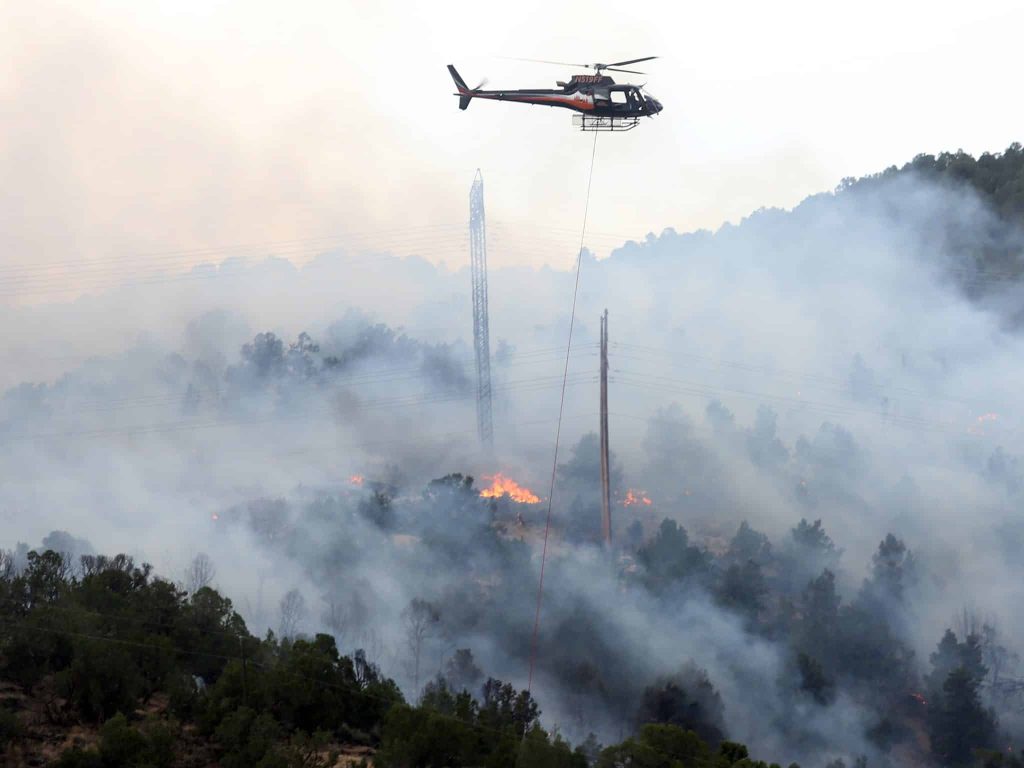
The East Troublesome Fire that burned more than 100,00 acres in less than a day help provoke some of the questions researchers explored in this study

Austin Colbert/The Aspen Times
Extreme wildfires that burn quickly and intensely are making it harder for forests in the West to recover, according to a new study from researchers at Western Colorado University.
The study published last month in the peer-reviewed journal Science Advances compared 3,500 wildfires that together burned more than 100 million acres in conifer forests across western North America between 2012 and 2023.
“What we found was the faster a fire grows across the landscape, the more impact it has to those landscapes,” said Western Colorado University professor Jonathan Coop, who authored the study. “The question of whether a landscape will recover toward what was there before is becoming an increasingly important question as we end up with a warmer and drier climate and more and more of these kinds of fires.”
To conduct the study, researchers from Western Colorado University, Colorado State University, University of California Berkley, the U.S. Forest Service and the Canadian Forest Service compared how quickly fires moved with what trees remained after they burned.
The study found that as fire spread rates increased, so did the intensity of the fire and the amount of forest that experienced nearly total tree mortality. The distance to surviving trees that would be capable of reseeding the burned area also increased with fire spread rates, according to the study.
Coop said that amid human-caused climate change, which is leading to warmer, drier conditions across the West, scientists expect ecosystems to become less habitable for tree species. But, he added that “fire can catalyze that transition very rapidly”
Since seeds from living trees are usually required to repopulate burn areas, severe fires that leave large areas without living trees make it harder for forests to reestablish themselves — especially under increasingly warm and dry conditions, Coop said. In some cases, he said the forest may not be able to recover at all and may transition into shrublands or other ecosystems better suited for warmer, drier conditions.
“In southern Colorado and northern New Mexico or parts of Utah, we might see shifts from ponderosa pine or dry mixed-conifer to oak shrub,” Coop said. “In other places, we might lose pinyon-juniper and its turning into more of a weedy, cheatgrass-dominated landscape, where prior to the fire there was a juniper woodland.”
Coop said the questions that this research explored were provoked after Colorado experienced extreme wildfires in 2020, including the East Troublesome Fire that burned more than 100,000 acres in less than 24 hours.
He noted that these types of fast-moving, destructive wildfires are becoming more common amid climate change, which is caused by burning fossil fuels that release heat-trapping gasses into the atmosphere.
“That is one of the take-home messages,” Coop said. “These problems are only going to get worse as long as climate change proceeds. Until (carbon) emissions are zero, the problem is only going to get worse.”
The study also suggests practical applications for forest management.
The findings highlight the importance of managing forests to prevent high-severity fire, including fuels reduction projects and mechanical thinning, Coop said. Because many Western forests are adapted to high-frequency, low-severity fires, he said the study suggests that forest managers may also want to increase their use of prescribed fire to treat forests.
The study also points to the importance of active management practices that attempt to restore forests after a fire, Coop said, noting that forests provide many benefits, from recreational and aesthetic value to watershed protection, carbon storage and habitat for various species.
Coop said the study expands on previous research at Western Colorado University showing that a relatively small number of extreme wildfire events account for a disproportionate amount of the total burn area each year, that low snow results in more severe wildfires that damage forests and that aspen forests can slow wildfire spread and serve as fire breaks. He said the body of research shows how wildfires and forest health in the West is changing amid climate change.
“It’s not just fire: It’s drought. It’s beetles. You don’t have to look very far out here in western Colorado to see dead trees — and a lot of dead trees,” Coop said. “These things are all related. They have the fingers of climate change all over them. It’s not rocket science that it’s a lot easier to make a campfire with dry wood.”




Support Local Journalism
Support Local Journalism
Readers around Steamboat and Routt County make the Steamboat Pilot & Today’s work possible. Your financial contribution supports our efforts to deliver quality, locally relevant journalism.
Now more than ever, your support is critical to help us keep our community informed about the evolving coronavirus pandemic and the impact it is having locally. Every contribution, however large or small, will make a difference.
Each donation will be used exclusively for the development and creation of increased news coverage.