Vail Resorts is facing its 3rd lawsuit this year alleging anticompetitive behavior — this time from an investor
The lawsuit from the Vail Resorts stockholder cites 2 other lawsuits filed in U.S. District Court this year

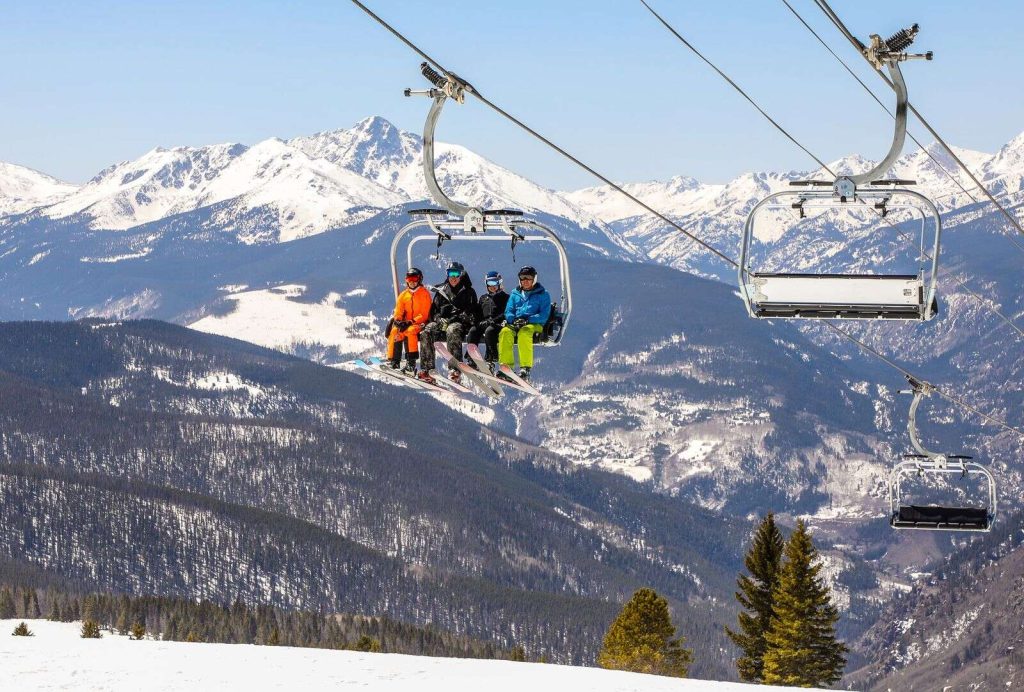
Chris Dillmann/Vail Daily
Vail Resorts is defending itself from its third lawsuit this year accusing the company of anticompetitive business practices — and this time an investor is the one suing.
Gary Peterson, an investor in Vail Resorts, filed a “stockholder derivative complaint” in U.S. District Court in Denver on Aug. 24. Peterson’s suit claims top company executives breached their fiduciary responsibility to stockholders, citing claims of anticompetitive practices raised in two other lawsuits filed in the same court earlier this year
“The (company executives) either knew that Vail was violating the antitrust laws and its own code and failed to halt the conduct, or consciously disregarded the red flags it generated,” the 55-page complaint states.
Vail Resorts is the largest ski resort company in the world, with more than 40 mountain resorts across four countries. The company is headquartered in Broomfield. Its resorts in Colorado include Vail Mountain, Breckenridge Ski Resort, Keystone Resort, Beaver Creek Resort and Crested Butte Mountain Resort.
The investor’s lawsuit names Vail Resorts and the company’s board of directors, including Chief Executive Officer Robert Katz, as defendants. It points to a separate lawsuit accusing Vail Resorts of colluding with other destination ski resort companies to fix pass prices and another lawsuit accusing the company of artificially inflating day passes to push customers to multi-resort season passes.
“We believe that the claims are without merit and will defend the company and our board of directors vigorously,” a Vail Resorts spokesperson Max Winter said in a statement.
Pass pricing ‘core’ to Vail Resorts business
Peterson claims in the lawsuit that the pricing of Vail Resort’s Epic Pass and daily lift tickets are “the core” of the company’s businesses.
In fiscal year 2025, Vail Resorts reported that pass products sold in advance generated about 65% of total lift revenue and about 75% of total visitation. The Epic Pass is Vail Resorts’ premier product and offers access to dozens of ski resorts.
“No decision the company makes carries greater consequence for its stakeholders than how it prices that pass,” the complaint states.
The investor’s lawsuit cites a class lawsuit filed in early August. That lawsuit, brought by three skiers, claims that Vail Resorts has conspired with other major ski resort companies — including Alterra Mountain Co. and Powdr — to share pricing and revenue information through a data company and the National Ski Areas Association, allowing the companies to raise pass prices in unison, rather than compete.
The earlier lawsuit claims that this information sharing allowed the companies to increase season pass prices by about 40% and day ticket prices by 55% since 2020, in violation of federal antitrust laws, including the Sherman Act.
According to Peterson’s litigation, Vail Resorts’ own code of ethics prohibits “signaling future lift ticket or season pass pricing” and the exchange of pricing information with competitors “no matter how innocent or casual the exchange may be.”
“Vail acted against its own economic interest by feeding rivals the very data they could use to price against it, behavior that makes no sense unless Vail understood the exchange would be mutual,” the complaint states. “No single resort would surrender that data absent confidence that it would reap the same benefit from everyone else’s reciprocal disclosures.”
Peterson’s lawsuit also cites another class action lawsuit filed against Vail Resorts and Alterra Mountain Co. — the second largest ski resort company — by four skiers in March. That lawsuit claims that the two ski giants have coerced customers into buying expensive multi-resort mega passes, like the Epic Pass, by setting single-day lift ticket prices artificially high, violating state and federal antitrust laws.
The earlier lawsuit notes that Vail Resorts was able to hike lift ticket prices because it had led the consolidation of the U.S. ski industry, buying ski resorts across the country over the past two decades.
Peterson’s litigation notes that Katz, who devised the Epic Pass, has told the New York Times that “Vail’s lift prices have been ‘intentionally’ aggressive” and the prices “pushed customers to buy Epic Passes.”
“Reinforcing the pricing conduct at the core of the conspiracy, Vail intentionally pitched single-day lift-ticket prices at its destination ski resorts at punishing levels to herd buyers
toward the Epic Pass,” the complaint states. “Those inflated day-ticket prices function as a penalty price that makes buying access outside the Epic ecosystem look economically foolish, steering consumers into the costlier pass.”
Complaint claims investors were misled
Peterson’s lawsuit claims that the Vail Resorts’ executives misled investors and “unjustly enriched” themselves when they issued a statement in 2024 to assure stockholders that the company was complying with its code of ethics, including its antitrust provisions.
The complaint claims that the “materially false and misleading” statement led investors to approve an incentive plan to compensate the board of directors based on performance metrics “that the conspiracy had artificially inflated.”
Peterson is asking the court to recover damages on Vail Resorts’ behalf, “compel disgorgement” of the compensation the executives obtained and require the company to “reform its corporate governance and internal controls to prevent a recurrence of the wrongdoing.”
The investor’s lawsuit claims the alleged anticompetitive behavior has also resulted in overcrowding, such as in February 2020 when Vail Mountain saw massive lines during a winter storm, and labor issues, such as the ski patrol strike at Park City Mountain Resort in Utah during the 2024-25 season.
“The anticompetitive conduct has also degraded the very product Vail sells, damaging its reputation and goodwill within the business community,” the complaint states. “The parallel, supracompetitive pricing scheme left Vail’s resorts overcrowded, understaffed and beset by guest complaints, conditions serious enough to produce what guests dubbed the ‘lift line apocalypse’ at Vail Mountain and labor unrest at Park City.”











Support Local Journalism
Support Local Journalism
Readers around Steamboat and Routt County make the Steamboat Pilot & Today’s work possible. Your financial contribution supports our efforts to deliver quality, locally relevant journalism.
Now more than ever, your support is critical to help us keep our community informed about the evolving coronavirus pandemic and the impact it is having locally. Every contribution, however large or small, will make a difference.
Each donation will be used exclusively for the development and creation of increased news coverage.