Trout restocked in Yampa River following wildlife area aquatic restoration project

Suzie Romig Follow
Suzie Romig/Steamboat Pilot & Today
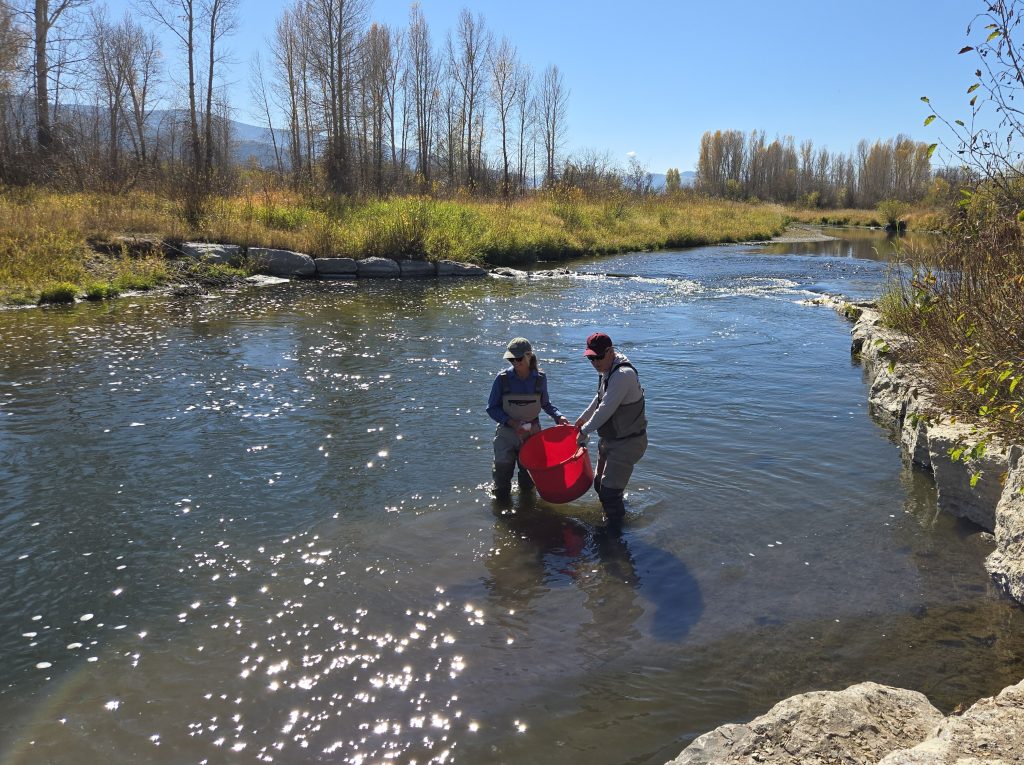
As volunteers with Trout Unlimited Yampa Valley Fly Fishers, husband and wife Steve Randall and Kathy McDonald were happy to help with the release of some 20,000 rainbow trout fingerlings into the Yampa River on Monday.
“I came down to help dump them, that way I know where to fish,” Randall joked about his “ulterior motive” as a fisherman.
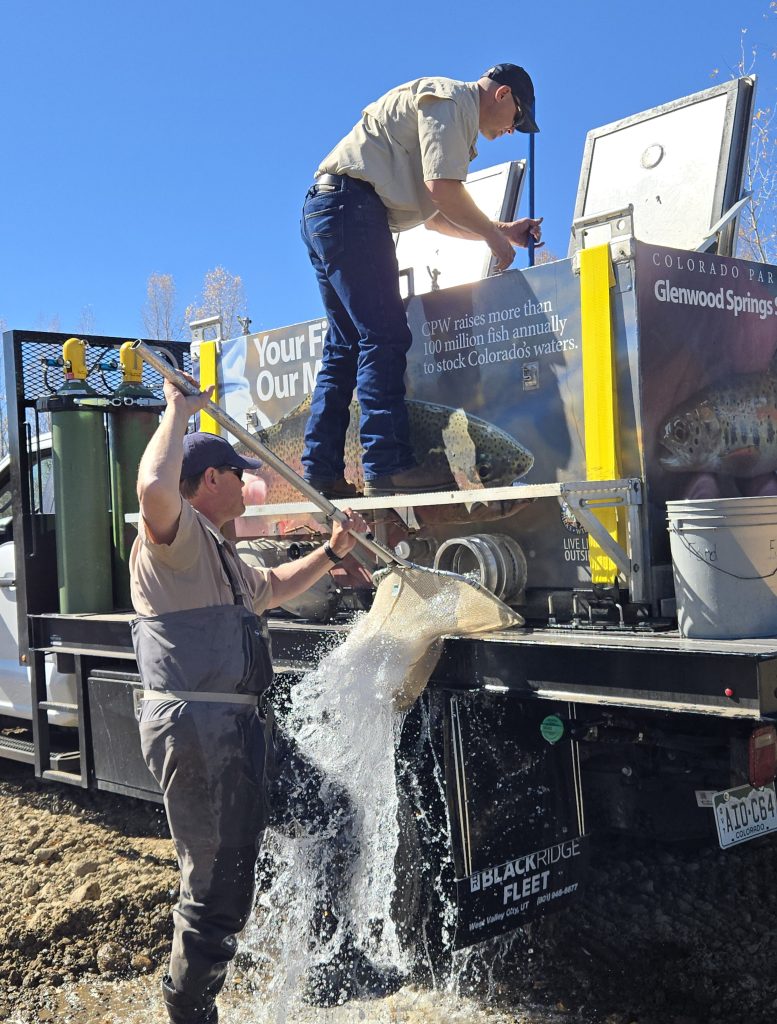
Randall and other volunteers helped Colorado Parks & Wildlife staff carry, release and disperse into the Yampa River many tubs of squirming 3-inch trout raised at the fish hatchery in Glenwood Springs. The small fish were dispersed where CPW supervised $500,000 is aquatic habitat improvement work this summer at the upstream reach of Chuck Lewis State Wildlife Area.
As a board member of the Trout Unlimited chapter, Randall is serious about the importance of the state wildlife area located off Routt County Road 14 about four miles south of Steamboat Springs.
“This river is one of our best resources here in town,” Randall said.
Randall called it “so cool” to see the newly restored section of the river that before was full of “old cars, junk and eroded streambanks silting in different places.”
“This state wildlife area is a gift,” said Trout Unlimited volunteer Chick Corrado, “close to town, accessible and beautiful.”
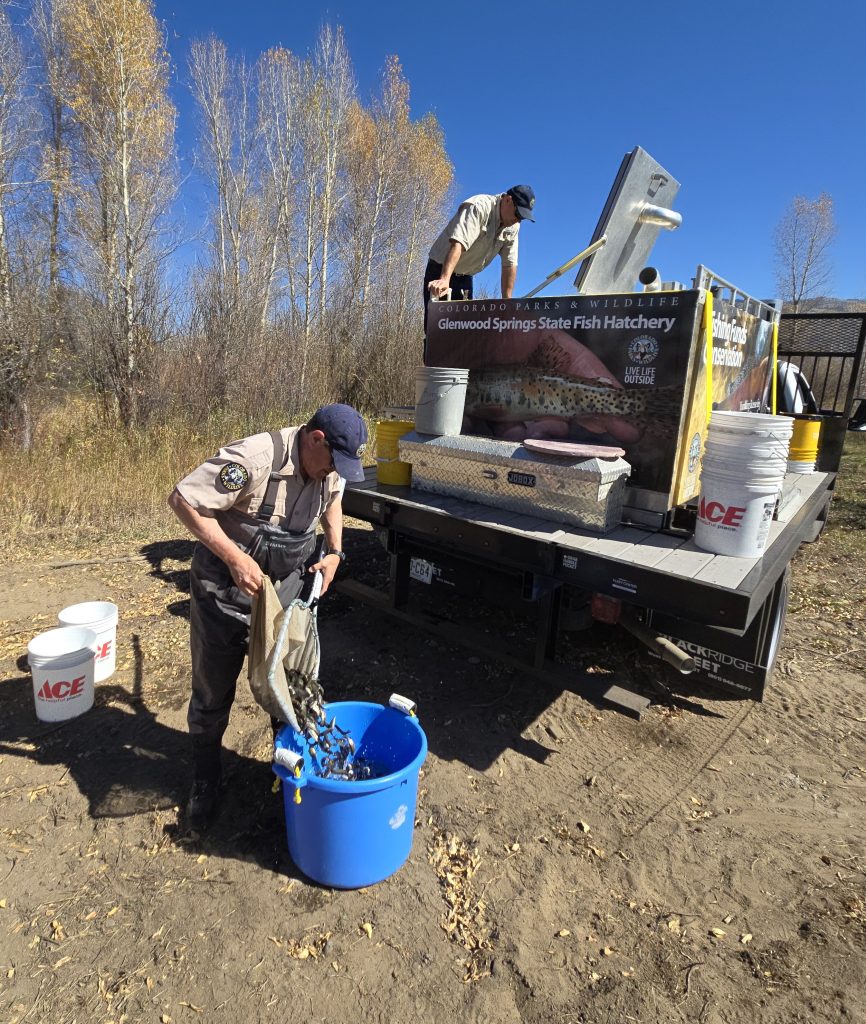
CPW Aquatic Biologist Billy Atkinson said with rapid initial grown of young trout, the released fingerlings should be 10 inches and ready to challenge anglers in about two years.
Standing along the river in waders, Atkinson explained that a previous restoration project in 2008 in the river section was not successful for sustained habitat for bigger fish and not structurally sound. The previous project failed so much so that the river was threatening to reroute and cut west away from the fixed point of a bridge downstream, he said.
The redesigned restoration project that started in mid-July included constructing multiple rock structures to direct stream energy away from banks, adding bank full bench features with coir fiber wrapped sod and willow vegetation mats, adding an inner berm design feature to help fish during lower flows, regrading vertical eroding banks and removing transverse and mid-channel bars to reshape the channel bed to appropriate dimensions.
The project is intended to prevent further degradation that would result in more costly maintenance, additional loss of habitat and continued contributions of excessive gravel to the river system, according to CPW.
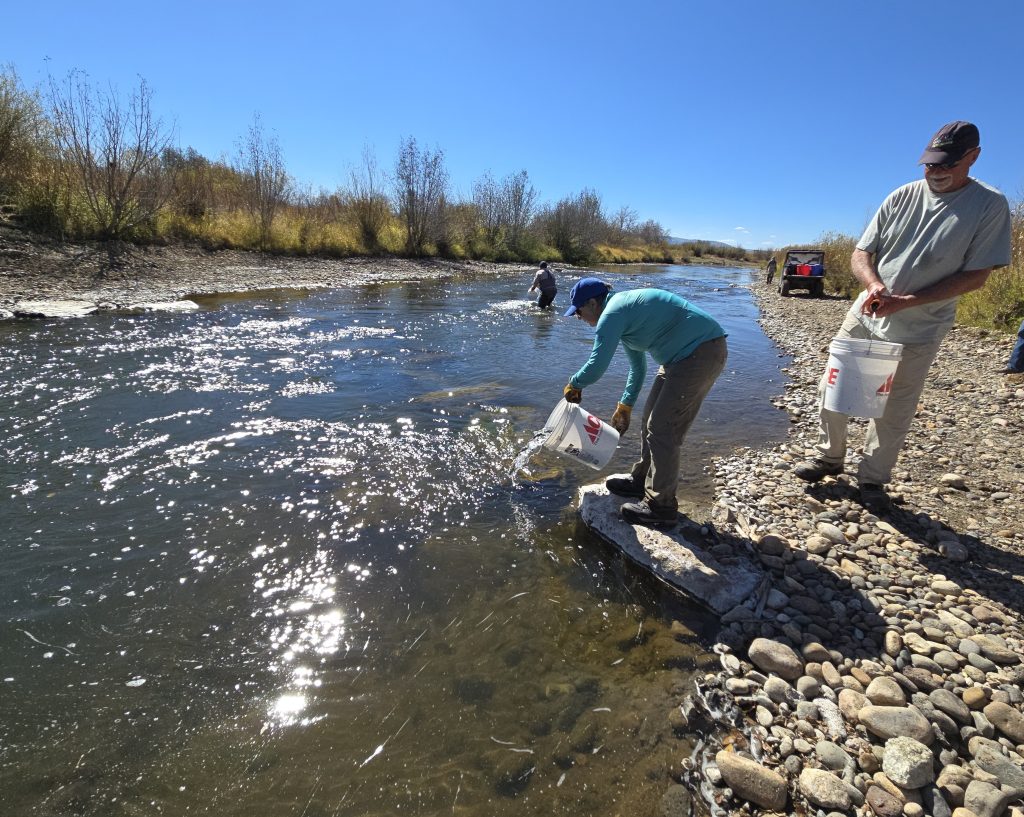
Atkinson said restocking quickly after the completion of the work last week is key for the fingerlings to try to find “nooks and crannies” in the habitat before bigger predatory fish find the improved stretch.
“With the degraded habitat prior to the project there weren’t a lot of big fish in here,” Atkinson said. “So, we can take advantage of that so-called empty niche to stock heavier up here.”
“We can do things like this to spread them out to up their survival rates,” Atkinson noted. “It takes a little more time, but by doing this instead of just stocking them in one spot, we are finding good habitat for the winter.”
Under the best conditions, up to 10-20% of the young rainbow trout released could survive, he said. In addition to environmental factors and larger fish, the small fish face predation from birds and mammals such as osprey, eagles, otters and mink and some eventual loss from hooking injuries by fishermen.
The aquatic biologist said growth of trout varies depending on temperatures, environment, lake versus stream habitat, growing season and foraging conditions. Although brown trout can reproduce themselves in the Yampa River habitat, rainbow trout have a tougher time reproducing due to factors such as Whirling disease and environmental degradation.
“We do get some reproduction (of rainbow trout), but not enough to sustain the fishery for sport fishing purposes,” Atkinson explained.
Atkinson pointed out new sections of all-important underwater riffles in shallower, faster moving parts of the river. According to the U.S. Forest Service, riffles are important to fish habitat because rocks break the water surface in the fast current, and oxygen is added when the water rushes over rocks.
Atkinson thanked anglers for their support and patience while contractors worked on the habitat improvement project that negatively impacted water quality downstream for a time. Some signage related to staying off specific revegetation areas is coming soon, Atkinson said.
“Once complete, this project will allow the river to function in a more natural state, through improved riparian habitat connectivity and aquatic habitat features,” Atkinson noted. “Overall recreational amenities will be improved.”
A map for the Chuck Lewis State Wildlife Area is available online at CPW.state.co.us/state-wildlife-areas/chuck-lewis-swa.



Support Local Journalism
Support Local Journalism
Readers around Steamboat and Routt County make the Steamboat Pilot & Today’s work possible. Your financial contribution supports our efforts to deliver quality, locally relevant journalism.
Now more than ever, your support is critical to help us keep our community informed about the evolving coronavirus pandemic and the impact it is having locally. Every contribution, however large or small, will make a difference.
Each donation will be used exclusively for the development and creation of increased news coverage.