Staff to Council: Water capacity would make pre-2029 Brown Ranch move-in a risky proposition
City’s water system can only support 400 more homes before hitting recommended limit, officials say

Dylan Anderson/Steamboat Pilot & Today archives
Steamboat Springs’ water system can support additional growth in West Steamboat, but staff warned City Council this week that without a third treatment plant, the community is just 400 equivalent residential units away from its comfort threshold under a worst-case emergency scenario.
That new threshold, determined after completion of a joint study between the city’s public works department and the Mount Werner Water and Sanitation District, has direct implications for any future annexation west, east, north or south of the city — including Brown Ranch.
Public Works Director Jon Snyder opened the presentation at Tuesday’s regular council meeting by stressing how closely the city is monitoring its water system as growth pressure intensifies.
“We know it’s an important issue … the capacity of our water system and its ability to serve growth is important enough that we are always monitoring it, we’re always working on it, we’re always tracking it,” Snyder said.
The most recent effort, he explained, was an extensive hydraulic modeling exercise that began in 2024 with the Willett Heights pump station replacement and was expanded after staff started observing irregularities in the water distribution system’s behavior.
Those anomalies — “difficulty filling tanks, pump run times, pressure fluctuations in higher elevations” — were not something customers would necessarily notice, he said, but raised flags for city staff nonetheless.
“What this study told us is … we need to prioritize four projects, and it updated our limitations to growth, and the risks and redundancy and mitigation strategies that we should take,” said Snyder.
Water capacity and growth limits
Distribution and Collection Manager Michelle Carr walked council through the five factors that can limit water capacity: water rights, raw water supply, treatment plant capacity under normal operating conditions, distribution system capacity (which is what this model and study looked at), and then redundancy in regard to any of the aforementioned factors.
On treatment capacity, Carr said the primary Fish Creek Filtration Plant has a design capacity of 7.5 million gallons per day, though it can be expanded up to 12 million gallons per day, with an estimated firm capacity of 6.5 million gallons per day.
The secondary Yampa Wells Treatment Plant, she added, has a design capacity of 3.5 million gallons per day and a firm capacity of 2.8 million gallons per day after its 2018 expansion.
Design capacity, she explained, is the rated or nominal output of a water treatment plant under normal conditions, while firm capacity refers to the “reliably available output” the plant can deliver, even if a key component is out of service.
She noted that Yampa Wells hasn’t been tested to a capacity over 2.45 million gallons per day, prompting a joint effort with Mt. Werner Water to verify the maximum capacity in summer 2026.
On the distribution side, said Carr, the new model largely reaffirmed work already underway, including three ongoing efforts in the budget and 2024 rate study: the Willett Heights pump station replacement, pressure-reducing valve replacements, and water main replacements.
The fourth improvement identified as being crucial to support growth is the installation of a booster pumping station in the Sunlight neighborhood.
“There are phases of Sunlight that are at higher elevations that experience lower pressures, and according to our model, as we grow out to the west, those low pressures tend to be exacerbated,” explained Carr. “So installing this booster station would essentially isolate Sunlight and allow for growth to proceed in (West Steamboat) without impacting their pressures.”
Once all four improvements are complete, limitation of the distribution system’s growth capacity is around 1000 equivalent residential units, up 25% from the previous 800 EQRs identified in earlier modeling.
“The next thing we look to is redundancy in treatment plant capacity, and this is where our constraint shifts from the distribution limitation to redundant water treatment capacity,” said Carr.
Redundant capacity, she said, refers to treatment capacity in emergency scenarios where the Fish Creek plant is offline, such as a wildfire or major equipment failure, where the Yampa Wells plant then becomes the sole supplier of drinking water.
“What that equates to is a maximum growth capacity of 400 EQRs for the city district,” Carr said. “Compare that with what we understand and what we know to be the projected growth of the city district of 700 EQRs, and that highlights our risk gap.”
“So this changes the conversation from a technical one to a policy one,” Carr told council. “It’s not so much, how much can the system serve, but how much risk is the city willing to accept?”
Policy implications and the future of Brown Ranch
If council allows west side growth beyond 400 EQRs before an Elk River plant comes online, she warned, “this increases risks that there could be mandatory water-use restrictions, potential service disruptions, and a reduced margin of safety for existing customers.”
To address that redundancy gap over the long term, the Public Works Department is continuing to look toward a new plant: the Elk River treatment plant, which would have a design capacity of 5 million gallons per day and cost approximately $115 million to $187 million.
“This would create a resilient three-plant system that would allow the city to continue receiving all of its water demands from two of the plants if one of them was shut down,” said Carr.
The timeline to complete the plant, however, is seven to nine years.
“Water system service should not be operational to new homes for Brown Ranch annexation prior to the completion of those four distribution system improvements,” she said. “Prior to the Elk River water treatment plant, it’s our recommendation that no more than 400 EQRs be added.”
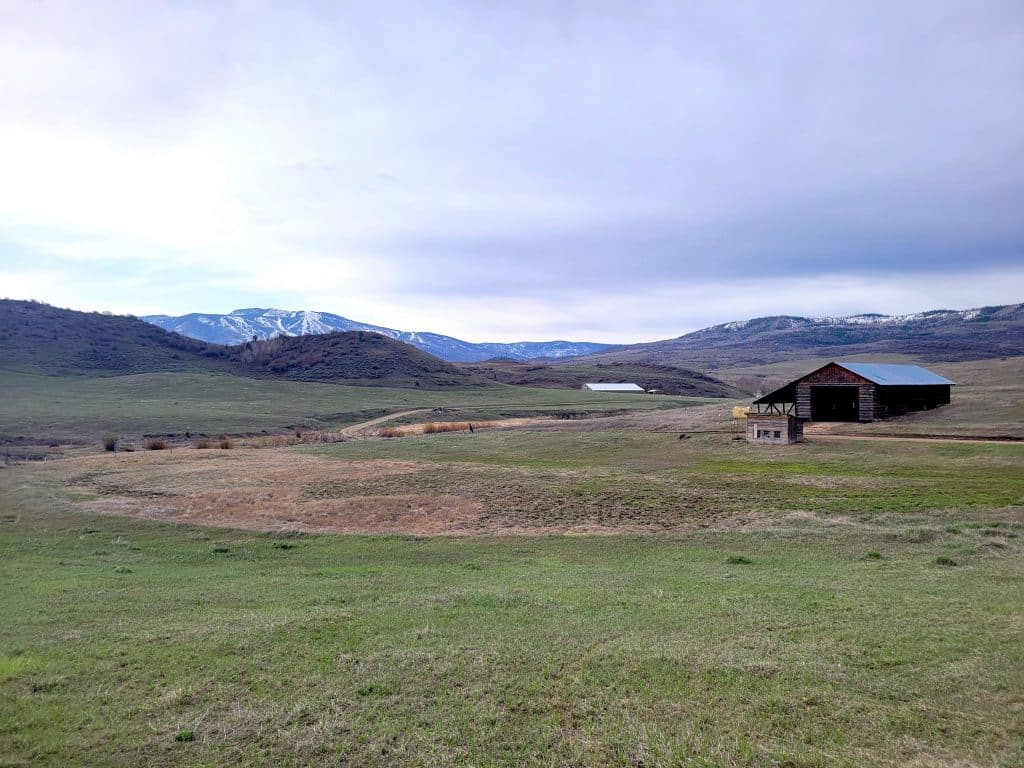
That last point drew a sharp line for some council members around the city’s most contentious growth proposal: Brown Ranch, the 420‑acre annexation and affordable‑housing project rejected by voters last year.
“If I understand, you’re saying that you don’t recommend any houses in the Brown Ranch development or on the west side of town receive water before the four upgrades, or 2029?” Councilor Dave Barnes asked.
“That’s correct,” Snyder replied. “You can certainly do all the other construction involved … you can even start building the house,” he added. “But we’re confident that we can be done with our stuff before the first house is completed out there.”
During public comment, local resident Bill Jamison urged council to see the water presentation as a broader warning on the implications of annexation.
“If you didn’t have a reality check before the latest annexation vote, you oughta got one tonight,” Jamison said. “As far as I’m concerned, any annexation west, east, north or south would be irresponsible until you resolve your water issue, and the cost of resolving this water issue … will probably be a poison pill.”
“The question is not what you have the capacity and tolerance for as a seven-member board,” he said, referring to the Elk River plant cost estimate of $115-187 million. “The question is, what is the residents’ and the rate-payers’ — and more importantly, the voters’ — capacity to stomach this kind of cost so you can have growth outside the current city limits?”
At the close of the discussion, Councilor Bryan Swintek asked Snyder to what extent the threshold and current concerns around water are driven by Brown Ranch, versus the “natural progression of a city.”
“I think it’s the latter,” said Snyder, “where we’re growing and we’re close to hitting a threshold in the sense that we are 400 EQRs away under our worst-case scenario.”
Snyder described staff’s recommended 400-EQR planning threshold as intentionally cautious and open to revision, noting that as they become privy to more information and conditions change, the threshold will change as well.
“You’re going to see me challenging myself this next year, challenging my professional judgment — am I being too conservative?” said Snyder. “Are there other ways to protect our resiliency that doesn’t involve a $115 million treatment plant off the Elk (River)?”
Staff will continue to update projected growth and work with Mt. Werner Water to verify the Yampa Wells plant’s capacity. The finance department is analyzing the potential impact on customer bills if the Elk River plant moves forward.
With the fate of Brown Ranch’s next iteration still uncertain, staff will proceed with the four improvements, with the aim of having them complete — and ready for the first Brown Ranch resident to move in, if voters allow it — by the beginning of 2029.




Support Local Journalism
Support Local Journalism
Readers around Steamboat and Routt County make the Steamboat Pilot & Today’s work possible. Your financial contribution supports our efforts to deliver quality, locally relevant journalism.
Now more than ever, your support is critical to help us keep our community informed about the evolving coronavirus pandemic and the impact it is having locally. Every contribution, however large or small, will make a difference.
Each donation will be used exclusively for the development and creation of increased news coverage.