Regional Transportation Authority half-cent sales tax measure approved for November ballot
Yampa Valley voters to consider financial support for regional transit service

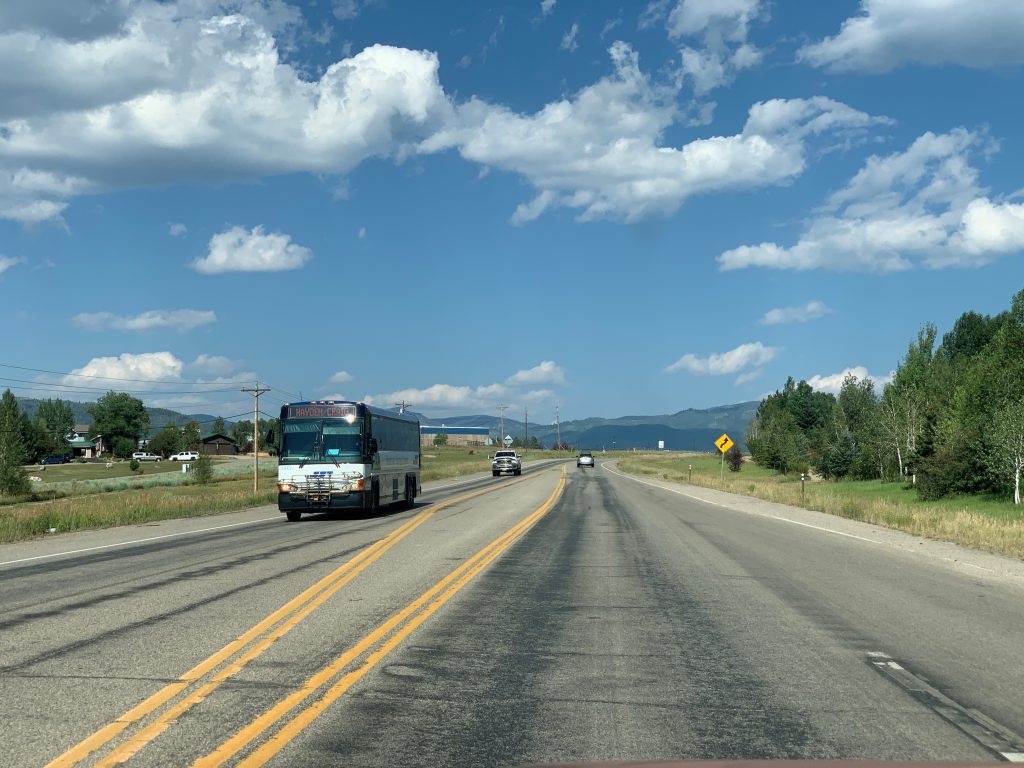
City of Steamboat Springs/Courtesy photo
The Yampa Valley Regional Transportation Authority Board of Directors voted 5-1 on Wednesday to submit a 0.5% sales tax funding measure to the ballot this November, positioning voters in nearly every Yampa Valley municipality to consider their financial support of regional transit service.
Oak Creek Mayor Melissa Dobbins cast the sole nay vote, citing apprehension from many Oak Creek residents to support a half-cent sales tax measure on top of the 2% municipal sales tax question submitted to the ballot for critical infrastructure projects, as well as hesitation in terms of how RTA funding will be used.
The Steamboat Springs City Council held a special meeting on Friday, Aug. 21 to discuss the ballot language after Councilor Bryan Swintek asked for a postponement of the RTA board’s vote, with council ultimately giving direction to Councilor John Agosta, who represents Steamboat on the RTA board, to vote in support of submitting the 0.5% sales tax measure.
Councilor Dave Barnes sent a memo to council shortly before the Friday meeting requesting that the resolution be amended to tighten what he viewed as broad language around public safety.
“As drafted, the resolution’s recital and ballot title reference ‘enhancing public safety by maintaining and improving pedestrian access, crosswalks and wildlife crossings’ and ‘decreasing the risk of accidents’ on Highway 40,” wrote Barnes. “This language is broader than the Authority’s core transit mission and broader than the practice of comparable mountain RTAs.”
He clarified in the meeting that he wanted the amount of funds the RTA could allocate to wildlife crossings, passing lanes and highway improvements to be limited such that other municipalities would not be able to take advantage of that for “pet projects,” rather than prioritizing regionally connected service.
Financial figures provided in a recent survey also stood as a point of contention. While the polling that went out in late July stated that a 0.5% sales tax would bring in roughly $1.25 million, the estimate that RTA Secretary/Designated Election Official Mathew Mendisco arrived at was closer to $7.4 million.
By the RTA’s Wednesday’s meeting, that estimate was increased to roughly $7.7 million.
Swintek noted in the Friday council meeting how the incorrect figures in the survey were “four or five times off” Mendisco’s estimate, to which Mendisco responded that the disparity was a result of “human error.”
Swintek also questioned whether that discrepancy could negatively impact the ballot measure’s ability to successfully pass.
At council’s Friday meeting, local resident Bill Pass commented that while he sees the benefits of the RTA for area businesses and the local workforce, he has not been persuaded as to why those who would not use the transit system, but be taxed nonetheless — especially in Steamboat Springs, which would bear the highest tax burden — should support the ballot measure.
No public comment was made at the RTA’s Wednesday meeting.
The board then commenced the official deliberation of the ballot measure. Agosta, who was sworn into the Steamboat Springs City Council in November, kicked off the discussion by underscoring the way regional transit played a key role in his campaign.
He said the RTA will “provide vibrancy across the valley,” improving mobility for Steamboat’s kids, essential workers and small businesses alike.
Dobbins followed. She said opposing the ballot measure was difficult for her, as she’s a “major advocate” for the RTA, but that residents are concerned about how the RTA sales tax measure might conflict with the 2% municipal sales tax measure for capital improvements and critical infrastructure projects, something Oak Creek officials have repeatedly referred to as a high priority.
She also said that she’s been “inundated” with questions regarding how the funding will be used and what exactly that will look like for Oak Creek — information she can’t provide, as the RTA isn’t quite there yet.
Hayden Mayor Ryan Banks reminded his colleagues that the RTA formation question in the fall was passed by Yampa Valley voters by over 70%, a “testament” to the process the formation committee went through in gathering the perspectives of every municipality to create a collaborative vision for regional transit service.
Craig City Councilor Randy Looper empathized with Dobbins, noting that he’s received similar questions from his fellow councilors about how the RTA’s funding will be allocated — but that ultimately, Craig is a “yes.”
Moffat County is the sole municipality in Routt County that will not be participating in the election.
While some Yampa officials and community members have hesitations about the RTA as well, Mayor Stacey Geilert said Yampa also is a “yes” vote.
Routt County Commissioner Sonja Macys, the RTA board chair, closed the deliberation period by highlighting the challenges the board has worked through and its success so far.
“We have all the right players on the team. We have the state who is rooting for us, we have others who want to see this succeed, we have private donors who are willing to come to the table,” said Macys. “Our ski company provided the startup money that has allowed us some flexibility to be able to breathe as we think through some of the bigger questions.”
“We had a couple stumbles along the way, but I think that the strength of this group is because we have stuck together, we worked together, we have overcome the obstacles that have been put in front of us,” she continued.
“Routt County is fully supportive of taking this to the ballot,” added Macys.
While setting the stage for a funding measure this fall has been the RTA’s primary focus this summer, the board has continued to make progress in other areas.
Earlier this month, the RTA posted a job listing for an executive director, with a listed salary range of $150,000-$180,000.
The job description states that the RTA’s executive director will serve as the authority’s founding chief executive and “lead the organization from start-up,” working closely with the board to establish the RTA’s “culture, strategic direction, administrative systems, financial framework and approach to regional service delivery.”
Agosta said Wednesday that as of mid-August, the posting has attracted 16 applicants. First reviews of applications are set to begin Sept. 8.
Additionally, Macys, Dobbins and Steamboat Springs Transit Manager Jonathan Flint, who are on the hiring committee for a branding and marketing firm, are conducting interviews Friday, Aug. 28 with their final candidates.
Going forward, the RTA board will meet on the second Monday of each month, with the next meeting set for Monday, Sept. 14.





Support Local Journalism
Support Local Journalism
Readers around Steamboat and Routt County make the Steamboat Pilot & Today’s work possible. Your financial contribution supports our efforts to deliver quality, locally relevant journalism.
Now more than ever, your support is critical to help us keep our community informed about the evolving coronavirus pandemic and the impact it is having locally. Every contribution, however large or small, will make a difference.
Each donation will be used exclusively for the development and creation of increased news coverage.