Owners seek right buyer to purchase iconic downtown building, piece of Steamboat history

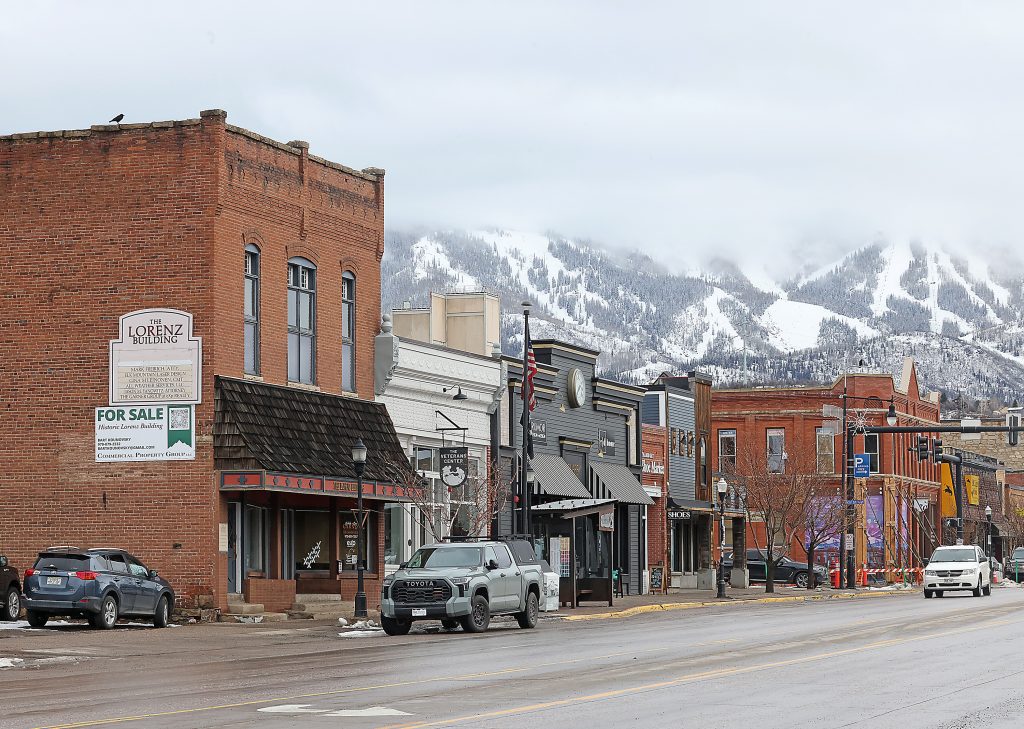
John F. Russell/Steamboat Pilot & Today
The iconic Lorenz Building has housed a variety of endeavors since being constructed in the early 1900s. But while purposes have changed, the red brick building appears nearly as it did the day it was built.
Last month the Lorenz family, which has owned the property at 928 Lincoln Ave. since 1958, decided to sell the property, which is now listed for $2.595 million.
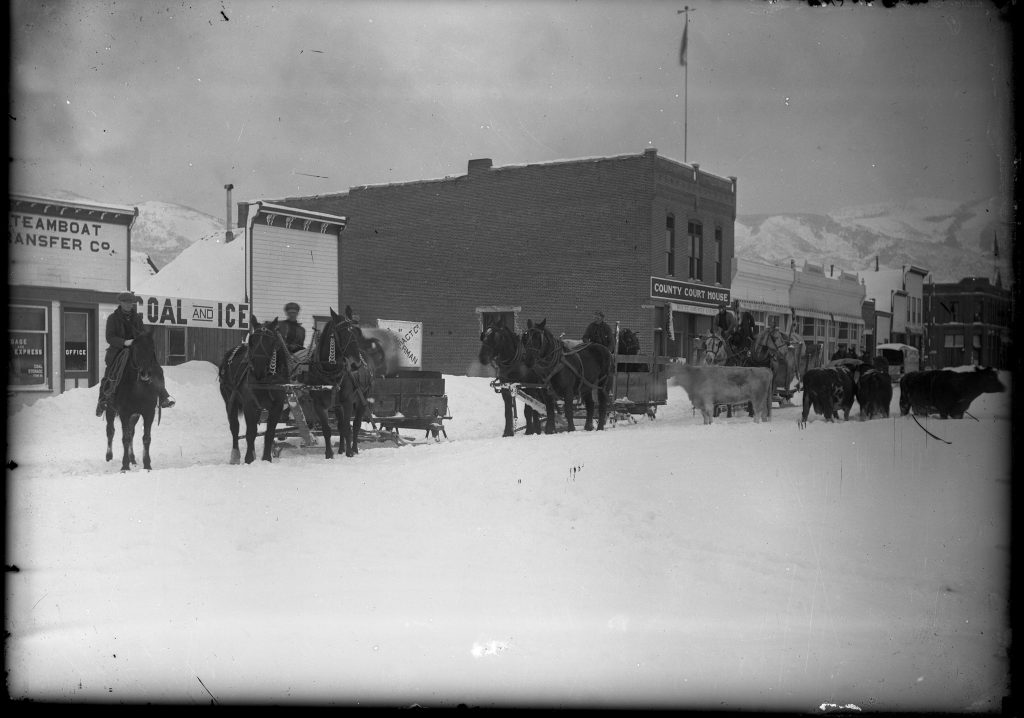
“The Lorenz was used as a Masonic Lodge for a bit until the Routt County seat was moved to Steamboat to this building in 1911 until 1923 when (the courthouse) was moved to its current location,” Erica Swissler Hewitt, a local historian, wrote in an email. “Afterwards (the Lorenz Building) became a dance hall called the Social Benefit Association, and it was purchased by Don Lorenz in 1958.”
Today, the 5,000-square-foot building houses nine offices and a 600-square-foot apartment that overlooks Lincoln Avenue. Realtor Bart Kounovsky, with Steamboat Realty and Management, listed the property last month and understands the landmark’s place in the history of Steamboat Springs.
“We have had some interest in it, and everybody that we’ve had look at (the building) understands the historical characteristics of the building and the historical nature of the building — so that’s wonderful that people are very much in tune with that,” Kounovsky said.
The building is tied closely to the early development of the town of Steamboat Springs, and a time when early settlers relied on J.W. Hugus Company, a mercantile that had 20 locations across Wyoming and Northwestern Colorado — including Steamboat Springs. J.W. Hugus was a mercantile, banking and supply business selling everything from needles to threshing machines, groceries, dry goods and stock supplies until the mid-1920s.
When Hugus decided he wanted to open a store in Steamboat Springs in 1898 he bought the two-story W.H. Dunfield Building, which had been constructed in 1892, along with the lots next to the property — where he opened his full-service mercantile to serve the growing Steamboat Springs community.
Afraid the wood buildings he purchased would burn down, Hugus elected to tear down all the adjacent buildings and replaced them with his store, and another building that served as a bank and warehouse, in 1899. Today those properties are where Rumor Designs and the recently renovated Veterans Center are located.
Hugus sold the two-story wooden building to P.F. Reinhardt, who moved the building down the block, where it later burned in 1919.
Caitlin Berube-Smith, historic preservation planner for the city of Steamboat Springs, wrote that construction of the Lorenz building began in 1900 offering J.W. Hugus and Company much-needed warehouse space. The Masons also used the second floor as a meeting hall and remained in the space until 1923.
Hugus continued to use the Lorenz Building as a warehouse until 1911. But when Routt County residents voted to move the county seat in 1912 from Hahn’s Peak to Steamboat Springs, the courthouse relocated to the Lorenz Building.
The county courthouse moved to its current location in 1923 and in the years that followed the Lorenz building became home to a variety of stores, cafes and offices. The Social Benefit Association used the building’s second story as a dance hall beginning in the early 1930s, while by the end of that decade the ground floor was headquarters for the Routt National Forest.
When Don Lorenz purchased the building for his law practice in 1958, the building became known as the Lorenz Building, and it has been continuously owned by the Lorenz family since then.
Berube-Smith said Steamboat Springs historic buildings can be listed on three different historic registers.
The first is the National Register of Historic Places, which is an official list of the nation’s historic places deemed worthy of preservation. It is a national program to coordinate and support public and private efforts to identify, evaluate and protect America’s historic and archeological resources. In Steamboat Springs this includes the Chief Theater, the Lorenz Building and the Steamboat Springs Historic District.
“The Steamboat Springs Downtown Historic District comprises approximately six city blocks along Lincoln Avenue, roughly bounded by Fifth to 11th streets,” Berube-Smith wrote in an email. “It’s total of 52 resources, 36 of which are considered contributing. Three buildings are individually listed on the National Register of Historic Places. Approximately 40% of buildings within the district were constructed during the decade of the train’s arrival in anticipation of growth from 1900-1909 or in the decade immediately following from 1910-1920.”
The second register is the Colorado State Register of Historic Places, a listing of the state’s significant cultural resources worthy of preservation. This list includes Howelsen Hill and the Mesa School House.
The third register is the Steamboat Springs Register of Historic Places, established in 2009, which designates significant properties in city limits to preserve the town’s character and is managed by the Historic Preservation Commission.
Berube-Smith said that unlike the national and state registries, the Steamboat Springs registry is regulatory, meaning properties must first be listed by their owner, and once listed on the register, they cannot be demolished.
“The Lorenz Building is a ‘contributing building’ to the National Historic District,” Berube-Smith wrote. “In comparison, the Chief Theater is a ‘non-contributing building’ to the National Historic District, but the Chief Theater is on our local Steamboat Springs Register of Historic Places, which protects it from demolition.”
John F. Russell is the business reporter at the Steamboat Pilot & Today. To reach him, call 970-871-4209, email jrussell@SteamboatPilot.com or follow him on Twitter @Framp1966.

‘Better safe than sorry’: Colorado mountain utility providers ask residents to prepare for potential power outages as wildfire risk ramps up
Utility providers in the Colorado mountains are planning to use a host of tools — including potential power shutoffs — to reduce wildfire risk this summer as the state faces widespread drought conditions.





Support Local Journalism
Support Local Journalism
Readers around Steamboat and Routt County make the Steamboat Pilot & Today’s work possible. Your financial contribution supports our efforts to deliver quality, locally relevant journalism.
Now more than ever, your support is critical to help us keep our community informed about the evolving coronavirus pandemic and the impact it is having locally. Every contribution, however large or small, will make a difference.
Each donation will be used exclusively for the development and creation of increased news coverage.