Moffat County adopts resolution reviewing data centers
Initial public comment reveals deep opposition
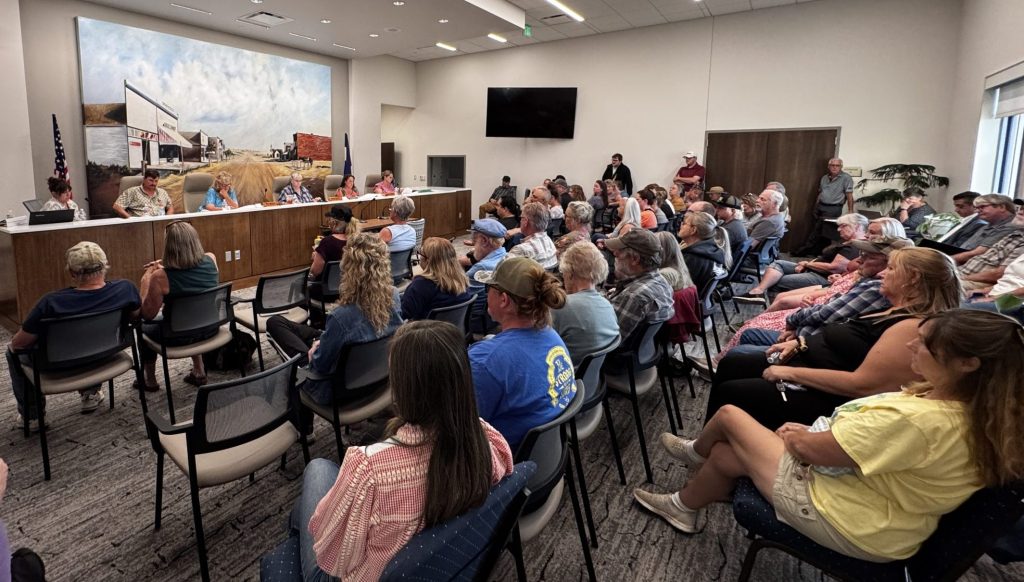
John Camponeschi/Craig Daily Press
Editor’s note: This is a developing story and will be updated as more information becomes available.
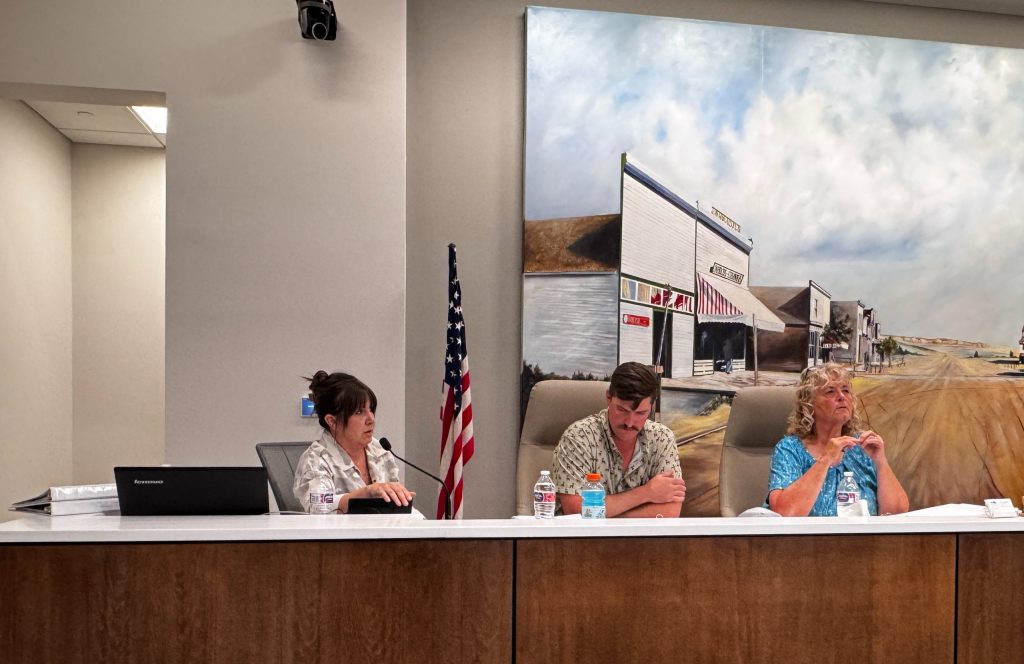
The Moffat County Planning and Zoning Commission voted Wednesday to begin studying how data centers relate to the county’s existing zoning rules, stressing that no data center has been proposed and no decision was made about whether such facilities should be allowed.
The commission approved Resolution PC2026-01, initiating a public review of the county’s zoning resolution. It also directs planning staff and commission members to research possible regulations for data centers.
The action did not approve or reject a project, change the county’s zoning code, impose a moratorium or commit the county to allowing data centers. Instead, it opened what county Planning Director Candace Miller described as a process to understand the industry and prepare the county in case an application is submitted.
“We have no project to review,” Miller told the commission.
Miller said the Planning Department has received no application, speculative proposal or other specific data center plan. She said she brought the issue forward after observing discussions in communities across the country and determining that Moffat County’s zoning resolution does not specifically identify or regulate data centers.
The county’s lack of a clear classification leaves unanswered questions about whether different types of data centers would be permitted, conditional or prohibited uses and which zoning districts could be appropriate.
Commission members Megan Cook, Kitsey Behrman, Rena Olsen, Shauana Merrill and Ford Richmond approved moving forward with the review.
The commission noted that while it will conduct research and recommend changes, the Moffat County Board of County Commissioners would have final authority over any amendment to zoning after required notices and public hearings.
Miller repeatedly emphasized that beginning the study was not an expression of support for or opposition to data centers.
“There is no recommendation,” she said when asked whether the county was recommending that a data center come to the community.
The review will begin with basic definitions and classifications. Miller said the term “data center” can describe facilities ranging from small server rooms inside an office to large cloud computing or artificial intelligence campuses containing thousands of servers.
The commission will study how a facility’s size, energy demand, water use, physical footprint and operating capacity could affect its classification. It will also consider whether different facilities belong in heavy industrial, light industrial, commercial, business or other zoning districts.
Later phases could examine water and wastewater, electrical demand, noise, light, traffic, air quality, wildlife, agriculture, emergency response, cybersecurity, public health, decommissioning and effects on neighboring properties.
Economic questions could include permanent employment, construction jobs, tax revenue, demands on public services and possible community benefits.
Miller said the review would take as long as necessary. Future meetings will be open to the public and the commission will continue accepting written and oral comments.
A large portion of the Aug. 5 meeting was devoted to public comment. Most speakers opposed data center development or urged the county to adopt strict regulations before an application arrives.
Residents raised repeated concerns about water consumption, particularly during drought conditions and periods of low flows in the Yampa River. Several speakers questioned whether the county’s water and wastewater infrastructure could accommodate a large facility without affecting residents, agriculture, recreation or aquatic life.
Speakers also questioned whether the regional electrical system could support the power demands of a large data center. Some said they feared those demands could increase utility bills or require extensive new infrastructure. Others raised concerns about backup generators, air emissions, noise, light pollution and the effect of construction or continuous operations on nearby homes.
Economic concerns were also common. Several residents questioned how many permanent jobs a data center would provide after construction and whether specialized positions would be filled locally. Others said tax incentives could reduce the amount of revenue reaching the county and argued that potential financial benefits might not outweigh effects on water, power and quality of life.
Some speakers said the county should prohibit data centers outright or consider a moratorium while research continues. Others urged officials to study experiences in communities that have adopted bans or faced conflicts over data center development.
Paul Boney of the Western Resilience Center in Steamboat Springs offered a different framework related to data centers being powered by behind-the-meter clean energy, water use, energy-efficiency standards and the capture of waste heat for possible use by schools, hospitals or other facilities.
The public discussion occasionally became tense as residents questioned why the commission would continue studying an industry after hearing overwhelming opposition. Commission members and staff responded that the county must conduct a thorough review before making a recommendation and that residents who had not spoken or had not formed an opinion should also have an opportunity to participate.
Miller said the commission’s job is to gather information and give county commissioners a defensible, fact-based recommendation. She said the review could ultimately result in regulations, restrictions or a recommendation against allowing certain facilities.
The commission did not set a deadline for completing its work. Miller asked members to begin reviewing definitions, zoning districts and questions about the size and operational characteristics of different facilities before the commission’s next meeting.
Miller also said Club 20, a West Slope policy organization, is working to assemble experts for a public presentation and question-and-answer session about data centers. No date has been set, but organizers are considering holding the event in a school gymnasium to accommodate the public.
In a message left for the Craig Press, Club 20 Executive Director Wade Haerle stated that the 501(c)3 nonprofit organization plans to host “an open house on data centers to see what the community’s concerns are, what their thoughts are, those kinds of things.”
“It’s going to be an open conversation looking at the nuisance issues, looking at the economic development issues, employment, taxes, all those kind of things,” Haerle said in the message.
According to Haerle, the meeting will take place on Aug. 27 at a time and location to be determined. He did note that the meeting would take place in the evening.
Miller said the community would be updated when details are available and that additional experts and regional organizations could be asked to assist the commission as the review progresses.
Toward the end of the meeting, Moffat County Commissioner Melody Villard cautioned against treating the opposition voiced during public comment as the only opinion in the community. She noted that the room was full but relatively few people spoke, suggesting others may still be gathering information or may not feel comfortable expressing a different view.
Villard said stopping the discussion immediately would do “a disservice” to residents and officials who had not completed their research. She said county leaders must consider potential industries as Moffat County faces the loss of jobs and property tax revenue.
“It’s our job to operate this county as a business that’s open for business,” Villard said. “It’s not our job to create jobs. It’s not our job to create industry. It’s our job to be welcoming to those things that don’t hurt us as a community.”
She added that residents cannot ask the county to replace jobs and tax revenue while rejecting every possible form of development.
“If we continue to put all these regulations in place that say no, no, no … then do not ask us to replace property tax,” Villard said.
The Planning and Zoning Commission’s next regular meeting is set for Sept. 2. Miller said the process will remain open to public participation and that the county will continue collecting research, questions and comments.






Support Local Journalism
Support Local Journalism
Readers around Steamboat and Routt County make the Steamboat Pilot & Today’s work possible. Your financial contribution supports our efforts to deliver quality, locally relevant journalism.
Now more than ever, your support is critical to help us keep our community informed about the evolving coronavirus pandemic and the impact it is having locally. Every contribution, however large or small, will make a difference.
Each donation will be used exclusively for the development and creation of increased news coverage.