How a call from Colorado Gov. Jared Polis helped swing Steamboat’s Brown Ranch annexation vote

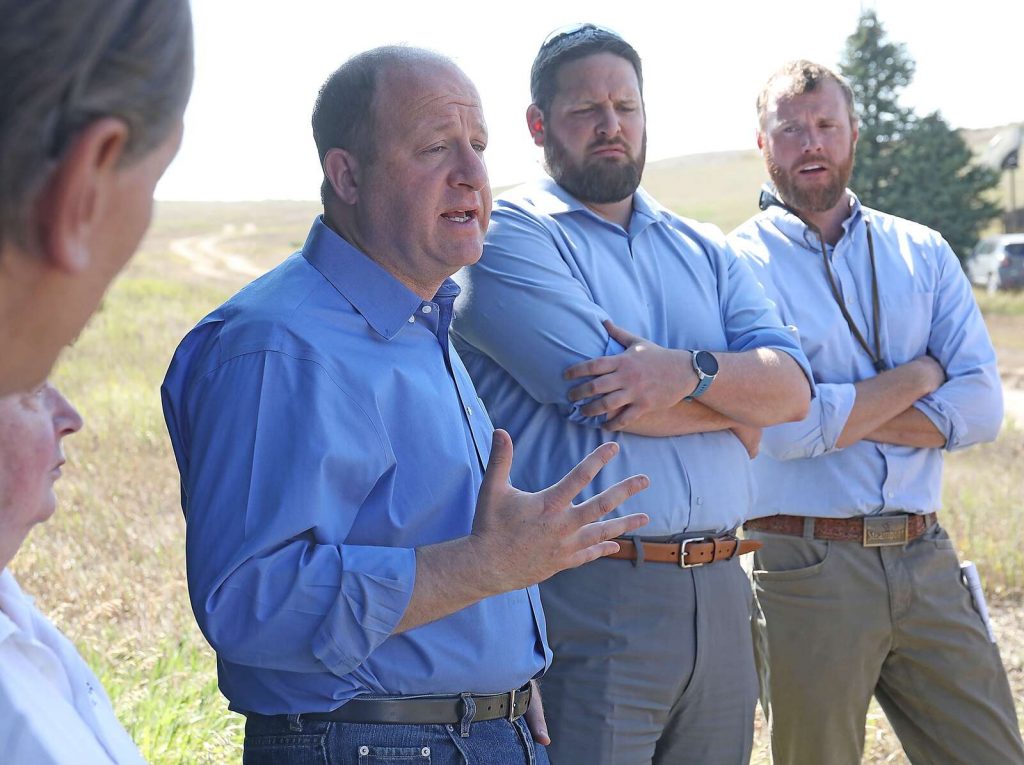
John F. Russell/Steamboat Pilot & Today
“Please hold for Governor Polis.”
On the day before she and her colleagues were slated to vote on second reading of the Brown Ranch annexation ordinance, Steamboat Springs City Council member Joella West said the start of a phone call from Gov. Jared Polis felt a bit surreal.
“It was just like in the movies,” West said, adding that she had never received a direct call from the governor before and doesn’t expect to receive one in the future.
The week prior, West had joined the majority in a 4-3 decision to send the Brown Ranch annexation decision to a referendum tentatively scheduled for June, but at second reading on Oct. 17, a day after speaking to the governor, she changed her vote, opting instead to approve the annexation by a City Council vote.
While she doesn’t know exactly why the governor called her, West described the “absolutely pleasant” conversation with Polis on Oct. 16 as a factor in her decision to approve the annexation outright.
In the call, Polis conveyed “urgent support” for the Brown Ranch affordable housing development, along with a concern over millions in potential state and federal funding for the project that could be jeopardized by a City Council decision to send the annexation ordinance to a vote next summer, West said.
A letter to council members from Rick Garcia, executive director of the Colorado Department of Local Affairs, or DOLA, the day before their second annexation ordinance vote summarized the governor’s concerns.
Pointing to a total of $15 million in pending applications and letters of intent from various entities for the Brown Ranch project, including Energy and Mineral Impact Assistance Fund initiatives and the Strong Communities program, the letter warned, “if this project does not move forward expeditiously, the state funding will likely be redirected to other parts of the state.”
The annexation of Brown Ranch would bring more than 400 acres of property, purchased by the Yampa Valley Housing Authority in 2021 with a $24 million anonymous donation, under city control — a move needed to pave the way for a larger plan to construct 2,264 affordable housing units over a 20-year period on the land west of downtown Steamboat.
On Nov. 7, voters will decide on ballot question 2I, which, if passed, would direct 75% of the city’s short-term rental tax revenues to the housing authority to fund most of the Brown Ranch development.
But how the city will fund its portion of the project in the form of needed off-site infrastructure has been a focal point in more than 10 months of negotiations between the housing authority and city officials.
Initial financial projections showed a $52 million funding gap for the city’s share of funding needed to develop infrastructure for the project. But that gap would close substantially, if not completely, with the removal of constructions costs related to a pair of planned community parks included in the project design.
On Oct. 17, City Finance Director Kim Weber explained to council members that if the city’s short-term tax revenue came in at $13 million per year and the city dedicated its share of those funds to Brown Ranch while removing the construction cost of the second community park, the city’s projected gap would drop to $9.9 million by 2044 and the initial phase of the project would be fully funded through 2040.
Removing the construction costs of both community parks — anticipated to cover a combined 39.6 acres at $1.3 million per acre — would balance the city’s budget throughout the project’s 20-year lifespan.
Given the fragile nature of the funding gap projections for the city, West said the peril that a council-induced referendum would pose to the potential $15 million in state and federal funding for the project was key to her decision to vote for the annexation ordinance without sending it to voters.
“We had talked about putting the annexation ordinance to a vote, and that vote would likely take place in June,” West said. “And that would have been too late for the funding.”
Despite council’s Oct. 17 annexation decision, a successful citizens’ petition could still put the decision to voters. If at least 1,200 signatures from registered Steamboat Springs voters are collected and certified, the annexation decision would be sent to a voter referendum in a special election that would come earlier than next summer.
Given the function of the citizens’ petition process, West noted a voter-induced referendum would happen sooner than June, “assuming that there’s the necessary signatures.”
West said she has no regrets over switching her decision on the annexation vote and in no way felt “pressure” from the governor during their call.
“I would say that would be the wrong word to use. I understood what his concern was. He was concerned that those funds would not be utilized, that those funds would need to be returned to the federal government, or he would need to find some other community with a qualified project that could receive those funds.”
A spokesperson for Polis’ office did not confirm the call to West but said in a statement on Oct. 18 that the governor was “thrilled” over City Council’s approval of the annexation ordinance without sending it to a voter referendum.
According to the statement, the governor “has passionately followed” the Brown Ranch process since he first visited the property in 2021 after the housing authority purchased the land.
During that visit, Polis indicated the state could become a significant partner to develop the property if the project’s plans move fast enough to spend pandemic relief dollars funneled to Colorado from the federal government.
“From a state perspective, we want to use this one-time opportunity we have with upwards of $600 million to $700 million,” Polis said during the visit. “We want to use these one-time dollars to really transform the landscape for housing affordability.”
Between the first and second annexation ordinance readings for Brown Ranch, Yampa Valley Housing Authority Executive Director Jason Peasley reported running into members of the governor’s staff at the 2023 Housing Colorado Conference in Keystone.
The housing authority director said he did not make any request for Polis to call West ahead of the second annexation ordinance reading, noting the conversation with the governor’s staff centered on the future of the state and federal grants for Brown Ranch.
“That was the nature of the conversation I was having with their staff because they were like, ‘We want to support you. We know this is an important project for the governor and for the state. It’s important nationally,'” Peasley said. “Their thought was, ‘How do we keep these grants alive?'”
Polis is not the only state official to express an interest in seeing the Brown Ranch affordable housing project proceed.
Council member Heather Sloop, who recognizes the need for affordable housing in Steamboat but has opposed the scale and cost of the Brown Ranch project, reported receiving a call from District 6 Colorado Department of Transportation Commissioner Rick Ridder ahead of the Oct. 17 annexation vote.
Ridder, who was appointed by Polis in August, relayed the governor’s support for the project and inquired over how CDOT might support needed improvements for U.S. Highway 40 to support the Brown Ranch development, according to Sloop.
State Sen. Dylan Roberts said last week that he has spoken about Brown Ranch at some point with every Steamboat City Council member.
“I am their senator, that is my job to answer questions about the state’s involvement and what the state might be able to help with,” Roberts said.
Ahead of council’s annexation vote on Oct. 17, Roberts reported that he returned a phone call from West to answer some questions regarding the potential for state and federal grant funding.
“She just called and asked about the timelines of those grants and whether Brown Ranch would be eligible.”
Roberts — who served as chair of the state’s Affordable Housing Task Force in 2021 and 2022 and pushed to make federal pandemic relief funding available for housing development projects — said his priority to push for funding to support projects like Brown Ranch comes from constituents who tell him they are, “struggling to live in Steamboat or even anywhere close to Steamboat and want us to work on affordable housing solutions.”
“The grants have deadlines,” Roberts said. “And affordable housing is, I feel like, a mandate that I got sent to the capitol to work on from voters across my district and it’s a priority of the governor. We don’t want to have to send these dollars back to the federal government and, in reality, we won’t. It’s just if Steamboat doesn’t move forward with Brown Ranch, the money will go to a different town in the state that is willing to take it.”
Trevor Ballantyne is the editor for the Steamboat Pilot & Today. To reach him, call 970-871-4254 or email him at tballantyne@SteamboatPilot.com.

Support Local Journalism
Support Local Journalism
Readers around Steamboat and Routt County make the Steamboat Pilot & Today’s work possible. Your financial contribution supports our efforts to deliver quality, locally relevant journalism.
Now more than ever, your support is critical to help us keep our community informed about the evolving coronavirus pandemic and the impact it is having locally. Every contribution, however large or small, will make a difference.
Each donation will be used exclusively for the development and creation of increased news coverage.