What to know about navigating homeowners insurance amid wildfires
Colorado insurance commissioner walks through policies, claims for homeowners impacted by fires

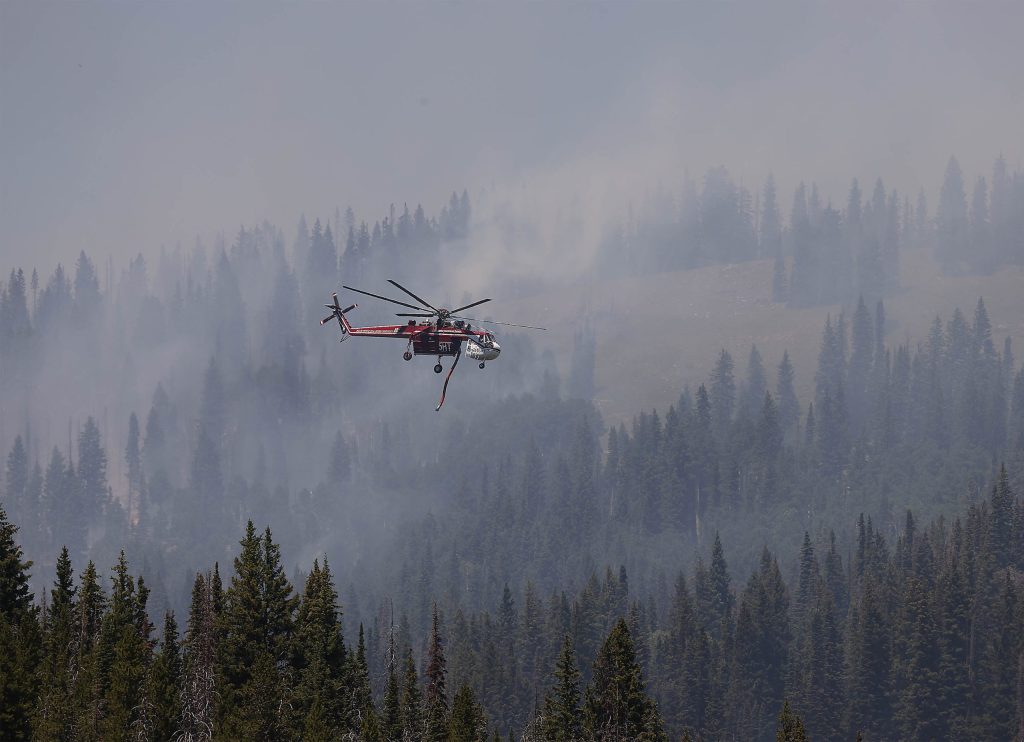
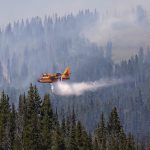
John F. Russell/Steamboat Pilot & Today
As wildfires burn across Colorado, homeowners whose properties are at risk — or have been destroyed — must navigate a complex insurance system.
The Aspen Acres Fire, currently the seventh-largest in state history, has burned more than 99,000 acres across Pueblo and Custer counties as of Wednesday, July 15. It has destroyed more than 300 homes.
Elsewhere in the state, two fires are burning in Routt County. The Fishhook Fire — a few miles south of Steamboat Springs — stood at more than 330 acres as of Wednesday. While mandatory evacuations for the Green Ridge Fire south of Stagecouch Reservoir were lifted on Wednesday, the fire threatened roughly 480 structures, including around 20 homes.
Also burning are the Gold Mountain Fire near Ouray at over 37,000 acres, the Ferris Fire near Dolores at over 64,000 acres, the Willow Fire near Leadville at over 6,500 acres and the Elk Fire near Lake City at nearly 2,000 acres.
Colorado has several laws in place meant to ensure homeowners get the help they need from property insurers in the wake of losing a home to natural disasters.
That includes House Bill 25-1322, which requires that insurance companies provide a copy of a homeowner’s policy upon request within three business days. Lawmakers in 2022 also passed House Bill 22-1111, which requires insurers to cover at least 65% of all household items if the house is destroyed, though this only applies to primary residences.
Colorado Insurance Commissioner Mike Conway, speaking Wednesday during a virtual town hall, said homeowners will need to submit an inventory of what was lost in a fire to claim the other 35%. But the 2022 law helps ensure homeowners whose properties are destroyed automatically get the majority of their items covered.
“One of the biggest complaints that we would hear time after time after a catastrophe … is that some insurance companies made people go through just an incredible amount of detail to inventory their contents in order to get the payout for their contents coverage,” Conway said. “In many ways, people felt like they were reliving the catastrophe because they had to remember and relive and think about everything that they had lost over and over again.”

Insurance policies may also cover the costs of repairing a home so that it is safe to occupy after an evacuation order has lifted. Some policies will also reimburse the cost of living expenses incurred after being forced to evacuate a home, such as temporarily renting, eating out or driving longer distances due to being displaced.
While not every insurance policy will cover those expenses during a mandatory evacuation, Conway said the state’s insurance division is also currently finalizing guidelines for insurers, urging them to provide those benefits for all homeowners who are currently being forced to evacuate.
Conway said the division saw success with the guidelines it issued for insurers following the 2021 Marshall Fire in Boulder County.
“When we made asks of the insurance companies effectively to be reasonable and step up and help communities recover, for the most part they really did,” Conway said.
Conway said homeowners should be documenting everything they want to submit for a claim using photos, videos and receipts.
“It is incredibly important for you to document as much as possible,” he said.
Conway added that it’s important for homeowners to understand the process for how insurers cover their losses. Much of that has to do with two key insurance industry terms: Actual cash value and replacement value.
Actual cash value refers to the amount a household item is worth after accounting for depreciation. Conway used the example of a refrigerator that is 12 years old. That refrigerator may have cost $1,500 when it was new, but it may now be worth around $300. That’s the amount the insurance company would pay out initially.
Replacement value refers to the cost of actually replacing that item, which is intended to make up the difference. In the refrigerator example, the insurance company would pay the additional $1,200 at the time of replacement for a new refrigerator that costs $1,500.
“Those things are going to be really important to keep in mind as you’re working your way through the claims process,” Conway said.
For homeowners who don’t have property insurance or are underinsured, Conway said it will be critical for the state to receive a disaster declaration, which unlocks grant money for those homeowners from the Federal Emergency Management Agency.
Only presidents can issue federal disaster declarations, and Conway said President Donald Trump has not yet done so for any of the active fires in Colorado.
“We’re working with our counterparts and other agencies at the state level that are going to be really pivotal in trying to get that disaster declaration,” he said.
Conway also urged homeowners who are impacted to reach out to U.S. Rep. Jeff Hurd, who represents southern and western Colorado in Congress, as well as the state’s senators, to push the White House to issue a disaster declaration.







Support Local Journalism
Support Local Journalism
Readers around Steamboat and Routt County make the Steamboat Pilot & Today’s work possible. Your financial contribution supports our efforts to deliver quality, locally relevant journalism.
Now more than ever, your support is critical to help us keep our community informed about the evolving coronavirus pandemic and the impact it is having locally. Every contribution, however large or small, will make a difference.
Each donation will be used exclusively for the development and creation of increased news coverage.