Colorado’s fall outlook fuels hope for early-season snowfall as El Nino strengthens across the High Country
Colorado’s fall outlook fuels hope for early-season snowfall as El Nino strengthens across the High Country

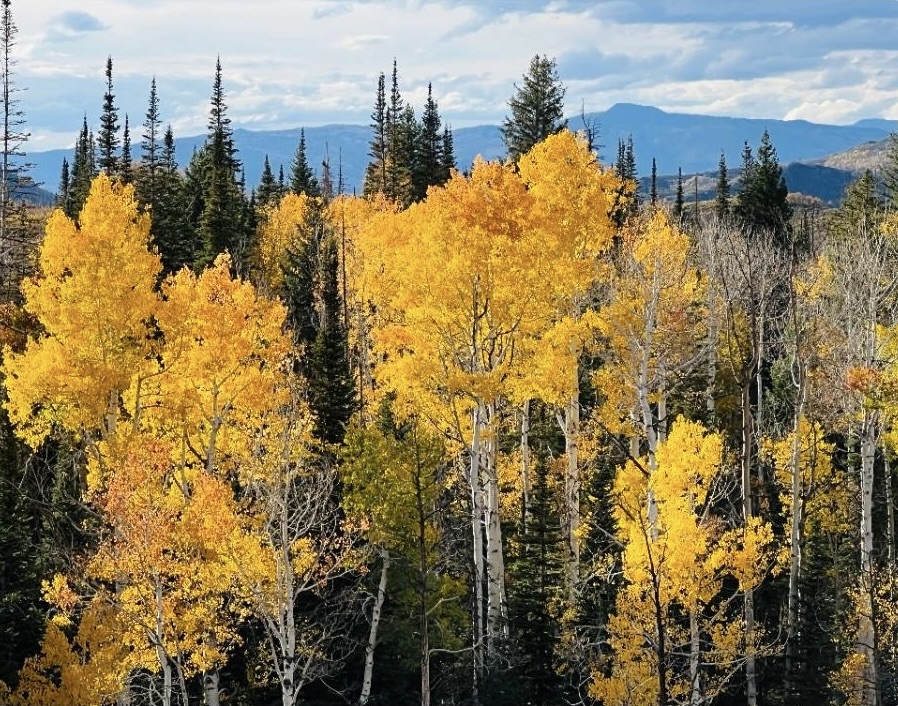
Keith Kramer/Steamboat Pilot & Today
Colorado’s Western Slope ski towns are wrapping up the month of August with sunny skies and thunderstorms, as fall forecasts bring hope of earlier-than-normal snowfall.
Across the mountains, forecasts show a slight chance of scattered afternoon showers and thunderstorms from Tuesday through the weekend, paired with temperatures ranging from the high-70s in Vail to the mid-90s in Rifle.
OpenSnow Meteorologist Alan Smith said the scattered precipitation is pretty typical for this time of year, though the temperatures are running warm.
“It’s pretty much been the same trend for about a year now,” he said. “Normally by the end of August, we’re starting to see things gradually cool off. … It’s still running warmer than normal for this time of year at least through the beginning of September.”
Beside the lingering rain, Smith said it’s less clear whether or not the warmer-than-normal temperatures will extend into the fall months.
Although the first official day of fall lands on Sept. 22 this year, meteorological autumn in the Northern Hemisphere is defined as the period from Sept. 1 to Nov. 30, bringing a progressive decline in temperatures and daylight hours.
For Colorado, strengthening El Nino conditions will likely be a major player in what those weather patterns look like this year, according to OpenSnow’s 2026 fall weather outlook.
Meteorologists forecast that the Northern Hemisphere is heading into a very strong or “super” El Nino by the end of the year, defined by well-above-average sea surface temperatures across the central to eastern equatorial Pacific Ocean.
Smith said El Nino conditions are often synonymous with strong precipitation early in the winter season, followed by below-average snowfall during the middle of the season. Colorado’s High Country is forecast to follow that pattern, with above-normal precipitation expected for the three-month period from September to November.
Signs of an active late season monsoon are typical for El Nino years, meaning this year’s monsoon season could last longer than average.
“[Monsoon season] usually wraps up at some point in September, but it’s not often a linear process,” Smith said. “What we’re seeing right now … it does look like it may be more persistent than usual in September this year.”
October, on the other hand, is expected to transition into a more traditional El Nino season as precipitation signals appear more neutral across the western U.S.
With an active southerly storm track expected to emerge in November, however, Smith said a strong El Nino winter could point to heavier snowfall earlier in the year across Colorado’s mountains.
“During these El Nino years, we do see a stronger signal for earlier starts in the fall. … I do think that it could be an earlier start to the snowpack season in the mountains, especially compared to last winter,” he said.
Additionally, the topical activity in the eastern Pacific could bring a wild card factor to the western U.S., Smith wrote in the fall outlook. Because El Nino tends to favor above-average tropical activity in the eastern Pacific, remnants of tropical storms and hurricanes can occasionally reach the western U.S. during the fall, bringing substantial rain to some areas.
In terms of temperature, Colorado’s Western Slope mountains can expect equal chances of above- or below-average temperatures for the fall season — before shifting to above-average temperatures and potentially below-average snowfall during the mid-winter months.
“With the stronger El Ninos, we tend to see above-average snow signals in the swing season [like] in the fall and spring, but then below-average middle-of-the-season signal in January and February,” Smith said. “Not to say it’s going to play out exactly like that every year. … There could be some variations year to year.”




Support Local Journalism
Support Local Journalism
Readers around Steamboat and Routt County make the Steamboat Pilot & Today’s work possible. Your financial contribution supports our efforts to deliver quality, locally relevant journalism.
Now more than ever, your support is critical to help us keep our community informed about the evolving coronavirus pandemic and the impact it is having locally. Every contribution, however large or small, will make a difference.
Each donation will be used exclusively for the development and creation of increased news coverage.