Steamboat oncologist part of successful clinical research team
Doctor contributes to FDA approval of new blood cancer treatment

Suzie Romig Follow
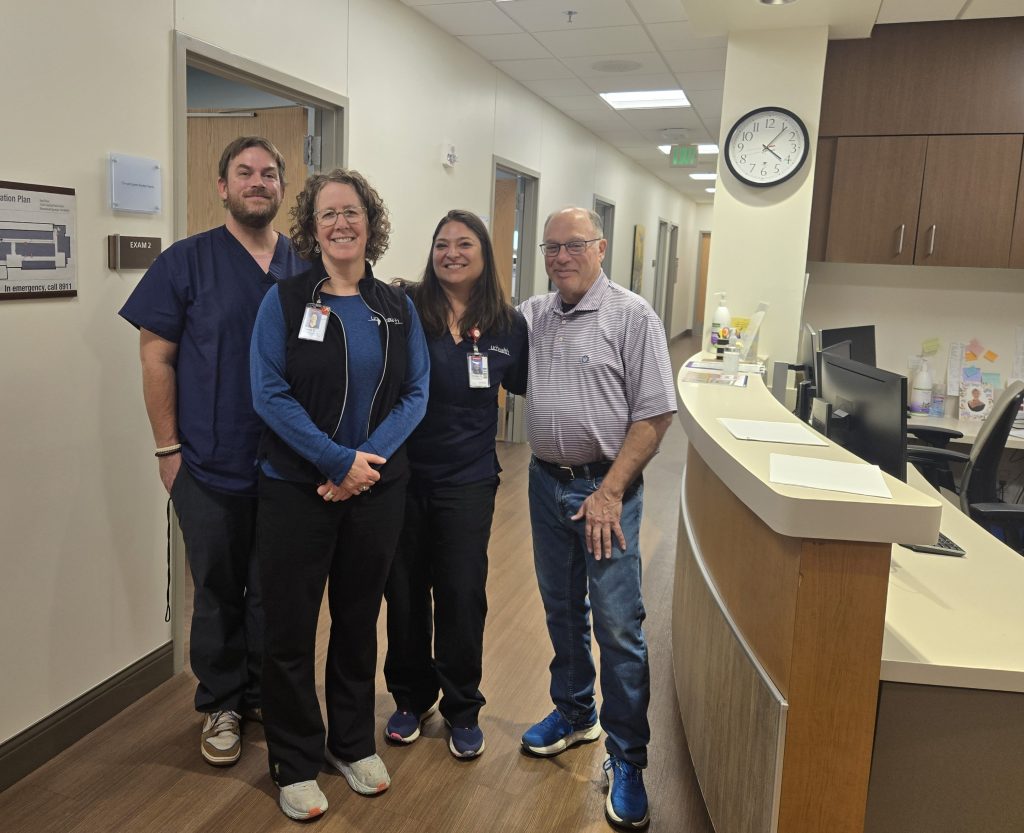
Suzie Romig/Steamboat Pilot & Today
While helping care for cancer patients in Steamboat Springs for 19 years, oncologist and hematologist Dr. Robert Rifkin has also participated in research that contributed to a new treatment for blood cancer patients around the world.
In October, the U.S. Food and Drug Administration approved use of the multiple myeloma blood cancer treatment drug called Blenrep for relapsed or refractory multiple myeloma. Rifkin was one of multiple clinical investigators involved in the three‑year DREAMM-7 study sponsored by drug company GSK that led to the development of the new drug.
Multiple myeloma is the third most common form of blood cancer globally and is considered treatable but not curable, Rifkin said.
During an interview at UCHealth Yampa Valley Medical Center last week, the oncologist said the most important development throughout his long research and treatment career is the increase in the median survival for multiple myeloma patients from 1.5 years to 20 years.
Although the research study and treatment information is technical, a key point is that “Blenrep combination helped keep multiple myeloma in remission three times longer” and, in combination with other drugs, “demonstrated a clinically meaningful 51% reduction in the risk of death,” according to a GSK media release.
DREAMM-7 stands for the Driving Excellence in Approaches to Multiple Myeloma-7 clinical trial, with research conducted at numerous academic and community sites in the U.S. and worldwide, Rifkin explained.
The new drug approved by the FDA can treat adults with multiple myeloma whose cancer has come back or did not respond after two or more treatments.

“Multiple myeloma is a blood cancer that develops in plasma cells in the bone marrow,” according to the nonprofit Multiple Myeloma Research Foundation. “In multiple myeloma, plasma cells are transformed into cancerous cells that grow out of control, crowding out the normal cells that help fight infection.”
Blood cancer can be identified through a common CBC blood test, so Rifkin encourages citizens not to overlook their annual physical exams including blood work. Some serious signs of multiple myeloma include bone pain, fatigue from anemia, frequent infections, weakness, numbness, easy bruising and unexplained weight loss.
More than half of the people diagnosed with multiple myeloma are 65 or older, according to the research foundation.
Rifkin said the U.S. recorded 36,110 new cases of multiple myeloma during 2025, including 12,030 deaths. According to the National Institutes of Health, multiple myeloma, although a rare disease, is the second most common hematologic malignancy. Rifkin said 179,063 people in the U.S. were living with or in remission from multiple myeloma last year.
The drug Blenrep can be administered as an infusion in local clinics including at UCHealth Jan Bishop Cancer Center in Steamboat Springs, noted Sanaya Sturm, nurse manager. The use of the drug for relapsed multiple myeloma requires consultation with an eye specialist to avoid serious eye-related side effects, Rifkin noted.
Officials at GSK noted the drug therapy for this difficult-to-treat blood cancer meets a major patient need because it can be used across health care settings including in community centers where 70% of patients receive care. Many patients with multiple myeloma are treated in a community cancer setting creating a need for new, effective therapies with manageable side effects that can be administered outside of an academic center.
“The reality for most patients with multiple myeloma is a relentless cycle of remission and relapse, as their disease becomes refractory to treatments,” said Michael Andreini, president of the Multiple Myeloma Research Foundation. “Patients urgently need more effective treatment options that can offer more quality time with their loved ones.”
Sturm said the drug approval for use in community cancer clinics is key to treating patients closer to home.
“We serve residents from four surrounding counties delivering safe, evidence-based care that meets National Comprehensive Cancer Network standards ensuring our patients receive the same quality and regimens as larger centers,” Sturm noted.
“It’s so great to have somebody like Dr. Rifkin working in our community,” Sturm said. “I can’t even tell you how much he’s published and has worked in drug development and changed how multiple myeloma has been treated all over the world.”
Rifkin said he became interested in working in blood cancers and multiple myeloma early in his career when completing a fellowship at the University of Arizona Health Sciences Center. The doctor also worked as director of cellular therapeutics at Rocky Mountain Cancer Center in Denver. Now, Rifkin will continue serving only at Jan Bishop Cancer Center in Steamboat.
For more information, visit the Multiple Myeloma Research Foundation online at Themmrf.org.



Support Local Journalism
Support Local Journalism
Readers around Steamboat and Routt County make the Steamboat Pilot & Today’s work possible. Your financial contribution supports our efforts to deliver quality, locally relevant journalism.
Now more than ever, your support is critical to help us keep our community informed about the evolving coronavirus pandemic and the impact it is having locally. Every contribution, however large or small, will make a difference.
Each donation will be used exclusively for the development and creation of increased news coverage.