Playing the transplant waiting game – again
After setback, Steamboat resident hoping for kidney from living donor

Suzie Romig Follow
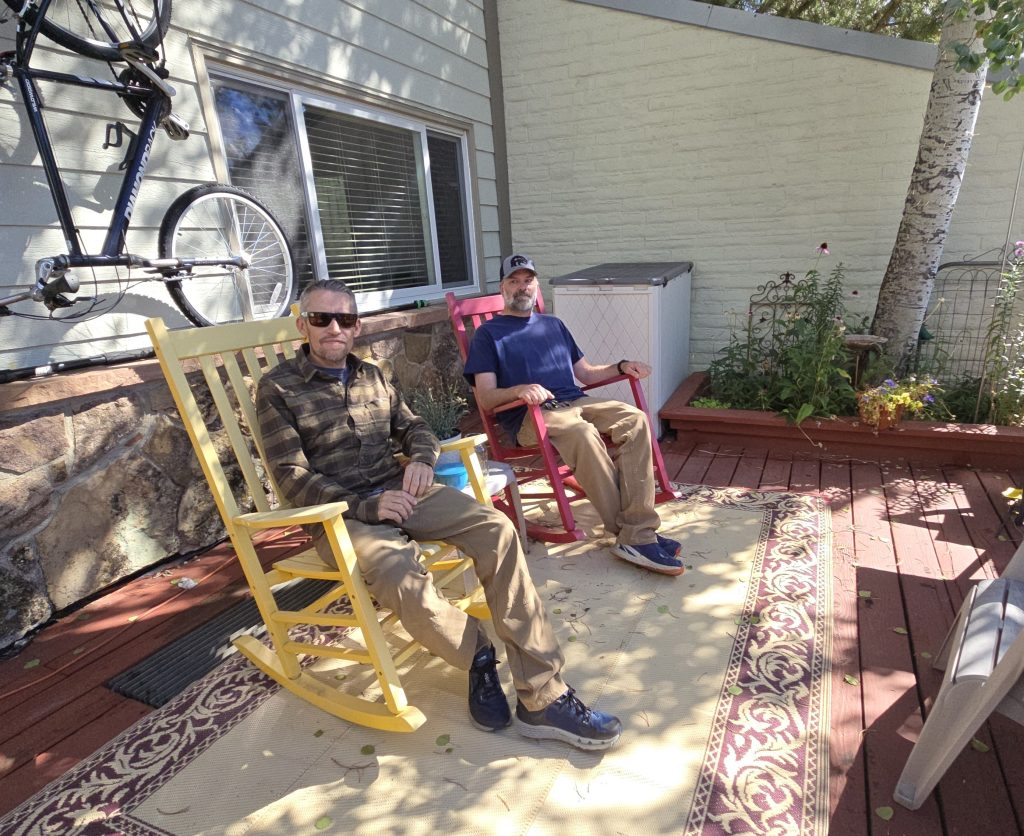
Suzie Romig/Steamboat Pilot & Today
After a 25-month wait on the kidney transplant recipient list and experiencing a host of medical issues, Steamboat Springs resident Steven Geer received the official call at 11:30 p.m. one evening in March to come immediately to Denver.
Emotions ran high on the nighttime drive to UCHealth University of Colorado Hospital, as Geer and his partner knew the surgery and recovery process for his kidney-failure condition would be nerve-wracking but potentially life-restoring. By 8 a.m. the surgery was underway and Geer was receiving a new kidney from a deceased donor. The donated kidney became the third kidney inside his body, transplanted near his left waistline, so he needed to take anti-rejection medication.
The transplant team thought the kidney was healthy and a good match for Geer, 50, a Walden native who has lived in Steamboat since 2008. For several years, Geer underwent 12-hour Peritoneal dialysis from home through a tube in his abdomen to remove waste products from his blood.
Geer, who works in I.T. at Big Agnes in Steamboat, started getting sick in May 2021 with symptoms such as anemia and respiratory issues. In late December 2021, his kidneys suddenly seized, and he ended up on a Flight for Life medical transport. He was hospitalized for 15 days and diagnosed with the autoimmune disease Goodpasture syndrome — a rare disorder when a body mistakenly makes antibodies that attack the lungs and kidneys.
After the transplant surgery in spring, Geer and his life partner, Tyler Kern, who works as Steamboat Springs transit operations supervisor, were hopeful as they left the hospital and lived temporarily in Aurora near follow-up care.
Unfortunately, the deceased donor kidney was deemed a “sleepy kidney” because it never woke up to function appropriately.
“Deceased donations usually do well,” said Kimberlie Jackson, kidney and pancreas transplant coordinator at University of Colorado Hospital. “Steven’s (transplant) did fail immediately, with delayed graft function or a ‘sleepy kidney.'”
UCHealth University of Colorado Hospital Kidney and Pancreas Transplant Coordinator Kimberlie Jackson provided some tips to help people keep their kidneys healthy.
Maintain regular doctor checkups.
Maintain a healthy diet and exercise routine.
Keep high blood pressure under control.
Keep diabetes under control.
Control or reduce higher volume, long-term use of NSAIDs, or nonsteroidal anti-inflammatory drugs, including aspirin, ibuprofen and naproxen sodium that can be harmful to kidneys.
Geer believes the donated kidney may not have been as healthy with the best circulation as originally thought, or any number of medical complications related to the major surgery of organ transplantation might have been factors.
Currently, Geer must wake up at 5:30 a.m. each Monday, Wednesday and Friday and drive to Avon for a more aggressive hemodialysis at Kidney Center of the Rockies, the closest dialysis center. Geer drives himself to the 3.5-hour treatments that are performed through a port in his right shoulder. The I.T. professional works remotely, waits until his blood pressure is stable and then drives himself home.
“Big Agnes has been very supportive and flexible with my situation, and I can’t say enough about that,” Geer noted.
In hemodialysis, a machine filters wastes, salts and fluid from a patient’s blood when kidneys are no longer healthy enough to do this work adequately, according to Mayo Clinic.
“The longer a patient is on hemodialysis, the weaker they tend to get,” noted Jackson, even though a kidney transplant is considered an elective procedure. “Patients have to be strong and healthy before transplantation for a better outcome.”
The best outcome for Geer, and many other patients experiencing kidney failure, would be a living donor kidney transplant.
“Absolutely, he would do better with a living donor,” Jackson said. “It’s a more controlled environment, and the kidney takes less of a hit from losing circulation after death.”
University of Colorado Medicine Chief of Transplantation Dr. Elizabeth Pomfret encourages healthy individuals to “give the ultimate gift of life” by considering becoming a living organ donor.
Transplant experts emphasize the first priority is to protect the health and well-being of potential donors, so donors can start simply by filling out a confidential health history questionnaire online at UCHealthLivingDonor.org. Only healthcare professionals from the UCHealth Living Donor Team will see the questionnaire information that is not shared with a transplant recipient.
If the process proceeds, potential donors often say the health evaluation provides the most comprehensive, free physical a person may have had with the possible added benefit of learning about health conditions earlier in life.
Even if the potential donor is not compatible for the specific patient, a paired-organ donation is another option. In that case, the donor of each pair is compatible with the recipient of the other pair. If both donors and recipients are willing, doctors may consider a paired-organ donation, according to Mayo Clinic.
Currently, Geer has a good Expected Post Transplant Survival rating, which is based on age, diabetes status, dialysis status and previous transplant, Jackson said, which can help Geer be matched with a younger kidney.
Although Geer said he is younger and healthier than many people he sees going through dialysis at the regional center in Avon, he calls the feeling afterward a “dialysis hangover.”
Although dozens of family members and friends have been tested to be a living donor match for Geer, no satisfactory matches have been found so far. Geer has been on the kidney donation waiting list, again, since July.
“Living donors provide the best outcomes for the folks in need,” Kern said. “We are trying all we can do to spread the word to help find a living donor match (for type O blood) and also to spread the word that many folks are in need.”
Family members set up a Go Fund Me page to help Geer with the cost of travel and temporary living expenses for the first failed transplant and in hopes of a second transplant option coming sooner rather than later.
“If you have ever felt like your life would be richer, if only you could save another person’s life, get screened,” Geer noted.





Support Local Journalism
Support Local Journalism
Readers around Steamboat and Routt County make the Steamboat Pilot & Today’s work possible. Your financial contribution supports our efforts to deliver quality, locally relevant journalism.
Now more than ever, your support is critical to help us keep our community informed about the evolving coronavirus pandemic and the impact it is having locally. Every contribution, however large or small, will make a difference.
Each donation will be used exclusively for the development and creation of increased news coverage.