Ballot initiative to boost funding for Colorado roads could pit infrastructure against healthcare, education
Groups representing Western Slope communities are divided on the issue

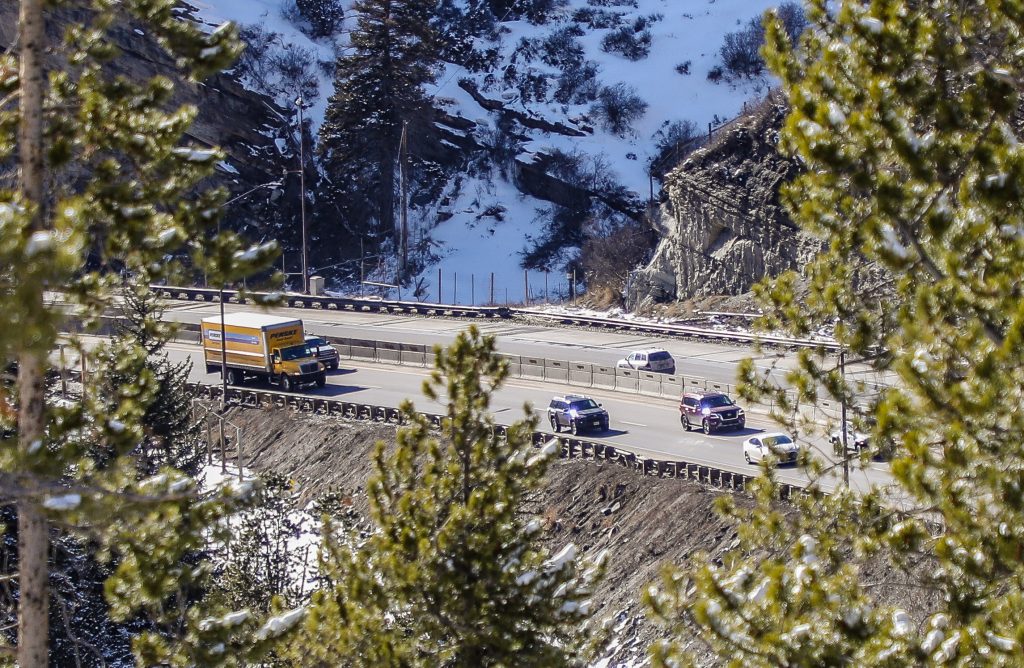
Chris Dillmann/Vail Daily
A proposed ballot initiative that would force the Colorado legislature to spend hundreds of millions of dollars more on road funding could come at the expense of healthcare and education, lawmakers are warning.
The initiative has yet to make it onto the ballot, but lawmakers have introduced a bill in the final days of the legislative session that would neutralize the proposal should it pass.
The fight centers around Initiative 175, a ballot proposal by the Colorado Contractors Association that would require the legislature to fully fund roads and bridges with the money it already collects for those initiatives. While the state has dedicated revenue streams for those infrastructure projects, lawmakers have sometimes diverted that money to other uses, including closing budget shortfalls.
The measure, which is still gathering signatures to be placed on the November ballot, could force the legislature to appropriate roughly $700 million annually in state funds toward road projects, according to an analysis by the nonpartisan Legislative Council Staff. The bulk of that, nearly $540 million, would come from the state’s general fund, which primarily supports Medicaid and K-12 education.
The proposal has sparked support and opposition from groups representing Western Slope communities.
Club 20, a coalition of nearly two dozen Western Slope counties, said in a statement that it supports Initiative 175 “as a responsible, voter-led effort to ensure sustainable funding for Colorado’s transportation network — particularly in rural and western Colorado communities that depend on safe and reliable roads for economic vitality.”
Other Western Slope groups oppose the effort, fearing that it will force cuts to Medicaid and K-12 education.
Routt County, the Craig Chamber of Commerce, and Counties and Commissioners Acting Together — which includes several western Colorado counties — signed an April 14 letter alongside roughly three dozen other groups urging proponents of the ballot initiative to abandon their effort.
“Colorado would be better served by a plan that strengthens Colorado’s transportation system without undermining critical services that support children, families and seniors across the state,” the letter stated.
Democrats plan to undercut road funding proposal

To offset the ballot initiative’s impact on the state’s general fund, a group of Democrats introduced a bill that would slash taxes and fees used to generate funding for roads, including excise taxes on gas and vehicle registration fees.
They say doing so would free up more spending room for the general fund under the state’s revenue cap imposed by the Taxpayer’s Bill of Rights, or TABOR. The measure, House Bill 1430, would go into effect only if the ballot initiative is passed and would sunset after three years.
Lawmakers say protecting the state’s general fund is critical amid a tight budget environment wherein the legislature has already had to close multiple billion-dollar budget shortfalls over the past two years.
“The entire state is facing a budget shortfall, and while transportation funding needs are always present, as the state’s elected representatives, it is my belief that we must make difficult choices to balance the budget each year,” bill sponsor Rep. Andrew Boesenecker, D-Fort Collins, said during a Tuesday, May 5 House committee hearing. “Taking from education and healthcare to simply fund roads is not the answer.”
Other bill sponsors are Rep. Emily Sirota, D-Denver, and Sens. William Lindstedt, D-Broomfield, and Judy Amabile, D-Boulder.
Jennifer Riley, CEO of Memorial Regional Health in Craig, told lawmakers that without legislation to guard against the impacts of Initiative 175, rural hospitals will face even greater budget challenges. Healthcare providers are already being squeezed by state reductions to Medicaid reimbursement rates and federal Medicaid cuts, she said.
“This year feels like a death by a thousand paper cuts,” Riley said. “Further reductions will force hospitals like mine to consider service reductions.”
Republicans said the bill undermines voters by undercutting a ballot initiative before it has the chance of passing.
“Do you feel that that erodes confidence in the legislature, because we’re presumptively saying, ‘We don’t care what the voters think?'” Rep. Max Brooks, R-Castle Rock, said during Tuesday’s committee hearing.
Boesenecker said he doesn’t think voters are being asked an honest question by the ballot initiative’s supporters. He said they have framed the measure as a way to boost road funding without raising taxes, while neglecting to acknowledge that that money will mean cuts elsewhere.
Tony Milo, CEO of the Colorado Contractors Association, the group behind the ballot initiative, said the measure has public support, adding that if Colorado “would just invest a small percentage of its budget annually to improve roads, this would save lives, improve congestion and create thousands of jobs.”
Milo said there has been pressure on his organization to abandon the ballot effort, and called the Democrats’ bill “as anti-democratic as it gets.”
The bill passed both the House Transportation, Housing and Local Government Committee and Appropriations Committee largely along party lines, with Democrats in favor and most Republicans opposed. It will now be considered by the full House.
Colorado ranks among the worst states for road conditions

Boesenecker said during Tuesday’s committee hearing that he understands the call for more road funding, but added that Colorado has made “meaningful investments in transportation over the past decade, generating more than $470 million each year in new funding for roads, bridges and transit.”
Yet, Colorado continues to rank among the worst for road infrastructure, placing 42nd in the nation for overall road conditions, and 46th in rural interstate pavement conditions, according to the 2026 Annual Highway Report by Reason Foundation, a libertarian think tank that tracks the health of the country’s road systems.
The Colorado Department of Transportation says its running list of road and bridge projects, outlined in the agency’s 10-year plan, amounts to the largest investment in rural roads in recent history, with over $382 million allocated to rural roads since the plan’s latest update in 2022. The agency said it plans to allocate close to $890 million over the decade.
Still, Western Slope leaders have long bemoaned what they say are languishing state investments in roads and bridges. The state is also working with fewer dollars for roads and bridges after the legislature in 2025 passed a state budget that reduced highway funding by more than $100 million over the next two years to help close a $1.2 billion shortfall.
Club 20 Executive Director Wade Haerle said in a statement that the proposed reductions to transit revenue in this year’s bill will make future road funding more uncertain.
“Colorado’s transportation challenges require serious, durable solutions — not policy experiments that jeopardize funding and shift burdens onto future taxpayers,” Haerle said.
Haerle also called out the timing of the bill’s introduction, which came less than two weeks before the end of the legislative session on May 13. Haerle said the bill’s late introduction does not give the public enough time to properly vet the measure.
“They do not want the people to know, and it is not fair,” he said.






Support Local Journalism
Support Local Journalism
Readers around Steamboat and Routt County make the Steamboat Pilot & Today’s work possible. Your financial contribution supports our efforts to deliver quality, locally relevant journalism.
Now more than ever, your support is critical to help us keep our community informed about the evolving coronavirus pandemic and the impact it is having locally. Every contribution, however large or small, will make a difference.
Each donation will be used exclusively for the development and creation of increased news coverage.